How to Calculate How Much Alcohol to Buy for Your Wedding
For a reliable wedding alcohol estimate, start with your drinking guest count, bar hours, bar format, and drink mix, then choose a clear buffer. A wedding alcohol calculator turns those details into a useful starting quantity. Your estimate gets better when it reflects who may drink and when the bar will serve them. A U.S. standard drink contains 0.6 fluid ounces, or 14 grams, of pure alcohol.
Planning a wedding means making choices that affect your guests and your budget. A careful estimate can help you avoid a bare bar or too much leftover stock. Your final order should fit venue rules and guest tastes. Use the estimate to shape a plan that feels right for your day.
Start with adults who are likely to drink, not the full guest count. Then account for the time alcohol is available, your bar setup, and a modest buffer. Keep your assumptions with the shopping list, so you can update the total when plans change.
Each wedding has its own rhythm. A brief toast differs from a long reception, and a simple beer-and-wine bar differs from a full bar. Treat the calculator result as a shopping estimate to refine, not a promise that every guest will drink the same amount.
How to Use a Wedding Alcohol Calculator
Gather your bar hours and the number of guests likely to drink before entering anything else. The best wedding alcohol calculator asks about your actual event and gives itemized quantities.
Gathering clear details now can save time when you build the final order. Your wedding alcohol calculator should reflect what guests will see at the bar, not a generic party.
Enter the details that change your estimate
Use this checklist before you enter details in an alcohol calculator. A wedding alcohol calculator spreadsheet can help you track each assumption as plans change.
- Count adult guests, then estimate the share likely to drink.
- Enter the actual bar hours, not the full event length.
- Choose beer and wine service, a full bar, or another format.
- Note the season, outdoor temperature, and any signature drinks.
- Include transportation plans and your crowd’s usual drinking habits.
One calculator uses six bar hours as its default: one cocktail hour and five reception hours. It adds about five percent when guests ride a bus or shuttle to a hotel.
Check what the results include
Results may list beer, wine, spirits, mixers, ice, sparkling toast, water, soft drinks, and mocktails. Event type may label the estimate without changing its math.
A free wedding alcohol calculator can give you a starting point. Check whether its quantities include a buffer; one calculator already adds five percent.
The U.S. standard drink definition counts pure alcohol, not the full drink’s liquid volume. The NIAAA standard drink guide gives examples for beer, wine, and spirits.
Your wedding planning timeline can help you set a date for confirming the final guest count and bar details. Check the buffer setting before you add a separate safety margin to the shopping list.
Plan your wedding tasks by month to keep those details on schedule.
How Many Drinks Should You Plan per Guest per Hour?
As a starting point, budget one drink per drinking guest per hour of bar service. The total equals the number of drinking guests multiplied by the actual bar hours.
This is a stocking estimate, not a drinking goal for any person. A drink calculator for a party can use the same guest count and hours, then adjust for the event’s service pattern.
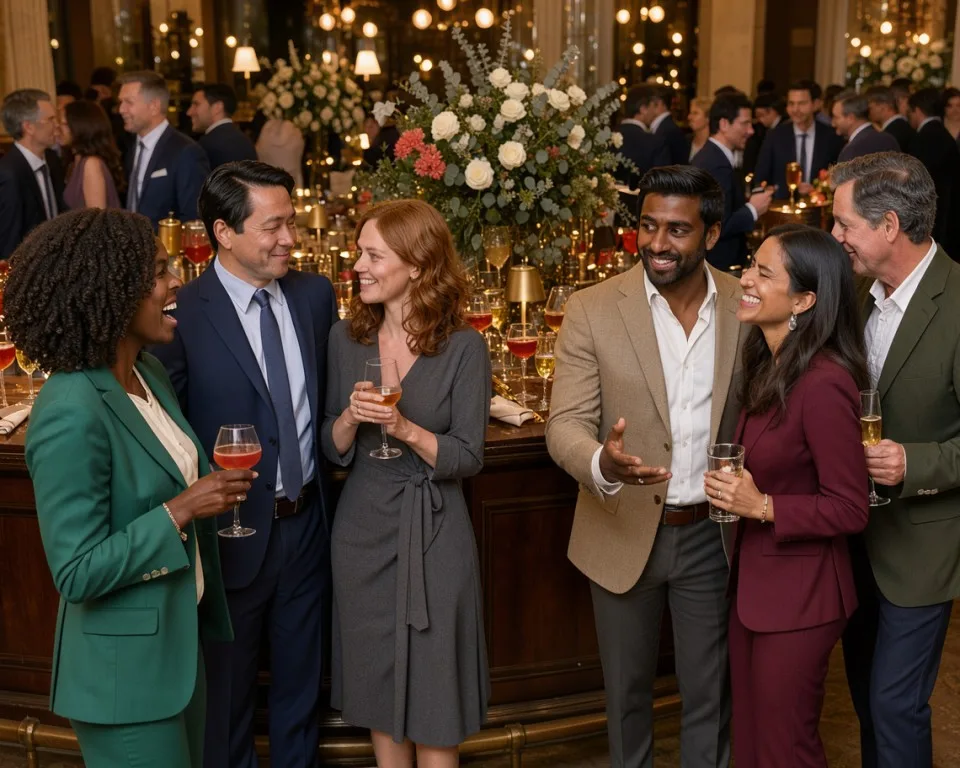
For example, 80 drinking guests and four bar hours give you 320 planned drinks before any buffer. The number changes if fewer guests drink or service lasts less time.
A calculator may set a heavier crowd at one drink every 45 minutes, rather than one per hour. That change raises the estimate sharply across a long reception. Use the crowd setting honestly instead of treating the heavy-drinking rate as a target for every guest.
Guest count estimates can improve when you track replies and likely attendance. Use a wedding guest list guide to organize names and responses.
Do not confuse drinks planned for the bar with a safe amount for a guest. The baseline helps you estimate stock, while each person’s choices and limits remain their own.
A smaller group can still need a thoughtful estimate if the bar stays open for many hours. Short service with more drinking guests can also add up quickly.
Use your best attendance estimate, then update it when replies come in. A count based on likely attendees is more useful than the number invited.
Choose a Bar Format and Drink Mix
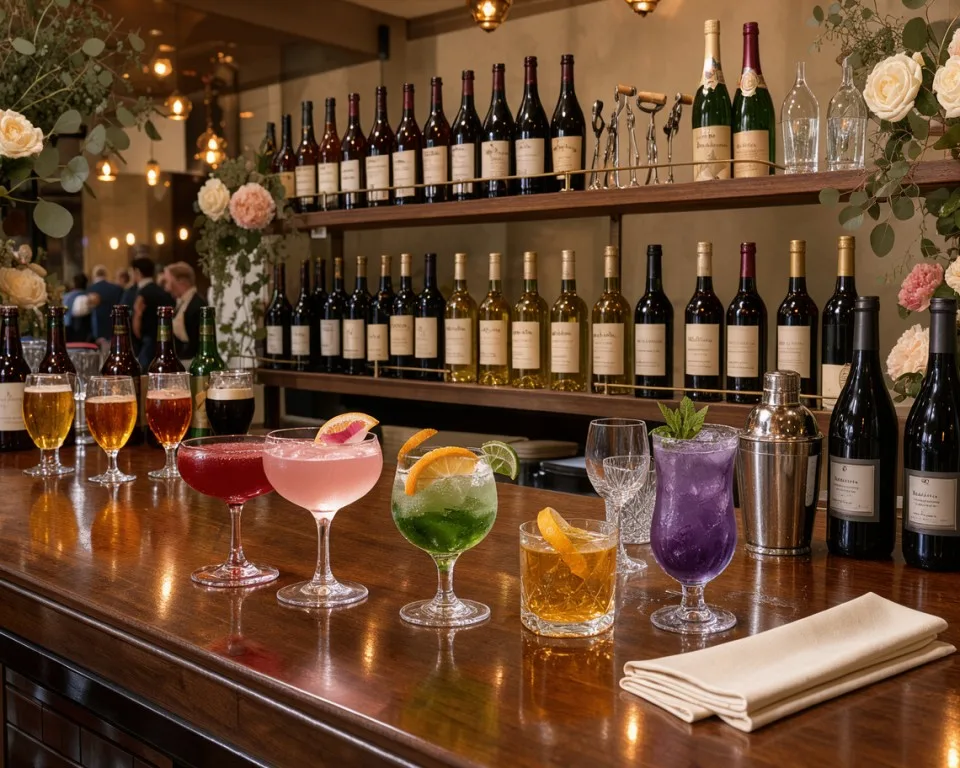
A beer-and-wine menu is a practical starting choice when your guests mostly prefer those drinks. A full wedding bar gives guests more options, but each extra drink type adds items to track.
Calculator drink mixes are working assumptions, not a promise about your guests’ tastes. Choose a format that fits your budget, venue, and menu.
Beer and wine or a full bar
One calculator estimates that 70 to 80 percent of guests at a typical U.S. wedding stick to beer and wine. Its beer-and-wine mix assigns 60 percent of drinks to wine and 40 percent to beer.
For a full open bar, its working mix assigns 50 percent to wine, 30 percent to spirits, and 20 percent to beer. That split helps you build a first shopping list, but your guests may prefer another balance.
Its suggested spirit mix is 35 percent vodka, 30 percent whiskey, 20 percent tequila, and 15 percent rum. Use your own guest preferences to change those shares.
Keep signature cocktails manageable
Signature cocktails can sit alongside beer and wine. A wedding alcohol calculator with signature drinks should count each recipe, since one spirit cannot replace every ingredient.
A sour cocktail can use a 2-1-1 formula: two parts liquor, one part sweet ingredient, and one part sour ingredient. It is one recipe pattern, not a required drink.
For more drink ideas, browse cocktail and mocktail recipes that can inspire a small wedding menu.
Keep the list focused. A few recipes with shared ingredients are easier to shop for and prep than many drinks with separate bottles.
Choose recipes with overlapping ingredients when you want signature drinks without a long, complicated shopping list.
Convert Servings Into a Shopping List
Convert each beverage category separately because a wine bottle, beer case, and liquor bottle do not serve the same number of drinks. A shopping list should match the drink mix and each recipe’s pour.
Use these steps to turn your servings into whole purchase units:
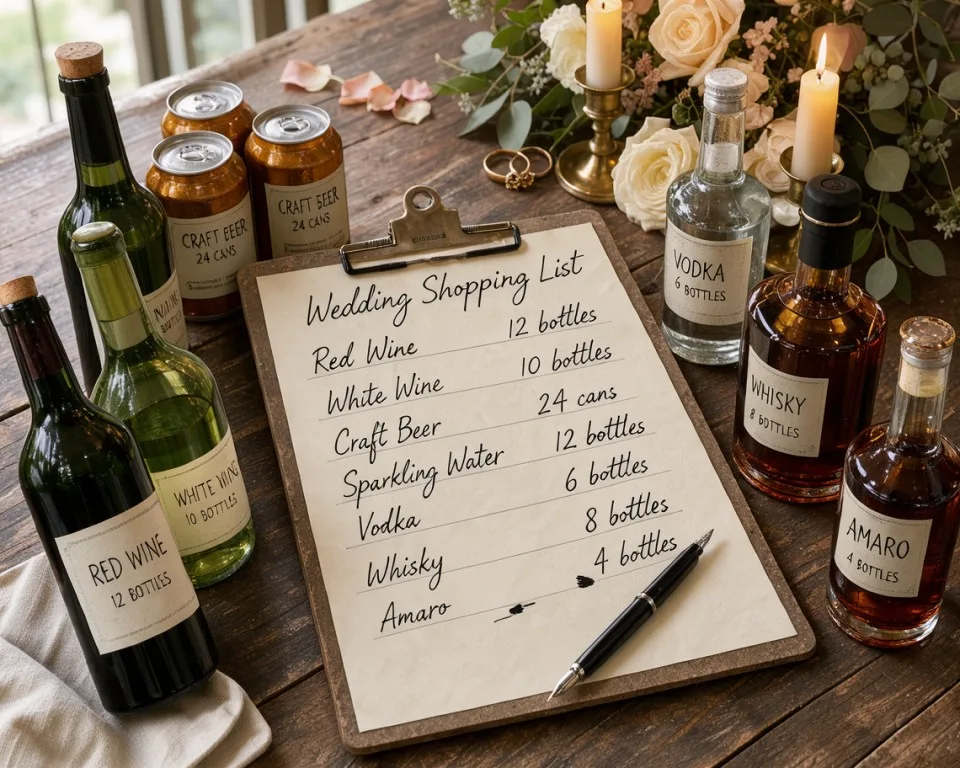
- Assign estimated servings to wine, beer, spirits, and sparkling toast.
- Convert each type using its own bottle or package yield.
- Round each category up to whole bottles, cases, or cans.
- Compare the result with your menu and event setup.
A 750-milliliter wine bottle gives five 5-ounce glasses. A 750-milliliter sparkling wine bottle gives six toast servings.
A wine case holds 12 bottles. A beer case holds 24 cans or bottles. One 750-milliliter liquor bottle gives about 17 standard 1.5-ounce shots or mixed drinks.
For 100 guests at a five-hour reception, one full-bar estimate gives about 27 wine bottles, eight beer cases, and 10 spirit bottles. That example assumes an average crowd and includes vodka, whiskey, tequila, and rum.
Those quantities are a scenario, not a universal order. A different drink mix or pour size changes the number of bottles and cases you need.
The U.S. standard drink can also help compare beverages with different alcohol strengths. The NIAAA drink size calculator uses drink volume and alcohol content to estimate standard drinks.
Compare the final shopping units with your menu before ordering, especially when the recipe uses a nonstandard pour.
What Will Wedding Alcohol Cost?
A full open bar is estimated at $15 to $25 per guest for retail alcohol, while beer and wine only is about $10 per guest. A realistic budget for a 150 person wedding starts with that per-person range, then fits the menu and service plan.
For 100 guests at a five-hour reception, a full open bar estimate is $750 to $950. That retail estimate includes a champagne toast and assumes an average crowd.
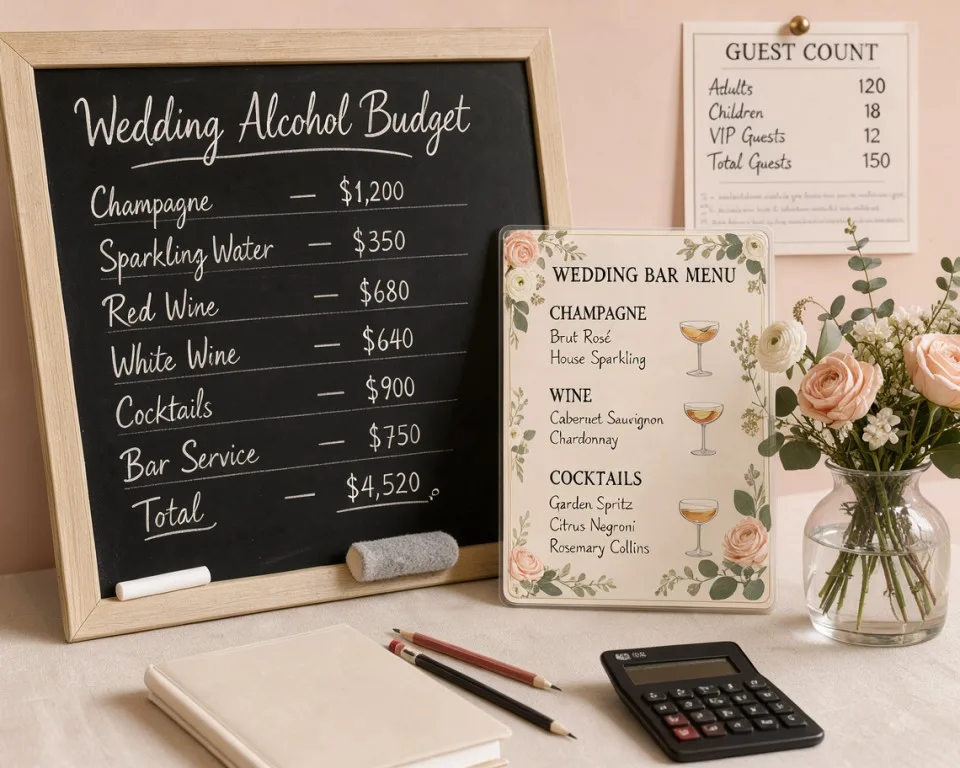
One 2026 retail estimate uses $15 per red wine bottle, $13 per white wine bottle, $1.30 per beer, and $30 per spirits bottle. Local prices can differ from those estimates.
Service fees, tips, minimum purchases, and venue rules can raise your total. A venue may also require a caterer or bar service, rather than allowing you to bring your own alcohol.
For 150 guests, the 50/30/20 wedding budget rule is a broad wedding-wide plan, not an alcohol budget. It assigns 50 percent to venue and catering, 30 percent to design and personal details, and 20 percent to other costs.
That split does not set a dollar amount for wedding alcohol. Your alcohol allowance depends on your total budget and bar format.
A caterer’s drink prices can be roughly four to eight times store prices. Bar or restaurant prices can be roughly five to 12 times wholesale prices.
For a wider view of costs, use this wedding budget guide to plan and track spending across categories.
Confirm venue fees and service charges before comparing a retail-only estimate with a catered bar package.
Plan Bartender Staffing Around the Bar Format
For 150 guests, plan on three bartenders for a simple beer-and-wine bar or three to five for a full cocktail bar. A full bar needs more hands when drinks take longer to make.
These counts use common staffing benchmarks, then round up to whole bartenders. Your menu and the busiest service times affect how quickly guests get served.
For simple beer-and-wine service, plan on one bartender per 50 guests. That rate gives you three bartenders for 150 people.
For full cocktail service, use one bartender per 35 to 50 guests. At 150 guests, that works out to three to five bartenders.
A barback supports one or two bartenders. This helper can restock drinks and handle tasks behind the bar.
A complex cocktail menu can slow service, especially when many guests order at once. A short menu can help the bar team serve guests more steadily.
For a rustic gathering, a lemonade or mimosa station can offer another serving style. These rustic drink station ideas can help you picture a simple setup.
Ask the venue or bar lead to confirm staffing against the menu and the expected rush periods.
Adjust the Plan for Comfort and Responsible Service
Warm outdoor weather can raise ice needs, while a brunch or lunch schedule can reduce the drink estimate. One estimate cuts drink totals by 15 percent for a brunch or lunch event.
Keep water and soft drinks available for the full guest list. A featured mocktail should replace part of the nonalcoholic drink plan, not add to it.
Account for weather, timing, and nonalcoholic drinks
Water estimates should cover every guest, with more nonalcoholic drinks planned for people who do not drink. Warm outdoor service also raises the amount of ice you may need.
Check these details before you set the final service plan:
- Heat and outdoor conditions
- Event time and food service
- Whether you plan a toast
- Water, soft drinks, and mocktail choices
Food and drink timing can shape the guest experience. Consider dessert service too, with wedding cake alternatives that suit your guest count and event style.
Keep alcohol service within safe limits
NIAAA defines binge drinking as a pattern that brings blood alcohol concentration to 0.08 percent or higher. For a typical adult, that means five or more drinks for men, or four or more for women, in about two hours.
NIAAA defines heavy drinking as five or more drinks on any day, or 15 or more per week, for men. For women, it means four or more drinks on any day, or eight or more per week.
These are health definitions, not amounts to stock or goals for guests. People should avoid alcohol if they are under 21, pregnant, or may become pregnant.
People should also avoid alcohol before driving or using machinery. The same advice applies with interacting medicines, some health conditions, or trouble controlling drinking.
Keep water easy to access and ask your venue or service professional about its alcohol-service policies.
Conclusion
Before placing your order, compare your final quantities with the venue’s service rules and your bar team’s setup. Your order should match the guests likely to drink, your chosen menu, and actual bar hours.
Save your assumptions beside the shopping list, including the guest count and service plan. This makes it easier to recalculate if attendance or the menu changes.
Use the final list to review what the venue will provide and what you must bring. Save the final list and the assumptions behind it, then confirm the order with the person responsible for bar service.