How to Compare Wedding Venues and Calculate the Real Cost
Compare each venue’s all-in cost and ability to support your day, not just its advertised rental fee. The all-in cost is the full venue expense after required services, fees, taxes, and rentals. It includes the rental fee. That number helps you compare a beautiful room with a simpler space fairly.
When you plan a wedding, the venue affects your guests’ experience, schedule, catering, décor, and budget. A guest list that fits one room may feel cramped in another. The right choice makes the big day work for you, not just look good online. A short, steady way to compare each package and fee can make your choice clearer.
Write down what each venue includes, then add the costs it leaves out. Keep the same guest count and event needs for every quote. This makes it easier to spot the real price and compare what your guests will experience. A venue is a sound choice when its written price, practical fit, and guest experience all match your limits.
How to Choose a Wedding Venue Before You Tour
Choose a venue that can deliver your three highest priorities within the financial limits you have agreed on. You and anyone helping pay should share the same view of the wedding and its spending limits.
Rank three needs before you tour. They might be a garden ceremony, in-house catering, privacy, or a room where you can get ready. A clear style can help you choose between very different venues. Think about the guest experience, too: a grand room may look lovely, yet feel wrong for a small wedding.
A planner can join the search early if you want help with choices and timing. Ask what a venue coordinator handles. The job may cover the venue only, or the venue plus food and drinks. Get the exact role in writing, since titles alone do not show what help you will receive.
Planning costs can compete with venue spending. In 2026, wedding planning averaged $4,047, while music and entertainment averaged $1,567. A 2026 wedding dress average of $2,000 and $550 for alterations show another trade-off. These are not venue prices; they show how one choice can affect another.
Use the three priorities to judge each wedding venue, rather than chasing every attractive feature. A planner may also help you see which parts of the package fit your plans. For more ideas on gardens, lofts, beaches, and other settings, browse wedding venue styles and ideas.
Write down the nonnegotiables before a beautiful setting makes a lower-priority feature feel essential.
Set a Wedding Budget Before You Compare Packages
Use the $36,000 U.S. wedding average for 2026 as a reference point, not as a target for your own guest count or location. The average gives you a broad view, but it cannot say what your wedding should cost.
Guest count, location, and priorities change what the same budget can cover. A large guest list needs more food and room. A popular area may have higher prices. A smaller event or a simpler plan may leave more money for a feature you care about.
Many couples worry that costs will rise before the wedding. In 2026, 78% worried that the economy or possible tariffs would push the final bill above their expectations. Also in 2026, 84% thought their wedding would cost more than the same event two years earlier.

Set a total spending ceiling
Start with the most you can truly spend, not the amount you hope to spend. Count money you have saved and any firm help from family. Do not include gifts you have not received or funds that may not arrive.
Keep a written budget with the same cost names for every quote. This makes it easier to compare new costs with the amount still free. Hold back some money for costs that change as plans take shape. Do not treat the national average as a minimum or a reason to spend more.
Use the 50/30/20 framework as a starting point
The 50/30/20 wedding budget framework puts 50% toward the venue and catering. It gives 30% to photos, video, music, flowers, and décor. The final 20% covers attire, stationery, cake, travel, the officiant, and other costs.
A framework is a starting point, not a rule. If a garden ceremony matters most, you may give the venue more than 50%. Then trim another group of costs to keep the total within your limit. In 2026, invitations averaged $500, while officiants averaged $325.
Keep the whole budget in view when you make a change. A small increase in one area can affect the money left for other wedding plans. Use your list to note who pays for each item and when the money is due. Agree on the maximum you can spend before requesting venue quotes.
Compare Dates, Seasons, and Locations
For a spring or fall date, begin venue booking 12-18 months ahead, especially if the date is fixed. Fall is the most popular U.S. wedding season, so early planning can help you find more options.
January, February, and March are among the most affordable seasonal options in the United States. Spring and fall can suit outdoor ceremonies, while winter may suit a budget-minded plan. Local weather and the venue’s conditions still matter.
Choose a date around season and availability
Saturday evenings have the highest U.S. venue prices. Fridays, Sundays, and weekdays can cost less. If you can shift your date, compare a Saturday with a Friday or Sunday before ruling out a venue.
Ask which dates are open in the season you want. A popular date may limit your choices, while a weekday could open more options. Your guests’ work and travel needs also matter, especially when people must stay overnight.
Find wedding venues near you by travel fit
A search for wedding venues near me can help you find places in your area, but distance alone does not show how easy a trip will be. Check airport distance, nearby lodging, parking, access for guests with mobility needs, and likely travel time.
Compare the route from lodging to the venue at the time guests will travel. A short drive can still be hard if traffic builds or parking is scarce. Think about how the location works for the people on your guest list.
Destination weddings call for more travel details. Guests may need clear notes about flights, places to stay, local transport, and how far the ceremony site is from town. Check local legal marriage rules before settling on a destination.
Check the venue’s availability and typical travel routes against the date before scheduling a tour.
Match the Guest Count to the Room and Layout
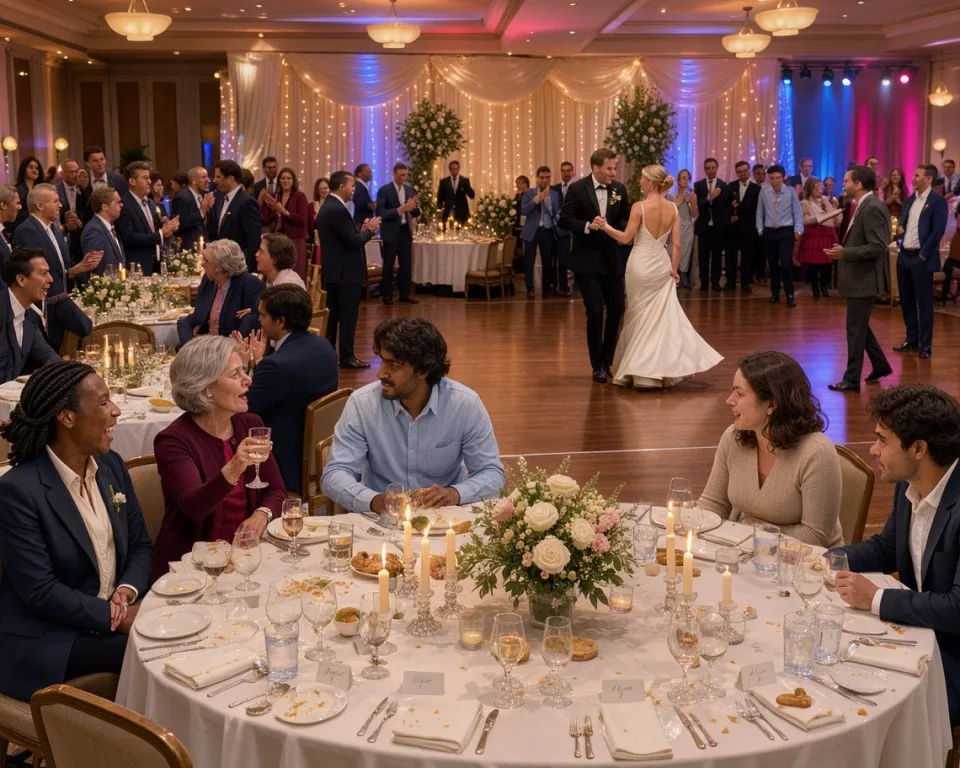
Start with a realistic guest count, then verify both seated and cocktail-style capacity before deciding that a room fits. A venue’s largest number may not show how comfortable the event will feel.
Ask for the seated limit and the cocktail-style limit. These can differ because guests need different amounts of room when seated or standing. If your guest count is still changing, use the highest realistic number for your first layout check.
Confirm both capacity limits
A room that holds 200 people can feel crowded with 200 guests if there is little space to move. Yet 20 people in a room built for 200 may feel spread out. The count alone does not tell you how the room will feel.
Ask how the venue sets its capacity. Some rooms count guests without the same table plan, service areas, or dance floor you need. Check whether the stated limit includes staff, vendors, and any space set aside for equipment.
Your guest list affects both comfort and cost. If you need help building and tracking the list, read how to create a wedding guest list. Keep your count in one place so each venue gets the same number.
Test the layout for movement and dancing
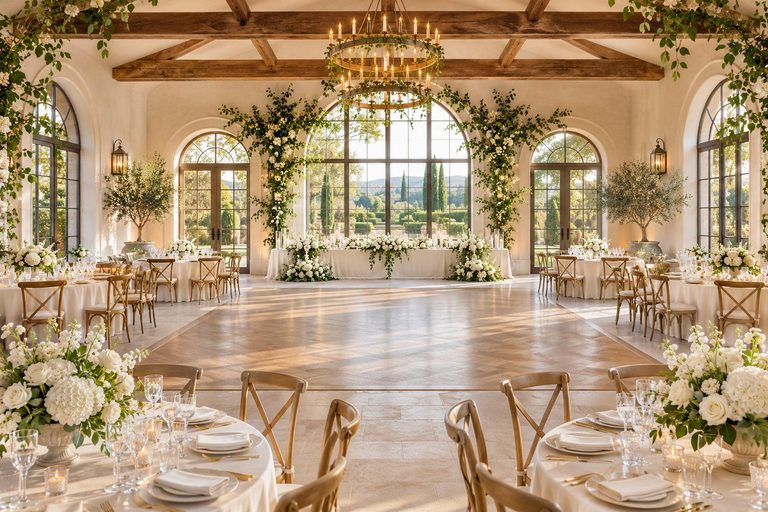
Look at the tables, bar, buffet, and dance floor as one floor plan. Bar and buffet lines can block paths if they sit near the main walkways. Guests should be able to move between seats, restrooms, and the dance floor without squeezing past chairs.
Check that the layout leaves room for people who use wheelchairs or other mobility aids. Ask how the venue can change the plan if your count grows or falls. A different table size or fewer seats may change the feel of the room.
Ask to see a layout that includes the actual table plan, service areas, and dance floor.
Compare Packages and Calculate the All-In Cost
The lowest rental fee is not necessarily the lowest all-in cost once required rentals, staff, food, and fees are added. Compare every quote using the same guest count and event needs.
A blank-slate space may give you freedom, but you may need to rent many items. An all-inclusive package can cover more, yet its price still needs a close look. Venue costs averaged $8,573 in the United States in 2026, with a typical range of $6,900-$10,300.
Compare inclusions line by line
List the rental fee, tables, chairs, linens, dinnerware, staff, catering, bar, and other rentals. Add taxes, service fees, gratuity, insurance, and overtime. A venue may bundle staff and rentals or bill for them as separate items.
Venue costs can include setup and breakdown, equipment rentals, overtime, and insurance rules. A service charge is often 18%-22%, and it may not include gratuity. In 2026, 57% of couples faced a required venue service fee.
Set aside 5%-10% of your total budget for service charges, tips, sales tax, overtime, and weather plans. That money is not extra spending room for optional décor. It helps cover costs that may not appear in the first rental price.
Price food and drink by service style
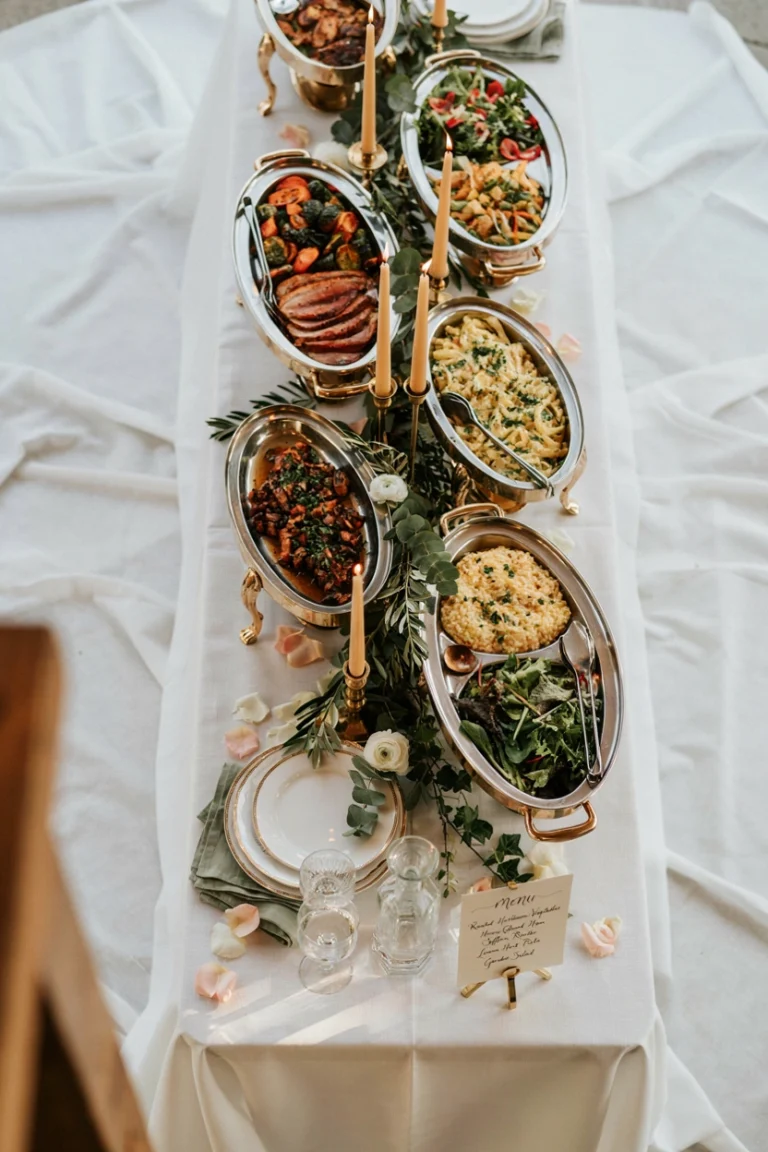
In 2026, U.S. wedding catering averaged $6,927, with a typical range of $5,500-$8,300. Catering often costs $50-$150 per person, based on menu, location, and service style. A buffet meal at $50-$90 per person may cost less than plated service.
Plated service costs $80-$150 per person, while family-style service costs $70-$120. A cocktail reception with hors d’oeuvres costs $30-$70 per person. That menu is not always a full dinner, so match the food to the time and length of your event.
For 100 guests, catering is estimated at $7,000-$12,000. Drinks, staff, and rentals may add $1,500-$2,500. Buffet or family-style service may cut labor and staff costs by 10%-20%. Compare the same menu and service when you ask for prices.
For more ways to plan a lower-cost meal, see these budget wedding meal ideas. Ask each caterer to include labor, delivery, rentals, taxes, service fees, and gratuity in its estimate.
Decide between two venues with the all-in cost
To decide between two wedding venues, add every required item to both quotes. Subtract only services you truly do not need. Keep the guest count, schedule, meal, and bar plan the same for both.
Then compare what each package gives you, not just the final number. One venue may include chairs and staff, while another may charge for them later. Request an itemized estimate for your expected guest count before comparing the headline prices.
Inspect the Space, Lighting, and Guest Flow
A useful tour follows guests and vendors through the spaces in the order they will use them. Walk from arrival to ceremony, cocktail hour, reception, restrooms, and preparation rooms.
Also walk the vendor load-in path. See whether carts and equipment can reach the event room without crossing guest areas. A clear path can make setup easier and keep busy work away from guests.

Use a wedding venue checklist on the tour
A wedding venue checklist can be a few notes on your phone, not a long form. Write down what you see in each space, then compare the same details at every venue. Check whether the ceremony and reception areas work well for their planned use.
Look at how guests move from one room to another. Notice narrow doors, steps, and places where people may gather. Confirm that restrooms and preparation rooms are easy to reach from the event spaces.
Verify accessible routes against the ADA Standards for Accessible Design, which cover access rules for public places. Ask how guests can reach the ceremony, reception, restrooms, and other key areas. A route is useful only if guests can use it throughout the event.
Assess light and photo locations
Check natural and electric light at the time your event will take place. Notice window light, ceiling color, and harsh overhead lights. A room that looks bright at noon may feel different in the evening.
Find spots for family portraits and first-look photos. Ask whether indoor photo options work if the outdoor space is not usable. Look at sightlines and open space, since a large room may have few clear photo spots.
In 2026, average spending was $4,400 for photography, $3,993 for videography, and $6,345 for flowers and décor. A room that already fits your style may need fewer added touches. See indoor wedding reception decor ideas for ways to work with a room’s look.
Ideas for indoor wedding backdrops can also help you judge the ceremony wall and sightlines. Stand in the ceremony and reception areas at the planned event time to judge light, sound, and movement for yourself.
Check Vendor Rules, Restrictions, and Weather Plans
Ask for written answers about outside vendors, event restrictions, and the actual bad-weather plan before committing. Rules can affect your costs, your chosen vendors, and the way your ceremony works.
There is no need to recite 75 questions to ask a wedding venue. Ask every question that affects your real vendors, plans, or costs. The useful questions are the ones tied to your event.
Confirm vendor and event restrictions
Ask which vendors you must use and which ones you may choose. Find out whether outside vendors bring extra fees. Some venues charge more for vendor exclusivity, security, or cleaning.
Ask about vendor load-in and load-out rules, insurance needs, and noise limits. Confirm rules for live music, alcohol, pets, candles, and décor. A rule against open flames may change your table plan or lighting choices.
Check the catering and bar rules, including how the venue handles dietary needs. Ask if you can bring your own food or drinks, or must use specific providers. Get details about what the bar includes and who serves guests.
If you want an outdoor event, check rules for power, fires, and décor first. Campground wedding ideas can depend on site rules, power access, and fire limits. Know what the venue allows before you build a plan around it.
Get the weather backup in writing
An outdoor wedding needs a named indoor or tent backup. Ask who provides the tent and what it costs. A plan that says “move indoors” is not enough if the backup room cannot hold your ceremony and reception.
Ask when the weather choice must be made and who makes it. Find out who sets up the tent or moves furniture, and whether those steps cost extra. Check the plan for rain, wind, and other weather risks at your site.
Check severe-weather alerts from the National Weather Service as your date nears. The venue should explain how it handles a warning and when staff will contact you. Confirm that the backup works for the ceremony and reception, not just as a space that exists on paper.
Review the Contract Before You Pay
A venue contract is ready to sign only when it records the rental fee, deposit, payment dates, cancellation terms, and setup and breakdown times. Read the full agreement before paying a deposit.
Deposits may be 25%-50% of the total rental fee, with the balance due closer to the wedding date. In 2026, 57% of couples faced a required venue service fee. Check whether a service charge is separate from gratuity.
Check payment and cancellation terms
Make sure the contract states the payment schedule and what happens if you cancel or change dates. Check the contracted end time and any overtime rules. Extra charges may apply if the event runs past its agreed end time.
Read the setup and breakdown times closely. Check when vendors may enter and when they must leave. Confirm any insurance rules that apply to you or your vendors.
Put every promise in writing
Add spoken promises about included items, equipment, or access to the signed contract. A promise about chairs or room access can matter just as much as the listed price. Keep the final version with your other wedding records.
Ask what unclear wording means before you sign. Phrases like “subject to approval” and “additional fees may apply” need clear limits. Do not pay until every promised inclusion and every possible extra charge is clear in the written agreement.
Conclusion
A confident choice is the venue that supports the day you want without pushing your complete budget past its limit. A good fit gives your guests enough room and gives you a clear price for the plans you chose.
Keep your final comparison simple. Use the same guest count and schedule for both venues, then check that each estimate matches the written terms. If one price is lower, confirm that it still covers the services your event needs.
Send your final two venues the same guest count and schedule, then decide only after their itemized estimates and written terms are clear.