How to Choose a Wedding Caterer and Compare Quotes
The right wedding caterer is the one whose food, service plan, and logistics fit your venue, guests, and budget. The best choice supports your whole reception, not just a menu you love.
You want your guests to enjoy dinner, and you want the day to feel easy. Food, staff, timing, and venue needs all work together, so choosing wedding catering takes more than comparing dishes or headline prices.
A service style is the format used to prepare, present, and serve food to guests. Compare the full service each provider offers, including its role before, during, and after dinner.
A clear comparison of the same event details across providers makes the decision easier.
How to Choose a Wedding Caterer for Your Budget and Needs
In 2026, the average U.S. wedding catering cost is $6,927, and a typical range is $5,500-$8,300. Use those figures as planning guides, not as a price for every guest count or service plan.
The 2026 catering cost estimate gives you a starting point, but your reception may need more or less. The guest count, menu, bar, and service hours all shape the final cost.
One 2026 budget guide estimates a total of $25,000-$45,000 for a 100-guest U.S. wedding. A separate estimate puts the average U.S. wedding cost at $36,000 in 2026.
These totals cover many wedding costs, not catering alone. Venue, attire, flowers, photography, and other parts of planning make up the full budget.
A sample wedding-budget framework assigns 24% to catering, dessert, and alcohol. Treat that figure as one planning model, not a rule for every wedding.
The same 2026 framework sets 50% for the venue and catering, 30% for photography, video, music, flowers, and decor, and 20% for other costs. Those other costs include attire, stationery, cake, transportation, the officiant, and miscellaneous expenses.
A different 50/30/20 framework divides the whole budget into needs, wants, and a buffer. It serves a different purpose from the framework that sets category shares.
The 2026 wedding cost breakdown includes estimates from different wedding-cost guides. A wedding’s location, guest count, and plans can shift its total.
Set a total catering ceiling before asking for proposals. Include food, staffing, rentals, bar needs, taxes, service fees, and any other charges.
Set a total catering ceiling
Start with the amount your full wedding budget can support, then reserve a firm maximum for catering. Leave room for costs that may not appear in a food-only price.
Alcohol can change the total, especially when you need bar staff or glassware. Rentals, taxes, service fees, and extra staff hours can add costs, too.
Keep a small buffer inside your plan for changes in guest count or event needs. That gives you a clear limit without treating an early estimate as a promise.
Use budget frameworks as planning tools
Budget percentages help you decide how to divide your money, but they do not set a required spend. You can shift the shares to match what matters most to you.
If food matters most, you may give catering more room and trim another area. If your venue includes tables, chairs, or a bar, that can affect your choices.
These estimates do not replace a quote based on your reception’s actual details. Set a maximum total that includes food, staffing, rentals, bar needs, and fees before comparing proposals.
Confirm the Venue, Guest Count, and Event Basics
A caterer can make a more useful first estimate when you bring the date, venue, guest-count range, budget, and food preferences. Those five details show the provider what your wedding may require.
Share an early headcount range, not just one guess. Add the ceremony and reception times, bar needs, venue-included rentals, and any limits on other vendors.
Before you meet, gather these five basics:
- Wedding date
- Approximate guest count
- Catering budget
- Venue policies
- Food preferences
Tell the caterer whether your guest count may change by a wide margin. An initial estimate can be adjusted when attendance and event plans become firmer.
Venue rules may limit which catering companies you can hire. Some venues use a preferred list, while others require an exclusive provider.
Ask about kitchen access and the load-in route from the delivery area. A long walk, narrow door, or distant parking spot can affect setup.
Check whether the venue has power, a prep area, refrigeration, and needed equipment. A caterer may need to bring gear if the kitchen lacks what the menu requires.
For an outdoor event, ask where food can be prepared and held. Rules about power, weather plans, or open flames may also shape the setup.
Details like these matter at a campground or other nontraditional site. Use campground wedding planning ideas to consider how site rules can affect food and dessert plans.
Ask the venue to confirm its catering policy and kitchen access before you request a final proposal.
Decide Whether to Hire a Caterer or Self-Cater
Self-catering can lower the catering invoice, but it is not automatically cheaper after you count equipment, rentals, transport, labor, and cleanup. Compare the full cost and the work your household would take on.
Self-catering shifts at least six jobs to you or your helpers. Someone must plan the menu, buy food, prepare it, transport it, serve it, and clean up.
Food costs are only one part of that plan. You may also need rentals, cooking equipment, safe transport, paid labor, and a way to handle waste.
Home preparation may not work if your venue bans outside food. A venue without refrigeration, prep space, or safe holding equipment can also make self-catering hard.
With a wedding caterer, the team can take on food preparation, delivery, serving, and cleanup. Check which jobs remain yours instead of assuming every provider handles them.
If you hire staff, ask who directs them and who answers questions during the reception. A defined event-day lead can help when the couple is busy with guests.
Hiring a food business also means the business must meet the rules that apply to its products and facility type. Those rules vary by location and type of operation.
Confirm whether a helper can give the time and skills the work needs. A friend who planned to enjoy the reception may not want to manage trays all evening.
Self-catering can fit a small, simple event with a willing team and a suitable kitchen. A larger event may need more planning, gear, and hands than you first expect.
Choose the option whose total cost and workload your household can realistically manage.
Choose a Service Style That Fits the Reception
Your service style determines whether dinner feels structured, self-directed, or built around sharing. Choose a format that works with the room, guest count, and reception schedule.
Five common formats are plated dinner, buffet, food stations, family-style dinner, and cocktail-style reception. Each changes how guests move, how staff serve, and how the meal fits the event.

Plated dinner for a structured meal
A plated dinner gives guests a set meal at their seats. It can help keep dinner on a planned schedule, especially when speeches or dances follow.
The caterer needs each guest’s meal choice ahead of time. Staff must match the right dish to the right guest and serve tables in a coordinated way.
This format can suit a formal reception with a clear dinner plan. It may take more planning when guests choose between several entrees.
Buffet and stations for guest choice
A buffet lets guests choose from dishes set along a serving line. Food stations can spread choices around the room or focus on one kind of food.
Both formats offer choice, but they can create lines or leave some dishes low before others. The room layout and the way staff refill each area matter.
A buffet is not always faster or less costly than plated service. Food volume, equipment, staff, and layout can change both speed and cost.
For ideas on carving boards, global menus, and other buffet setups, see these buffet-style reception ideas. A good fit still depends on your room and guest flow.
Food that works well on a plate may need a different setup for a buffet. Ask how the caterer will keep each station stocked during dinner.
Family-style and cocktail-style for a social atmosphere
Family-style dinner brings shared platters to each table. It can make dinner feel social, but tables need space for dishes and serving hands.
A cocktail-style reception can suit a less formal event with food served in small portions. The menu and event length must give guests enough to eat.
Think about where guests will stand, sit, and move between food areas. A tight room can make a busy station feel crowded.
Ask the caterer to suggest a format for your actual room and timeline. Match the format to the room layout and the experience you want guests to have.
Build a Menu for Your Guests and Your Wedding Style
A good menu reflects your preferences while giving guests with dietary restrictions a clear meal they can eat. Share guest needs early, then plan how the team will prepare and serve each meal.
Collect meal needs through one clear process, such as an RSVP question. Ask guests to describe allergies and other limits plainly.
Common needs include vegetarian, vegan, gluten-sensitive, and allergy-sensitive meals. Keep this list for the caterer:
- Vegetarian meals
- Vegan meals
- Gluten-sensitive meals
- Allergy-sensitive meals
Each special meal needs a plan for preparation, identification, and delivery. Ask how staff will know which dish belongs to which guest.
A label alone may not be enough for a serious allergy. Share the details with the caterer and ask how the meal will be prepared and served.
Your menu can reflect family dishes, cultural traditions, season, and wedding theme. A few familiar foods can make the meal feel more personal.
Plan for children and vendors, too. Ask whether their meals differ from guest meals and how the team will know where to serve them.
Balance rich dishes with lighter choices, and think about the whole meal together. Seasonal ingredients can help shape a menu that feels right for the date.
A small plated dish may need changes for a buffet or a larger guest count. The caterer can suggest portions and serving methods that work at scale.
If you want a lower-cost meal, review these budget wedding meal ideas for options such as pasta, barbecue, and brunch. Dessert can also take many forms, from cake to small treats.
For more dessert choices, see these wedding cake alternatives and ask how each fits your service plan. Ask the caterer to confirm how each special meal will be identified and served.
Compare Complete Proposals, Not Just Per-Person Prices
A lower per-person price is not a lower total if it leaves staffing, rentals, or cleanup outside the proposal. Compare offers with the same guest count, menu, and service responsibilities.
An itemized catering proposal can separate food, staff, rentals, bar service, delivery, setup, cleanup, and fees. A per-person headline does not tell you which costs it includes.
Separate food from full-service scope
Food-only pricing covers dishes, but may not include cooking at the venue or serving guests. Full-service pricing may include staff and event tasks, but packages differ.
Ask who handles dessert, cake service, and coffee. If you plan a cake or another dessert display, confirm who sets it out and clears it later.
These spring wedding cake ideas show how cake style and dessert choices can shape the display. Confirm whether the caterer includes cutting or serving that dessert.
Compare labor, rentals, and event hours
Compare the number of staff and the hours each proposal includes. Ask whether those hours cover arrival, setup, dinner, clearing, and cleanup.
Check whether the price includes linens, china, glassware, and buffet gear. Confirm delivery, setup, bar service, and cleanup, too.
Every major job needs an owner, even when another company handles it. Ask who will bring rentals and who will collect them after the reception.
For help comparing service scope, read this guide to the full cost of wedding catering quotes. A detailed offer makes it easier to see what each price covers.
Check fees and what can change the total
Look for taxes, service charges, administrative fees, gratuity policies, and overtime rates. These terms can mean different things, so ask what each charge covers.
Ask, “Are these charges included or separate?” Then request the answer in the proposal, not only during a call.
Compare a small shortlist of itemized offers for the same event. Keep cake service and extra hours in the comparison if you may need them.
Ask each provider to price the same menu, guest count, service format, and responsibilities.
Find and Shortlist Caterers That Fit Your Event
Start with the venue’s approved options, then add referrals and local candidates whose format matches your reception. A wedding caterer must meet your venue’s rules and the service needs of your event.
These three routes can help you find candidates:
- Recommendations from your venue or planner
- Referrals from people whose events you attended
- Online searches by area, cuisine, and service format
Ask friends about events you saw yourself, not just a name they heard once. You can ask how the food, timing, and staff felt as a guest.
For wedding caterers near me, narrow your search by travel area and venue eligibility. Confirm that a local provider can reach your site and follow its rules.
Some chain restaurants take wedding catering orders, but a food order may not include event staff. Confirm who handles delivery, setup, food holding, serving, and cleanup.
Read recent reviews for details about communication, timing, staff, food, and problem-solving. Look for repeated comments rather than relying on one glowing or unhappy review.
A caterer may offer a familiar menu but lack the staff or format your reception needs. Keep your shortlist focused on providers that can serve the event as planned.
Keep only providers that can serve your date and meet the venue’s requirements.
Check Wedding Experience and Communication
Wedding experience matters because the catering team has to fit service around the reception timeline and other vendors. The team must know when to serve food and when to pause.
Ask about cocktail hour, dinner pacing, speeches, and room changes. Those details can affect when staff prepare, clear, and move equipment.
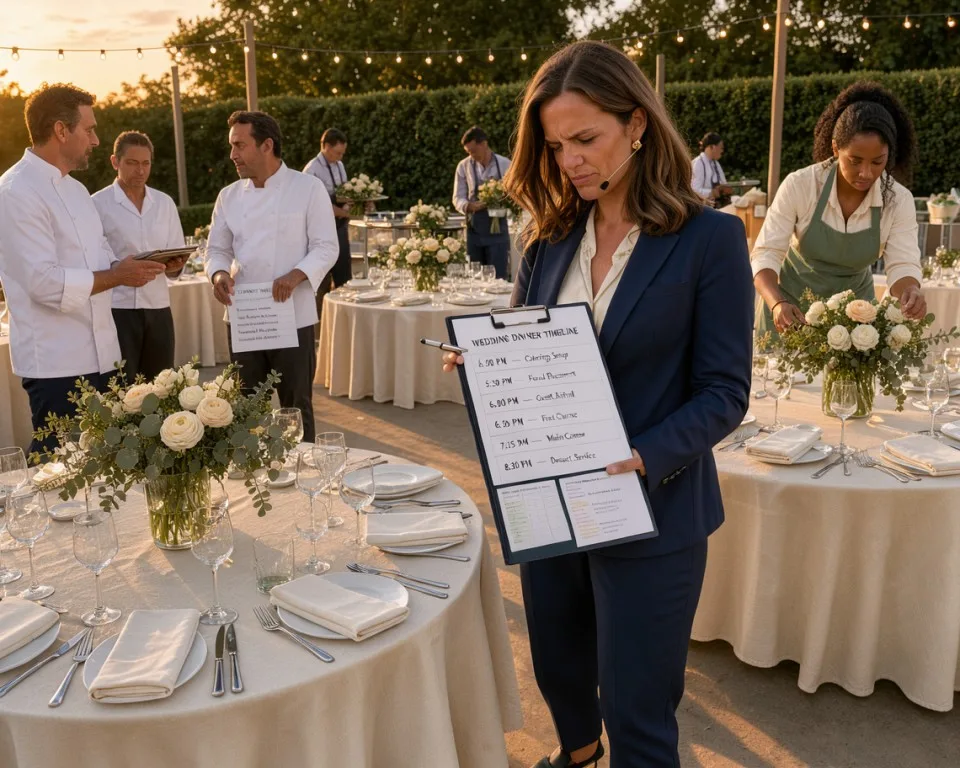
Ask how many events the caterer will serve on your date. Learn who will be assigned to your wedding if teams work at more than one site.
Find out whether the team has worked at your venue before. Ask about events of a similar size and how the staff handled that room.
Your planner, venue, photographer, and entertainment team may all need timing updates. Ask how the catering team will share key changes with them.
Confirm the planning contact and the event captain, who leads the catering team during the event. Ask who to contact if a service issue needs quick action.
Ask what happens if a key team member cannot attend. A clear backup plan can keep the service plan on track.
Pay attention to the caterer’s replies before booking. Useful answers are timely, specific to your event, and recorded clearly.
If you have a planner, clarify how the planner and caterer will share updates. Their roles may differ, so each person should know who handles the timeline.
Confirm the name and role of the person leading service on your wedding day.
Define What Full-Service Catering Includes
“Full service” can include food, staff, rentals, and cleanup, but you need the proposal to spell out the actual scope. The term does not mean the same package from every provider.
Ask whether the catering service includes menu planning, chefs, servers, and captains. Confirm whether bartenders, linens, china, glassware, and buffet equipment are included.
Ask about cocktail-hour food, dinner, setup, clearing, and cleanup. Check whether cake cutting, dessert, coffee, and vendor meals cost extra or come with the package.
A venue may provide tables and chairs, while a rental company brings dishes. Your planner or another vendor may handle decor or room changes.
Campground weddings may need extra care with power, weather plans, and fire rules. A dessert station such as a s’mores bar also needs a clear setup and safe use plan.
For seasonal dessert displays, spring cake designs and flavors can help you picture the look. Ask which team will bring and serve each dessert item.
Write down the jobs that need an owner before you sign. Include who brings food, runs the bar, sets out rentals, clears tables, and removes waste.
Do not assume the caterer will manage a task because it happens near the food. A separate vendor may own that work instead.
Ask who provides the coffee station, cake knife, serving tools, and extra plates. Small items can interrupt service when no one has packed them.
Name an owner for each task, including items that another vendor will provide.
Verify Food-Safety, Licensing, and Bar Responsibilities
Ask the caterer and venue to identify who is responsible for food-service compliance and alcohol service. Each party should know which rules and documents apply to its work.
The FDA Food Code is a model that state, local, tribal, and territorial governments use when making or updating food-service rules. It does not replace the rules that apply where your event takes place.

Food businesses must meet applicable federal, state, and local requirements. The needed licenses and permits vary by product and facility type.
Ask which permits the caterer holds for its business and the food it serves. Confirm who carries liability insurance and whether the venue needs a certificate.
Ask who is responsible for alcohol service and any required license. The venue may set its own rules for bar service, insurance, and approved staff.
Use this short checklist to confirm who owns each task:
- Food permits and licenses
- Liability insurance documents
- Alcohol service and its required license
- Venue approvals for food and bar service
Rules can differ across towns and event sites. A caterer working at one venue may need different approvals at another.
Ask the venue about insurance limits and document deadlines. Give the caterer time to provide any forms the venue requires.
Get the responsible party and any required documentation confirmed in writing.
Use the Tasting to Assess Food and Execution
Use the tasting to assess both the dishes and the caterer’s response to your questions. A tasting helps you judge flavor, portion size, and how the team handles feedback.
Tastings may happen before or after booking, at an expo, through the caterer’s restaurant, or for a fee. Ask when yours will take place and what it will include.
Confirm the tasting cost, guest limit, and dishes before you attend. Ask whether the fee will count toward a booking.
Check the food’s temperature, texture, seasoning, portion size, presentation, and balance across the menu. A rich dish may feel different beside a light side or starter.
Ask how the wedding-day version may differ from the tasting. Food prepared for many guests may need a different method or timing.
Notice whether the team listens and gives clear answers. The tasting is also a chance to see how the caterer handles a request or concern.
Ask how changes to a dish affect the event plan. A special request may need more prep time or different ingredients.
Take notes while each dish is fresh in your mind. Record what you liked, what needs work, and which meal choices matter most.
Record the adjustments you want and confirm whether they can be delivered at your guest count.
Ask Specific Questions Before You Book
Ask questions that reveal how the caterer will handle your actual date, venue, menu, and guest needs. Answers should fit your headcount and service style, not just describe a standard package.
Write down the answers that change the plan or the cost. A clear record helps keep each provider’s offer easy to compare.

Ask about availability, experience, and event leadership
Start with the date and the team’s event plan. Ask, “Are you available on our date, and how many events will you serve that day?”
Then ask, “Who will lead our event, and have you worked at our venue?” Learn who will be your planning contact and who will lead service.
Ask about past weddings with a similar guest count. A team that knows the room may spot timing or setup needs sooner.
Ask about menu flexibility, dietary meals, and tastings
Ask, “How customizable is the menu, and how do you handle dietary restrictions and allergies?” Look for a clear plan for special meals and guest service.
Ask, “When is the tasting, what does it include, and what does it cost?” Confirm how many dishes and guests the tasting covers.
If you want a family recipe or seasonal dish, ask how the team can adapt it. Find out whether that change affects prep or the menu price.
Ask about staffing, bar service, and charges
Ask, “How many staff members will be present, and what bar service is available?” The answer should fit your guest count and room.
Ask which taxes, fees, gratuities, cake charges, or overtime costs are separate. Ask for each answer in writing if it changes your total.
Ask who can approve a change during the reception. The event captain may need a clear way to reach you or your planner.
Write down any answer that changes the scope or total cost so it can be included in the proposal.
Read the Contract Before You Sign
Sign only when the written agreement matches the service, timing, and costs you discussed. The contract should state the menu, guest-count deadline, service hours, responsibilities, fees, and payment terms.
Read the menu and substitution rules closely. Check how the caterer may change a dish if an ingredient becomes unavailable.
Confirm the deadline for your final guest count and menu changes. Check setup and breakdown hours against the venue schedule.
Make clear who supplies rentals and decor. A contract should name the party responsible for each item, even when another vendor provides it.
Review the payment schedule and when each payment is due. Read the terms for cancellation, postponement, or rescheduling before paying a nonrefundable amount.
Service charges, administrative fees, and gratuity are not the same thing. Ask what each charge covers and whether the contract includes it.
Check how the caterer bills overtime if service runs late. A speech or room change can push dinner past its planned end.
Keep a copy of the signed agreement with your wedding plans. Share the relevant schedule and contact details with your planner.
Resolve any verbal promise or unclear charge before you pay.
Spot Red Flags in a Catering Proposal
Pause if the proposal leaves you guessing about who will do the work or what the price covers. A few gaps can be fixed, but unclear plans need answers before you commit.
Watch for these five warning signs:
- No itemized proposal
- No review of venue requirements
- Vague staffing details
- Casual handling of dietary needs
- Important promises left verbal
A proposal without itemization makes it hard to see what the price covers. Ask for clear costs and task details.
A provider that has not reviewed the venue may miss access or setup limits. A visit still to be scheduled is a fixable gap if the caterer explains the plan.
Vague staffing can leave you unsure who will serve, clear, or lead the team. Ask for the planned roles and hours.
Casual talk about allergies can put guests at risk. The caterer should explain how it will prepare and serve those meals.
Promises left out of writing may be forgotten or disputed later. Ask that any important change become part of the proposal or contract.
Unclear ownership of rentals or cleanup can leave work for you after the event. Ask which company brings, removes, and stores each item.
Undefined fees or conditions can make the stated total hard to judge. Ask what may change the price and when that change could happen.
A provider that cannot explain its plan is a stronger concern than a task not yet booked. Do not commit until the caterer can resolve each concern in writing.
Compare Finalists and Choose the Best Fit
The best fit is the finalist whose menu, staff plan, venue approach, and full proposal match your actual reception. Compare two or three providers using the same event details.
Check these five practical areas: food fit, service format, staffing and coordination, venue readiness, and complete cost. Include your guests’ needs in each comparison.
A formal plated reception may need steady pacing and assigned meal service. A relaxed buffet or cocktail-style event may need more focus on room layout and guest flow.
Use the same guest count, menu, hours, and responsibilities for each finalist. That keeps one offer from looking cheaper because it covers less.
Think about how each team will handle the room during busy moments. A good explanation connects the service plan to your timeline and guest count.
Compare more than the food you tasted. The team must also communicate well, follow venue needs, and explain who leads the event.
Choose the provider that can describe how the plan will work on your wedding day. A clear fit matters more than one attractive price or dish.
Keep the written proposal and event lead’s contact details with your wedding planning documents.
Conclusion
Choose the team that can make your menu work with the venue, guest needs, and reception plan. The strongest choice pairs food you want with a team that can serve it well for your guest count.
Ask your finalists to price the same event details so you can compare full service, not just food. Before signing, ask your preferred caterer to put the full menu, responsibilities, timeline, and total charges in writing.