

55 Winter Wedding Bouquets
Winter wedding bouquet ideas are all here, from snowy whites and moody jewel tones to evergreen, dried, and budget-friendly picks. Scroll, save your favorites, and steal the details your florist will love.
This post may contain affiliate links, please refer to privacy policy for more information.
Classic White and Ivory Winter Wedding Bouquets
1. White Anemone and Lily of the Valley Bouquet
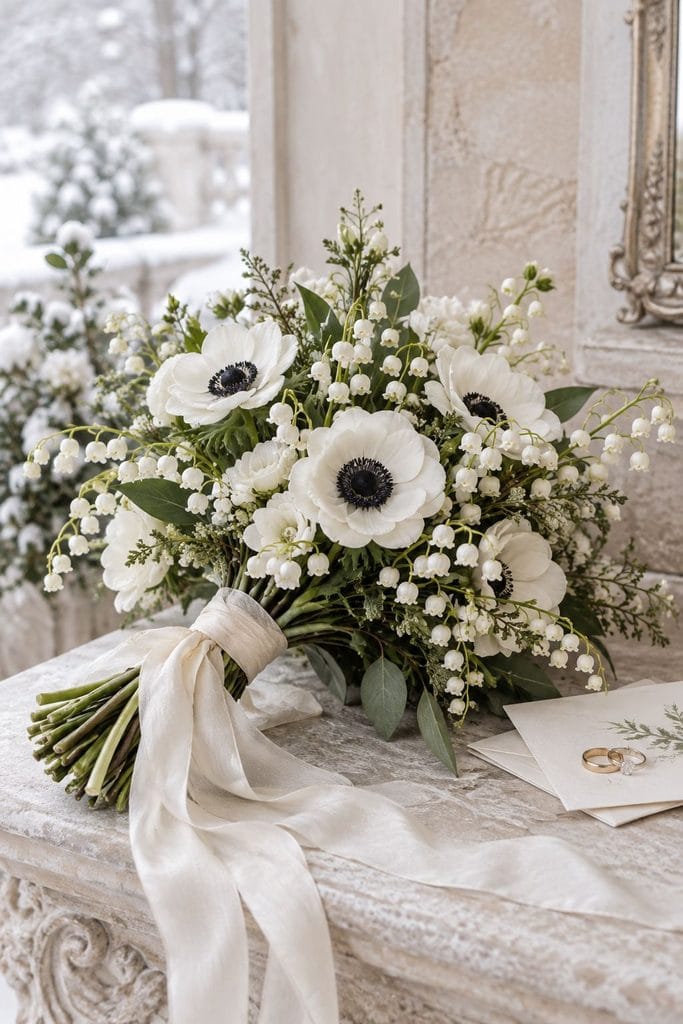
Those inky black anemone centers look like tiny ink drops on pure white petals, and the lily of the valley tucked between them smells like a snow day. It’s delicate and a little bit vintage, so keep the wrap simple with an ivory silk ribbon and let the contrast do the talking.
2. Ivory Rose and Silver Dollar Eucalyptus Cascade

Silvery eucalyptus leaves tumble past creamy roses like frosted branches after an ice storm. Ask your florist to keep the cascade on the shorter side, around 12 inches, so it photographs beautifully without competing with your dress.
3. All-White Amaryllis Statement Bouquet
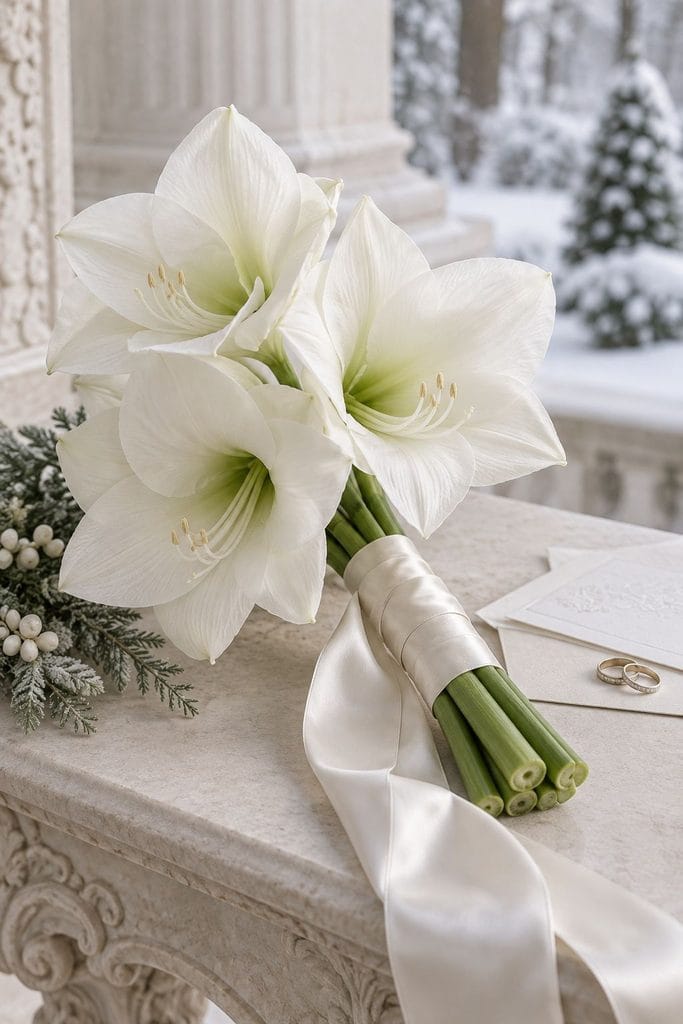
Three or four trumpet-shaped stems are all you need here. Each bloom is roughly the size of a salad plate, so it wins the drama contest with barely any greenery, and your florist can support the hollow stems so nothing droops during the ceremony.
4. Paperwhite Narcissus and Snowberry Hand-Tie

Clusters of tiny paperwhites smell like someone opened a window onto a spring morning in January. Puffy snowberries add a little bounce, and the whole thing stays petite (the scent is strong, so sniff-test it if you’re sensitive).
5. Stephanotis and Ivory Rose Bridal Bouquet
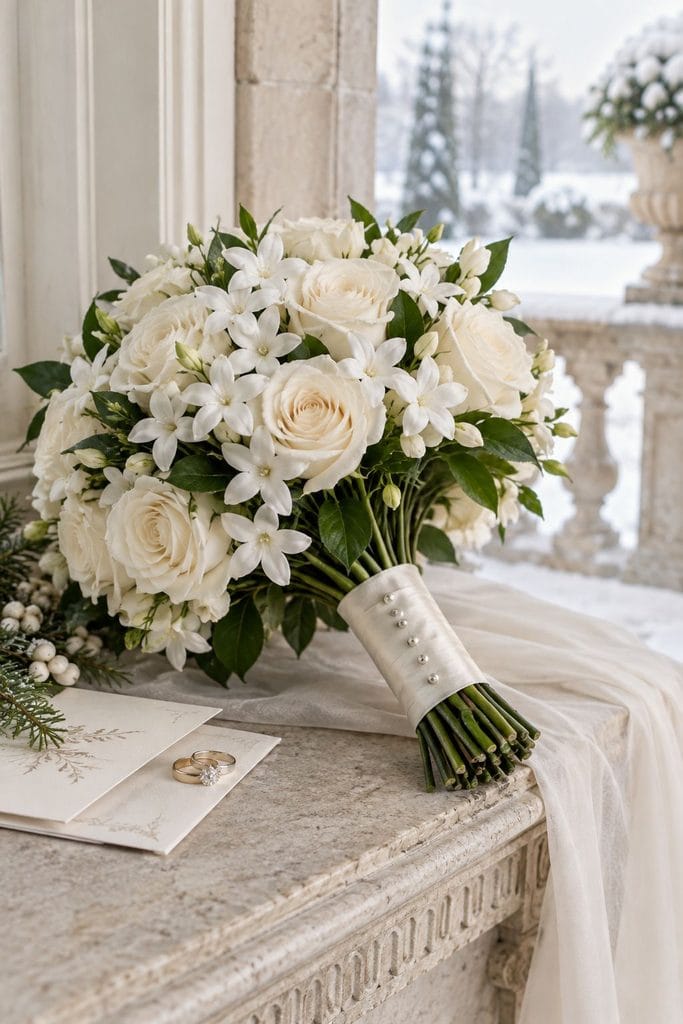
Waxy stephanotis blooms look like little stars, and clustered with ivory roses they give you the polished, old Hollywood bouquet everyone pins for a reason. Stephanotis bruises at a touch, so have your florist wire each bloom for a flawless finish.
6. Christmas Rose Hellebore Garden Bouquet
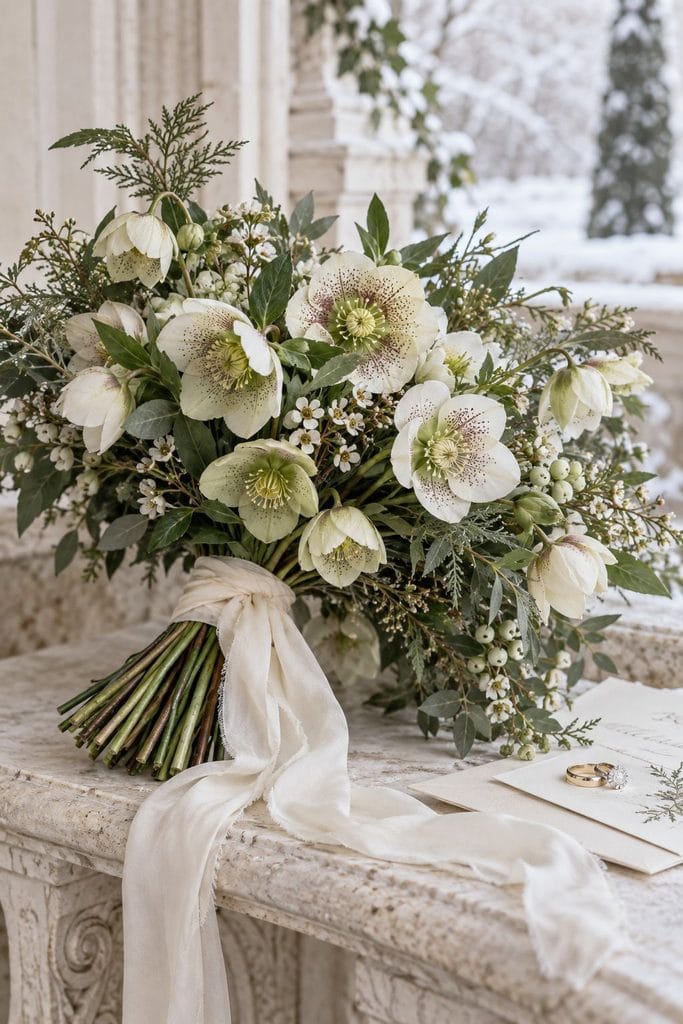
Nodding, freckled hellebores have a just-picked-from-the-garden look no other winter flower can match. They’re fussy once cut, so ask your florist to sear the stems and keep the bouquet in water until the very last minute.
7. Pearl-Pinned White Calla Lily Bouquet

Smooth calla lilies curve like little satin trumpets, and a scatter of pearl-headed pins down the stems adds a quiet sparkle. Sleek and simple, this one loves a sculpted crepe gown.
8. Ivory Orchid Cascade with Trailing Jasmine Vine
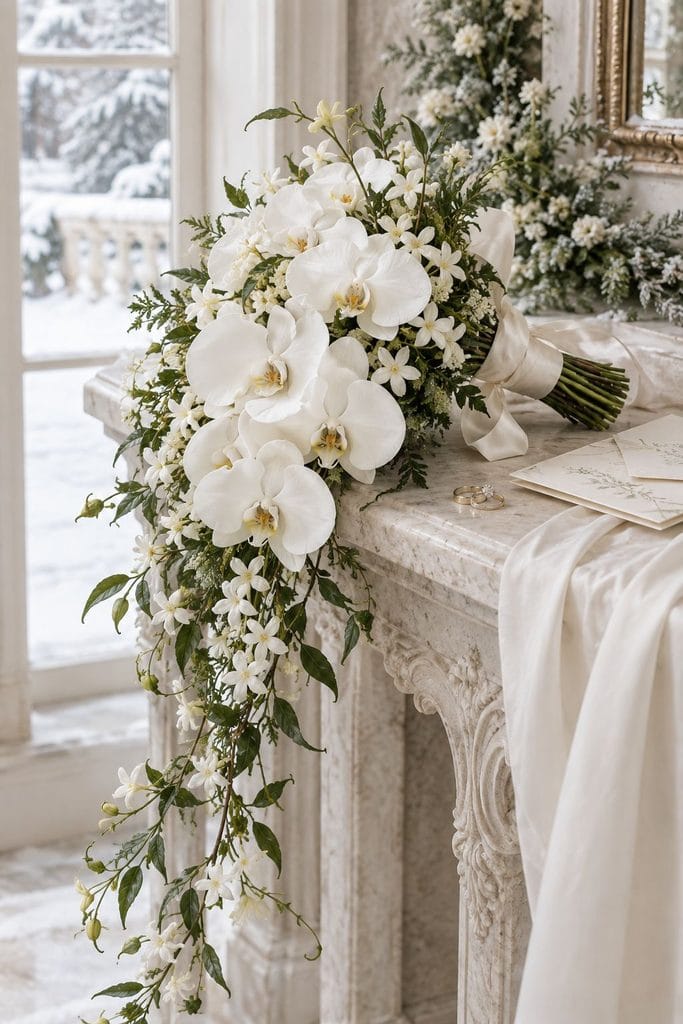
Ivory phalaenopsis orchids arch in a graceful waterfall while a curling jasmine vine weaves through like frost on a windowpane. Orchids last a long time once cut, so this bouquet stays fresh from morning prep through the last dance.
Moody Jewel Tone Winter Wedding Bouquets
9. Merlot Rose and Plum Anemone Bouquet
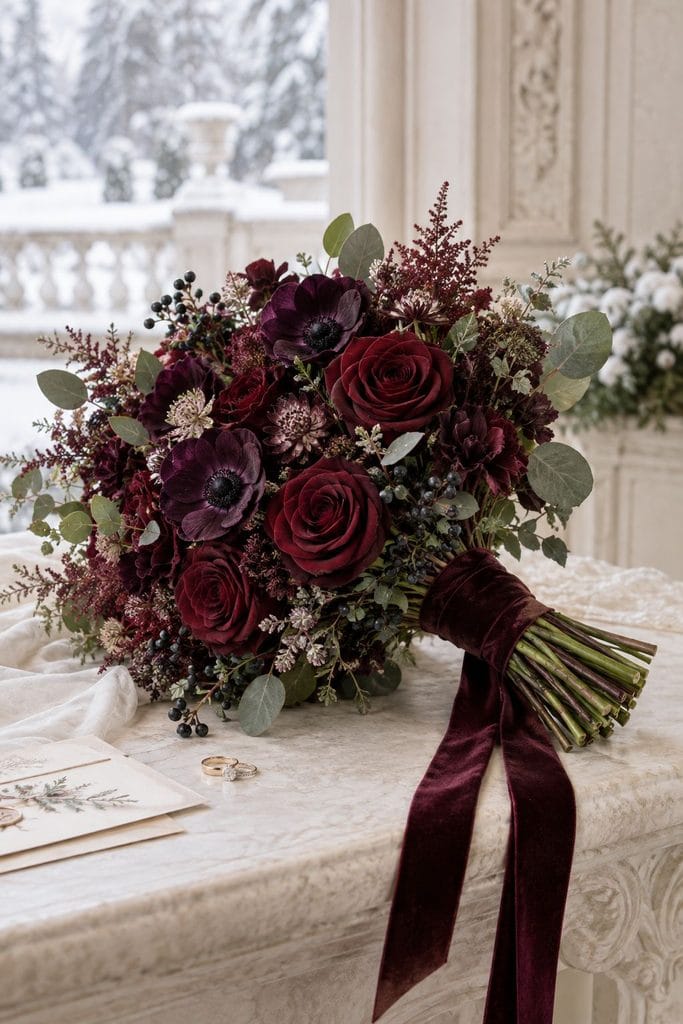
Deep wine roses and plum anemones melt into each other like a glass of red on a candlelit table. Wrap the stems in a slightly darker velvet ribbon and the whole bouquet looks like it cost twice as much.
10. Emerald Greenery and Crimson Rose Bouquet
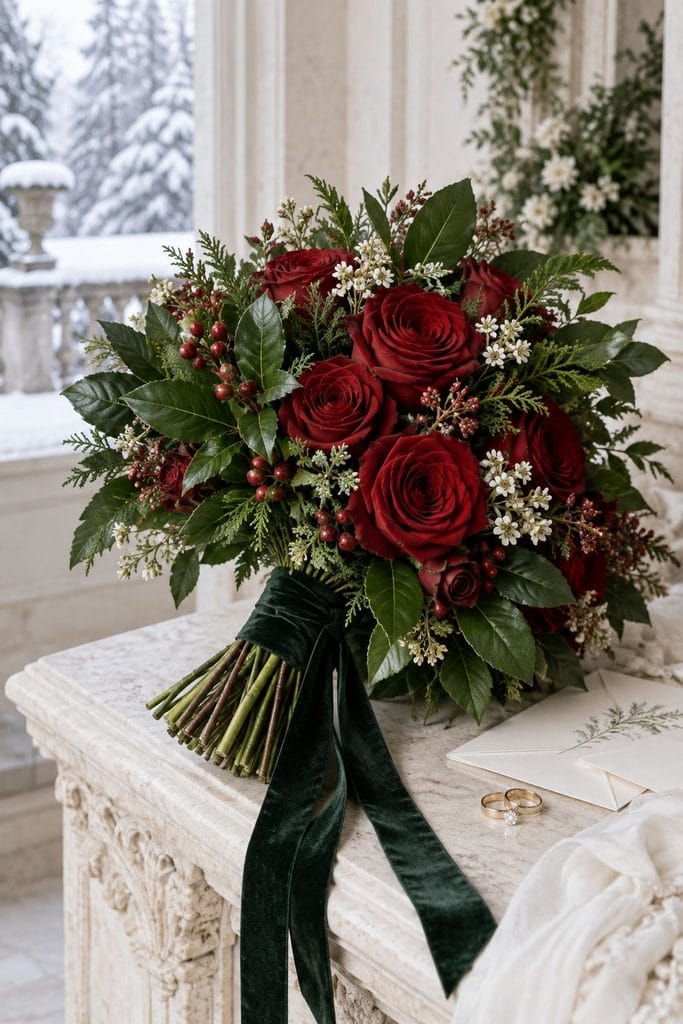
Glossy emerald leaves frame a handful of crimson roses, giving you a Christmas-card palette without going full holiday. Choose leaves with real texture, like camellia or laurel, so the greens feel lush instead of like filler.
11. Sapphire Delphinium and Blue Hydrangea Bouquet

Blue is the rare winter shade that feels icy and rich at the same time. Tall delphinium spires and puffy hydrangea heads layer every tone from midnight to periwinkle, and since hydrangea is thirsty, mention it to your florist for a fresher look all day.
12. Black Baccara Rose and Smoke Bush Bouquet
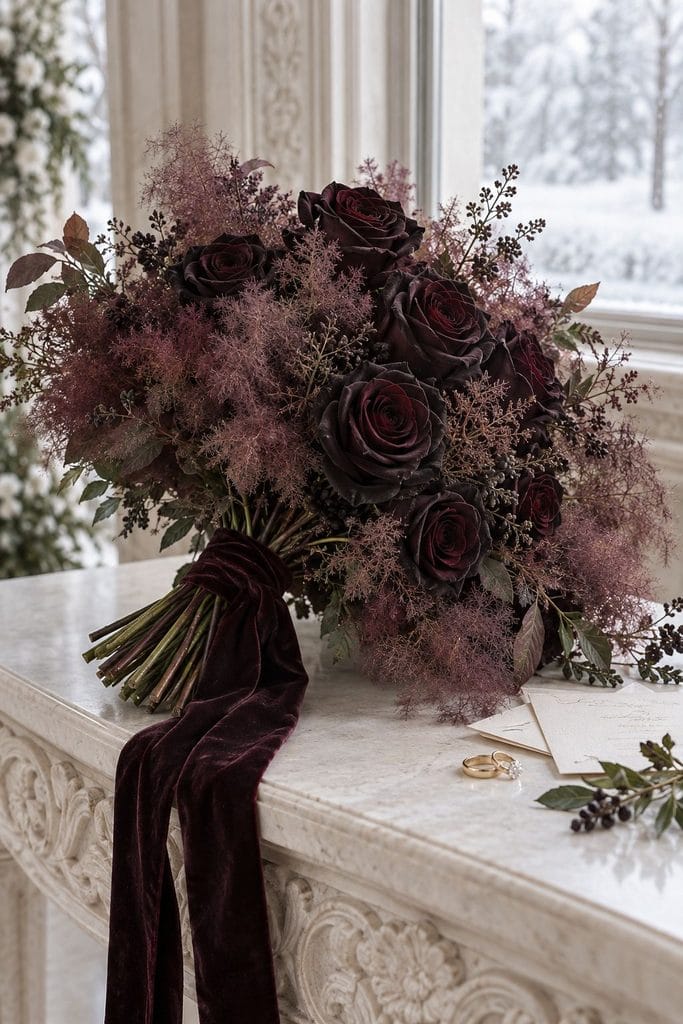
Baccara roses look almost black in low light, and wispy smoke bush foliage adds a misty, gothic edge. It’s a dramatic pick for evening ceremonies and candlelit venues.
13. Plum Ornamental Kale and Dusty Purple Rose Bouquet

Ruffled ornamental kale looks like an oversized rose in shades of plum and cream, and it’s tough enough to shrug off the cold. Pair it with dusty purple roses for a bouquet that’s quirky, sturdy, and totally unexpected.
14. Pomegranate and Red Hypericum Berry Bouquet
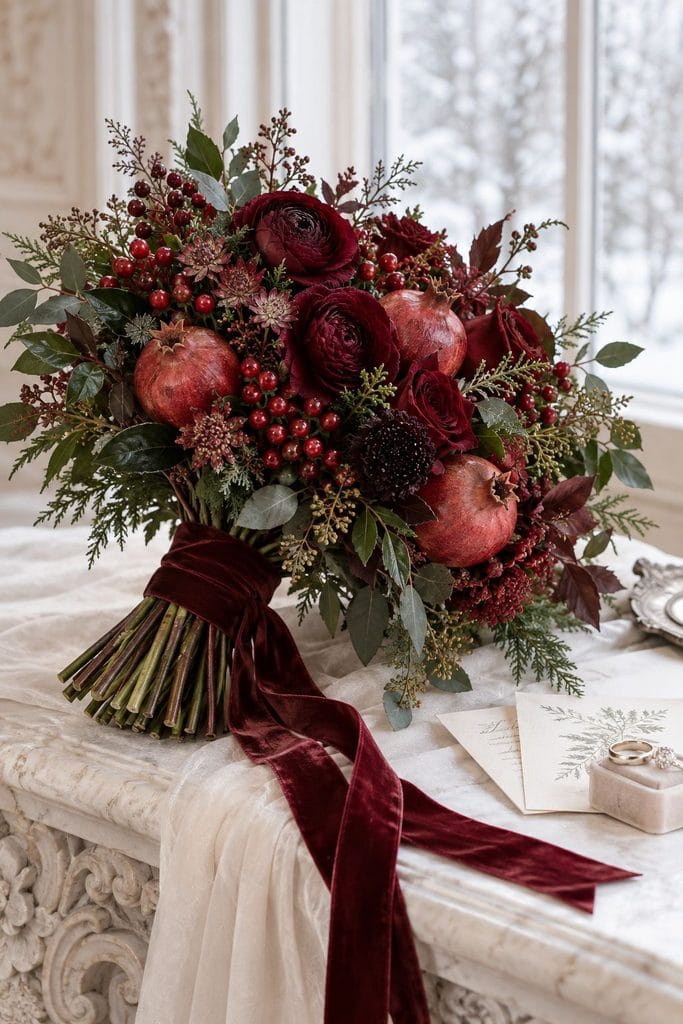
Wired pomegranates bring a jolt of glossy red, and clusters of hypericum berries add jewel-like pops. Nothing here is delicate, which makes it a great fit for a rustic barn wedding.
15. Peacock Teal and Copper Rose Bouquet

Copper spray roses glow against blue-green foliage like a sunset over a frozen lake. Add teal-toned seeded eucalyptus or a few feathers to tie the palette to your bridesmaid dresses.
16. Queen of Night Tulip Bouquet

Velvety near-black tulips in a tight, sleek bunch look modern and moody. Forced tulips are easy to find in winter, and they keep opening throughout the day, so don’t be shocked if they relax into a softer shape by the reception.
How to Choose the Right Winter Wedding Bouquet Style
Not sure which direction to go? This quick guide matches each style to the kind of wedding it shines at, plus how it handles chilly weather.
| Style | Best For | Budget | Holds Up in Cold |
|---|---|---|---|
| Classic White and Ivory | Formal ceremonies, churches, ballrooms | $$ to $$$ | Moderate |
| Moody Jewel Tones | Evening weddings, candlelit receptions | $$ | Moderate |
| Evergreen and Woodland | Outdoor, cabin, and mountain weddings | $ | Excellent |
| Textured, Dried and Seeded | Boho weddings and keepsake lovers | $ to $$ | Excellent |
| Romantic Blush and Pastel | Indoor garden-style ceremonies | $$ | Delicate |
| Modern and Minimalist | Courthouse, gallery, and city weddings | $ to $$ | Varies by flower |
Evergreen and Woodland Winter Wedding Bouquets
17. Cedar and White Berry Forest Bouquet
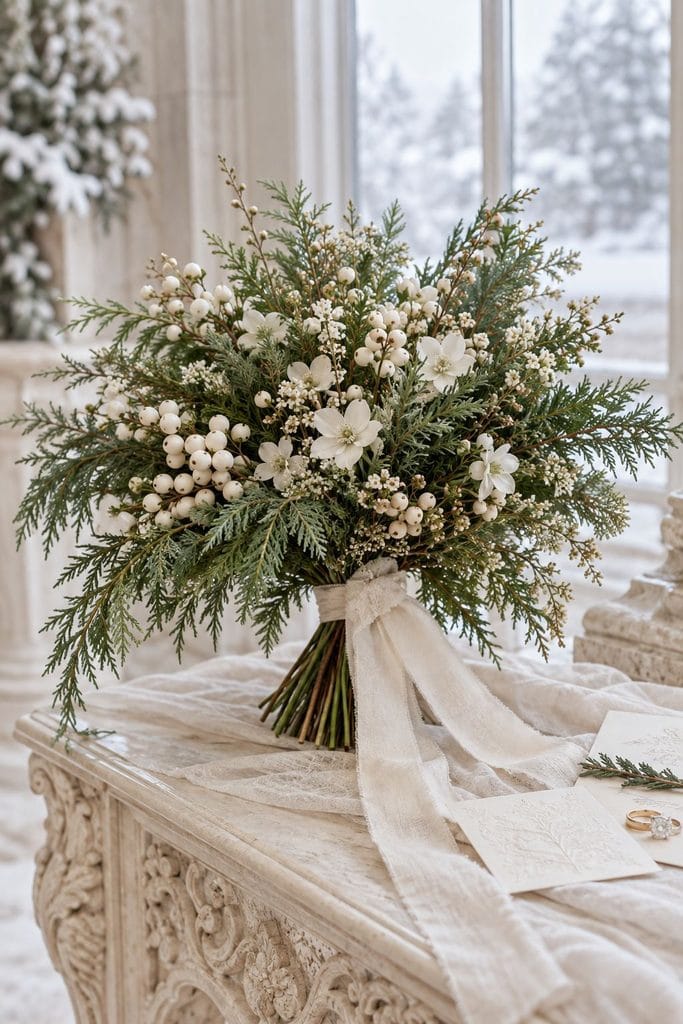
Feathery cedar boughs and pale berries give this bouquet a fresh-cut-forest scent that beats any candle. It’s lightweight and long lasting too, since evergreens stay perky for days.
18. Blue Spruce and Pinecone Bouquet

Frosty blue spruce tips and wired mini pinecones make a bouquet that reads pure mountain lodge. Keep the shape compact and wrap the stems in soft velvet so prickly needles don’t snag your dress.
19. Rosemary and Thyme Herb Bouquet

A bundle of rosemary, thyme, and sage is fragrant, silvery, and completely unexpected. Rosemary has long been tied to remembrance and fidelity, and guests can pluck a sprig afterward as a little keepsake.
20. Juniper Berry and Seeded Eucalyptus Bouquet

Dusty blue juniper berries and round seeded eucalyptus create a cool, hazy palette that looks like winter fog. It’s the ideal base for an all-greenery bouquet that still feels styled and intentional.
21. Holly and Ivy Traditional Bouquet
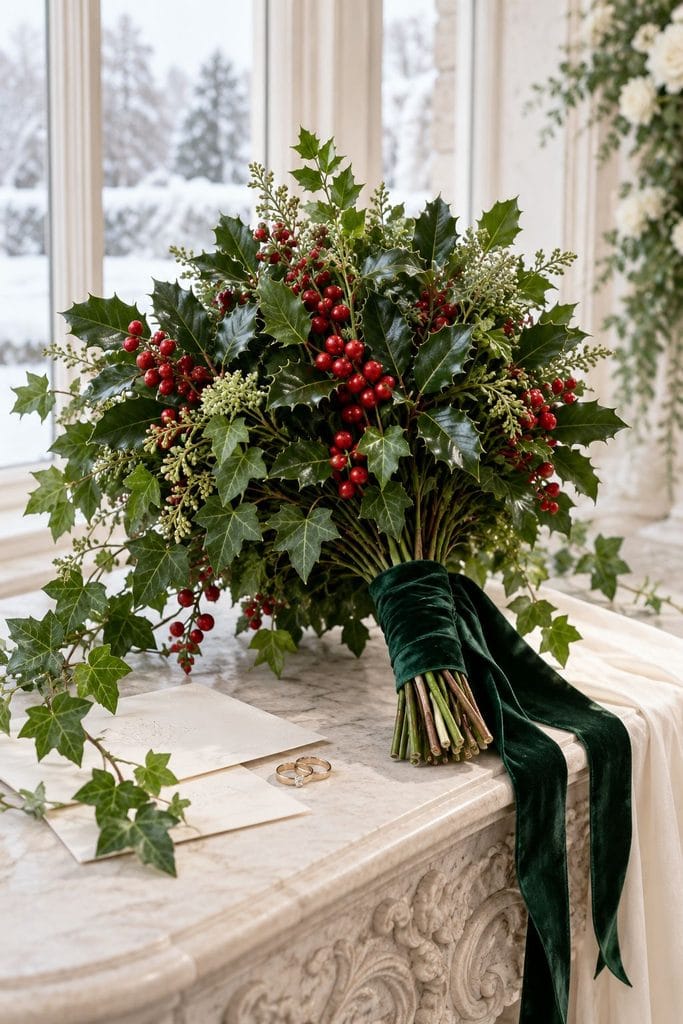
Spiky holly, trailing ivy, and bright red berries are as old-school as wedding traditions get. Have your florist snip the prickliest leaves near the handle so nobody gets poked in the hug line.
22. Mistletoe and Winter Greens Bouquet

Round mistletoe sprigs mixed with soft greens make a bouquet that practically begs for a kiss at the altar. The white berries are toxic if eaten, so skip this one if little ones or pets will be around after the wedding.
23. Birch Branch and Moss Wildwood Bouquet
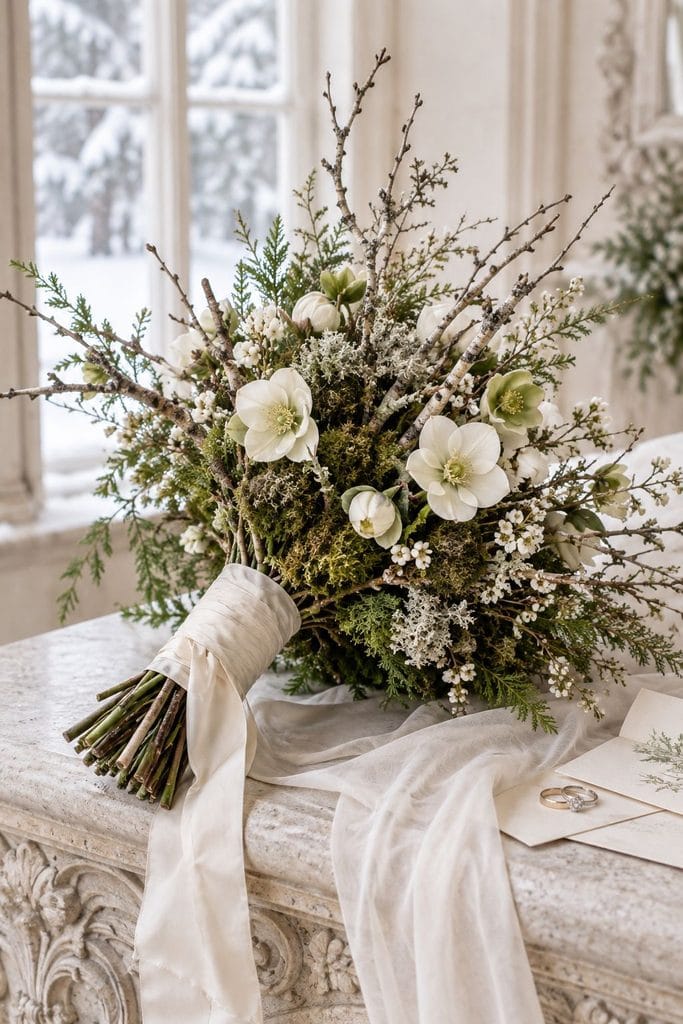
Papery white birch twigs and cushions of green moss, dotted with lichen, look like they came from a fairy-tale walk. It’s earthy, sculptural, and best for a bride who wants a barefoot-in-the-woods mood.
24. Magnolia Leaf and Cotton Boll Bouquet
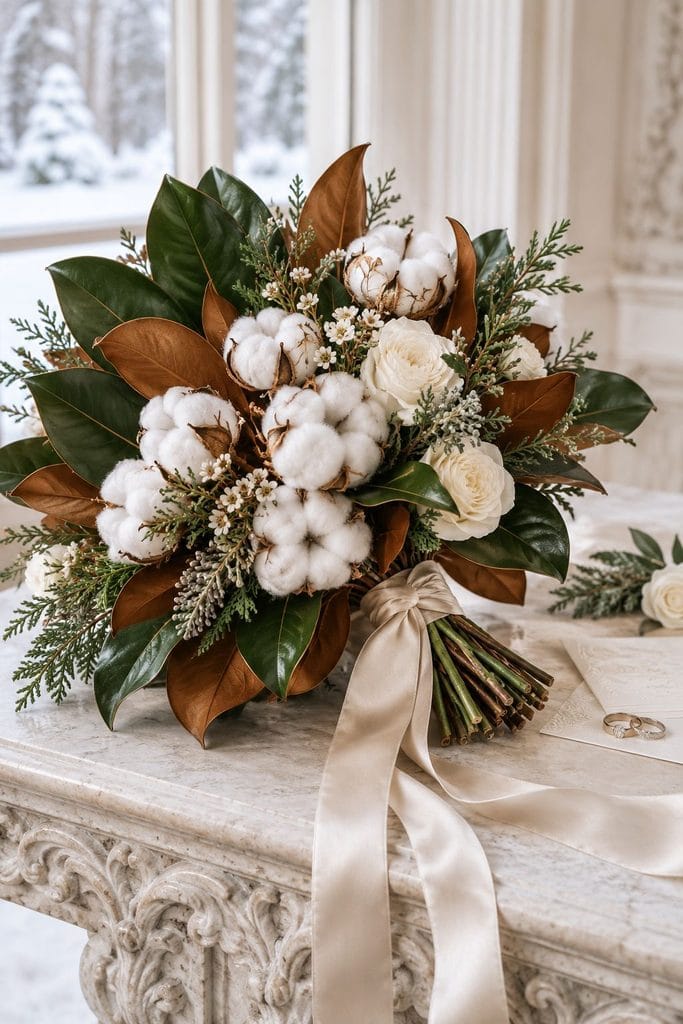
Glossy, copper-backed magnolia leaves next to fluffy cotton bolls are a Southern winter classic. The shiny-versus-soft contrast feels fresh, and it costs a fraction of a full floral bouquet.
Textured, Dried and Seeded Winter Wedding Bouquets
25. Bleached Pampas and Bunny Tail Grass Bouquet

Feathery pampas plumes and soft bunny tails look like a cloud you can hold. It’s the ultimate boho winter look, and because everything is dried you can make it weeks ahead with dried pampas grass and keep it forever.
26. Wheat and Rust Chrysanthemum Bouquet

Golden wheat stalk bundles and rusty spray chrysanthemums bring a harvest glow to a cold-weather wedding. Warm and textured, it pairs perfectly with wood tables and leather details.
27. Winterberry and Bare Branch Bouquet
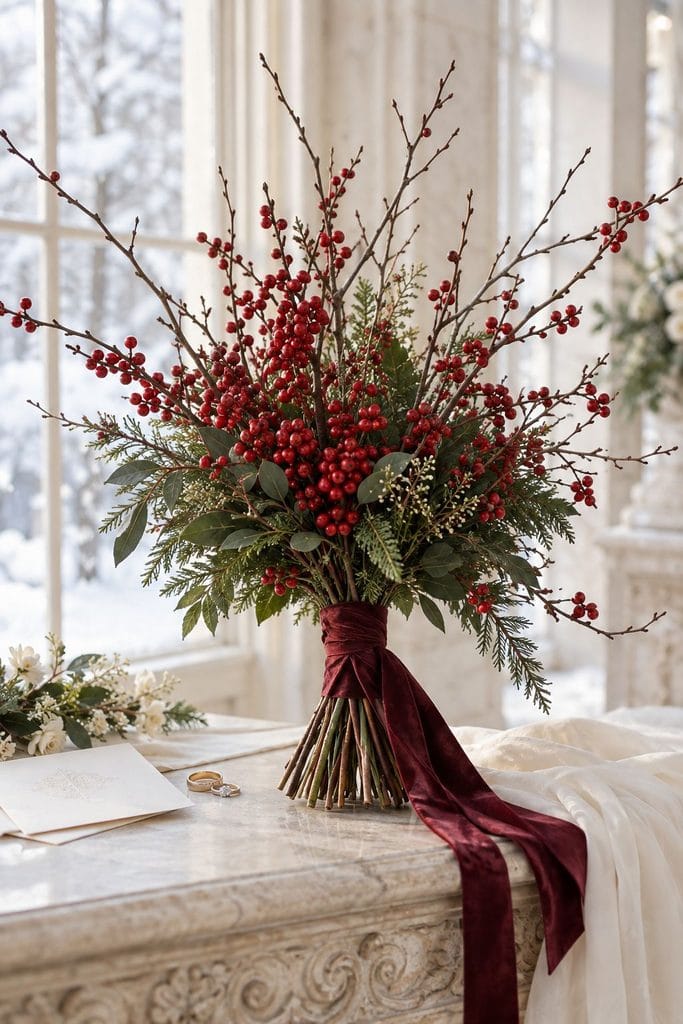
Bright red winterberry stems popping off stark bare branches look striking against snow. It’s minimalist yet festive, and it photographs like an oil painting when the light is low.
28. Lotus Pod and Poppy Pod Dried Bouquet
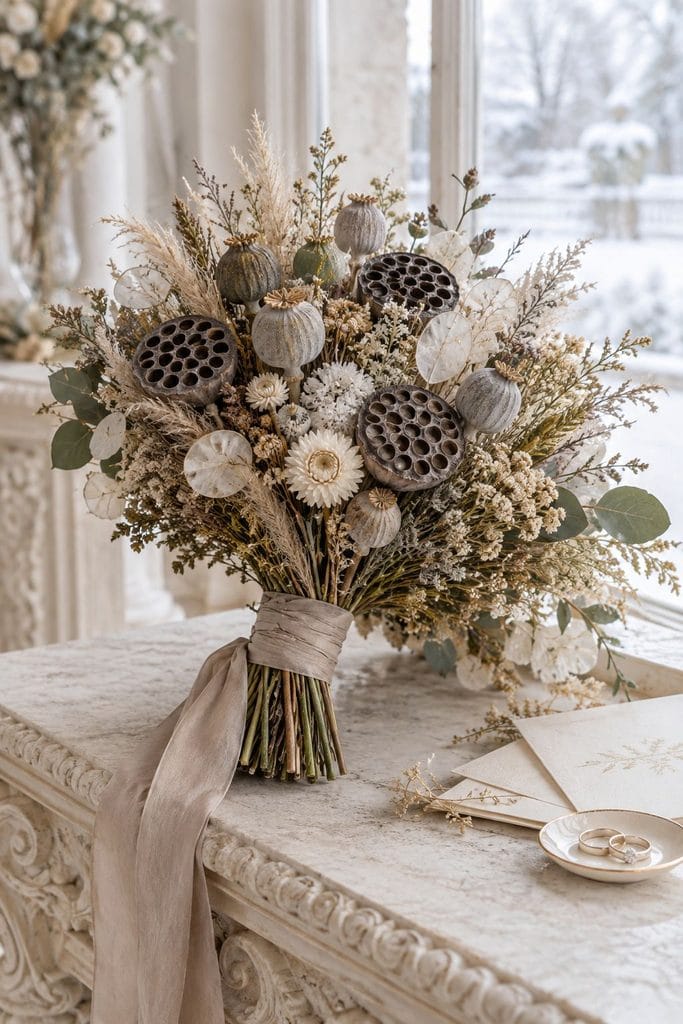
Sculptural lotus and poppy pods in sage, tan, and gray read like a piece of art. It’s modern, textural, and doubles as a display piece long after the honeymoon.
29. Dried Orange Slice and Cinnamon Stick Bouquet
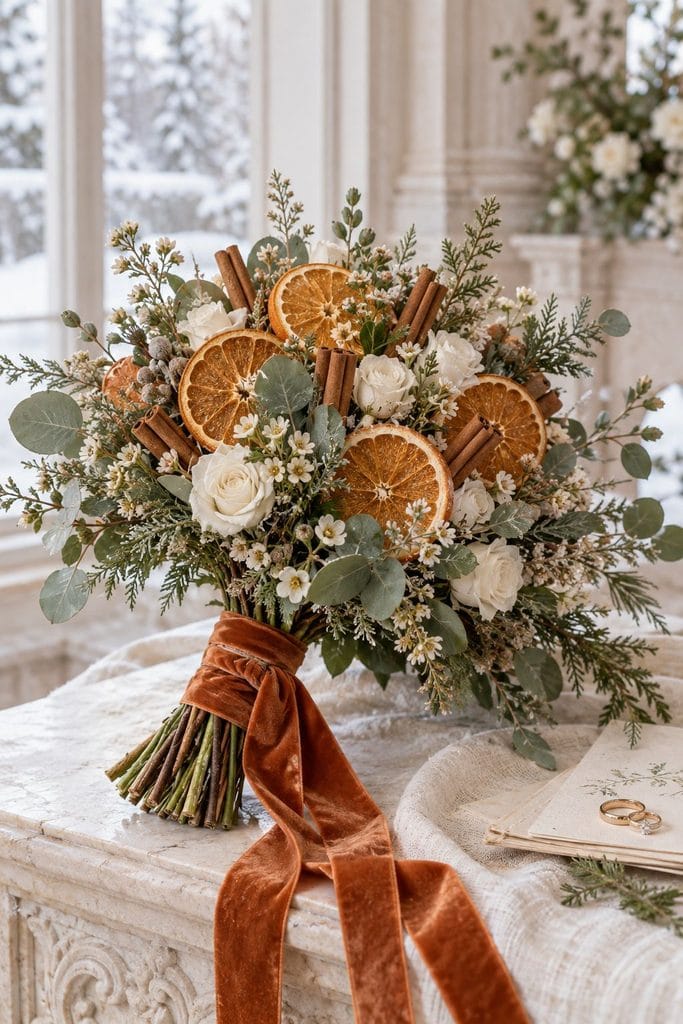
Sunny dried orange slices, cinnamon sticks, and sprigs of eucalyptus smell like a holiday kitchen. It’s playful and festive, and a natural fit for a December wedding.
30. Protea and Banksia Winter Bouquet

Proteas and banksia have spiky, prehistoric shapes and are sturdy enough to last through cold weather. Go with blush, cream, and green for a bold bouquet that dries beautifully afterward.
31. Ostrich Feather and Dried Flower Bouquet

Soft ostrich plumes mixed with dried flowers create a bouquet that moves when you walk, like snowfall in slow motion. Tuck in a few ivory blooms for balance so it doesn’t tip into costume territory.
Romantic Blush and Pastel Winter Wedding Bouquets
32. Blush Garden Rose and Dusty Miller Bouquet
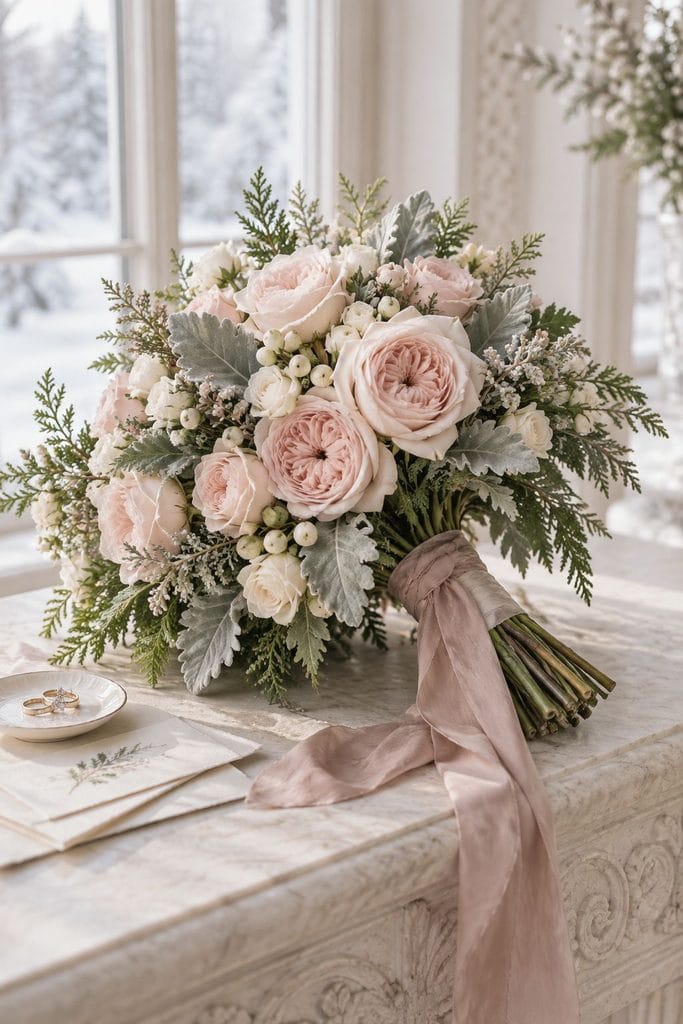
Silvery dusty miller leaves have a velvet texture that makes blush garden roses look even softer. It’s a romantic, understated choice that works for both church and ballroom weddings.
33. Dusty Blue Thistle and Cream Rose Bouquet

Spiky sea holly in dusty blue keeps a cream rose bouquet from feeling too sweet. Prickly, silvery, and a little wild, it’s a great pick for a bride who wants pretty with an edge.
34. Lavender Sweet Pea and Freesia Bouquet

Sweet peas and freesia are ruffled and fragrant, and they bring a spring-like softness into January. They’re delicate, so ask your florist to keep the bouquet hydrated with a water source until the ceremony.
35. Peach Lisianthus and Champagne Rose Bouquet

Creamy peach lisianthus and champagne roses glow like candlelight, which is a lovely trick in gray winter light. This warm neutral suits every dress shade, from bright white to deep ivory.
36. Mauve Carnation and Ruffled Tulip Bouquet
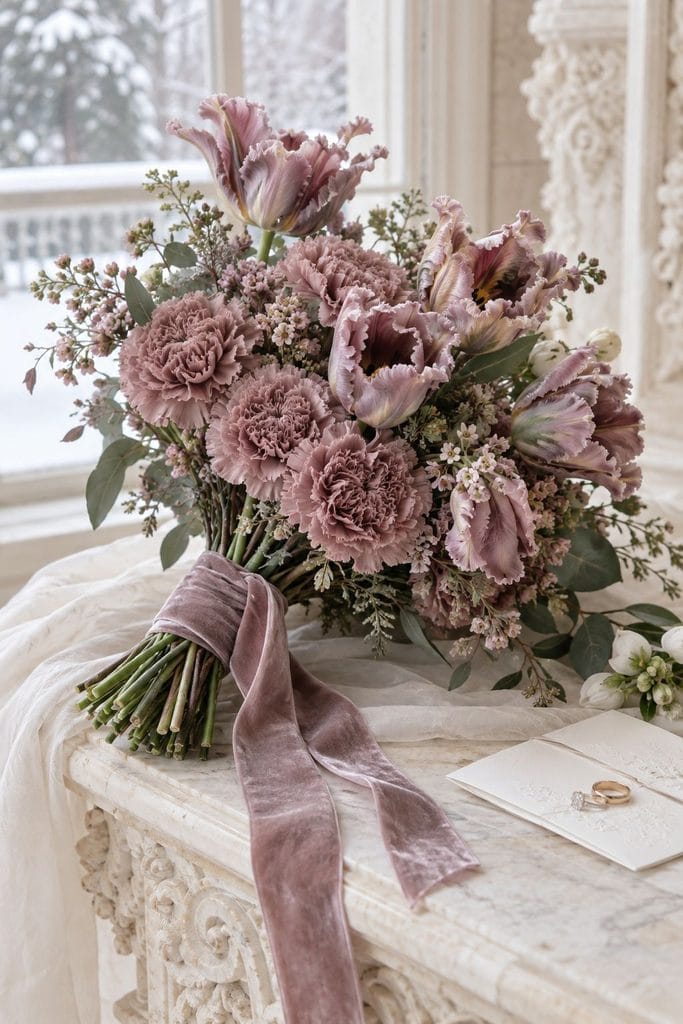
Carnations get a bad rap, but in a big, frilly bunch of mauve they look plush and vintage. Ruffled tulips add height and movement so the whole bouquet feels less flat.
37. Pale Pink Cherry Blossom Branch Bouquet

Forced cherry blossom branches bring a peek of spring into late winter, so this one is best for February and March weddings. Airy branches and puffs of pale petals feel like a watercolor painting, especially against snow.
38. Frosted Lilac Stock Bouquet
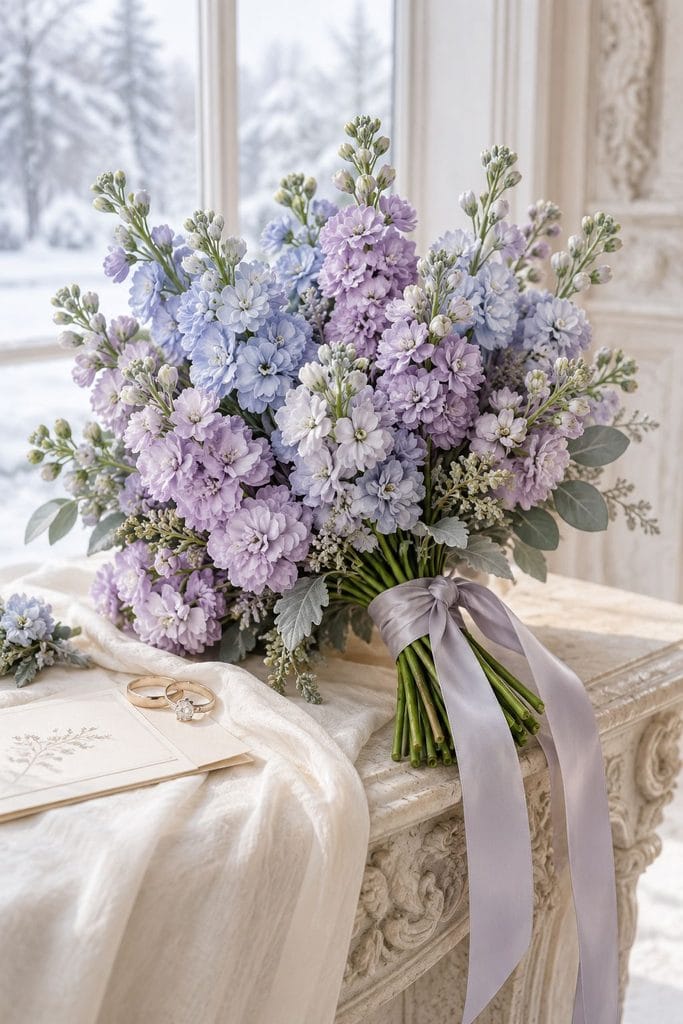
Stock has a spicy-sweet scent and a dense, spiky shape that makes a bouquet feel full without a big price tag. In icy lilac and powder blue, it’s a soft, wallet-friendly choice.
Winter Wedding Bouquet Color Combinations That Always Work
Picking a palette first makes every other decision easier. These pairings look gorgeous in winter light and are easy for most florists to source.
- Snow and Sage: White anemones or roses with soft gray-green eucalyptus for a calm, airy look.
- Burgundy and Blush: Deep wine blooms softened with pale pink for romance without the sugar rush.
- Navy and Silver: Blue delphinium with silvery foliage for a frosty, formal feel.
- Emerald and Gold: Rich greenery with gilded berries for an elegant, festive glow.
- Dusty Blue and Cream: A gentle, timeless pairing that flatters nearly every dress.
- Plum and Copper: A moody, warm combination that shines in candlelight.
Modern and Minimalist Winter Wedding Bouquets
39. Anthurium and Green Cymbidium Bouquet
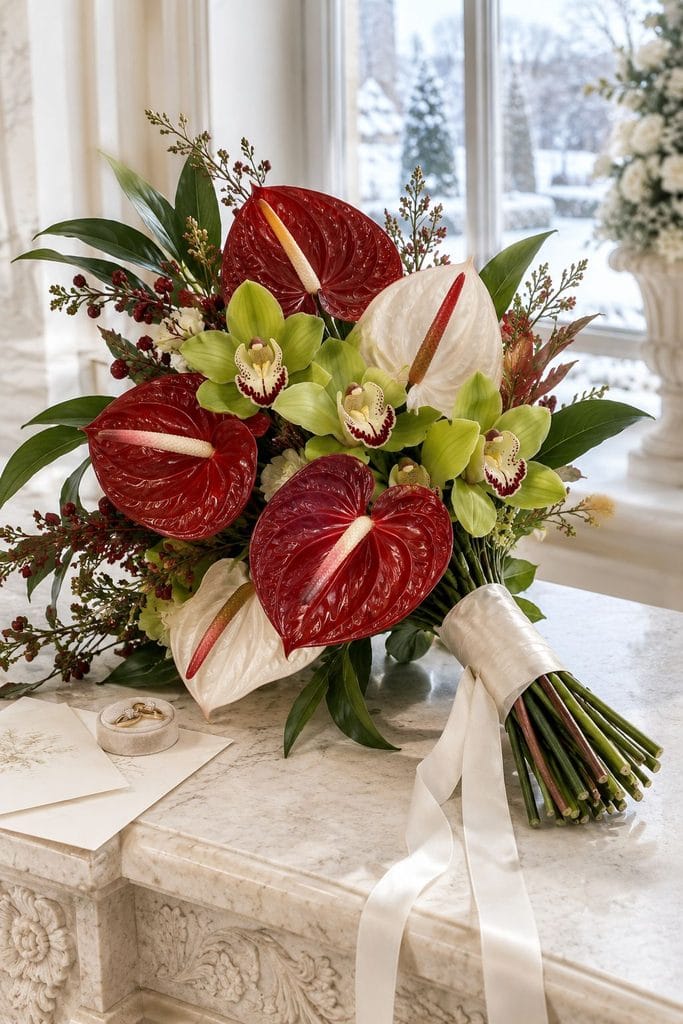
Glossy anthurium hearts and lime-green cymbidium orchids give a sleek, architectural look that feels like an art gallery. It’s ideal for a destination winter wedding somewhere warm, and the blooms last for ages.
40. Bold Red Ranunculus Monochrome Bouquet

One flower, one color, zero apologies. Layered ranunculus in cherry red look like tissue-paper roses, and the monochrome punch makes an instant statement against a white dress.
41. All-Green Bells of Ireland Bouquet
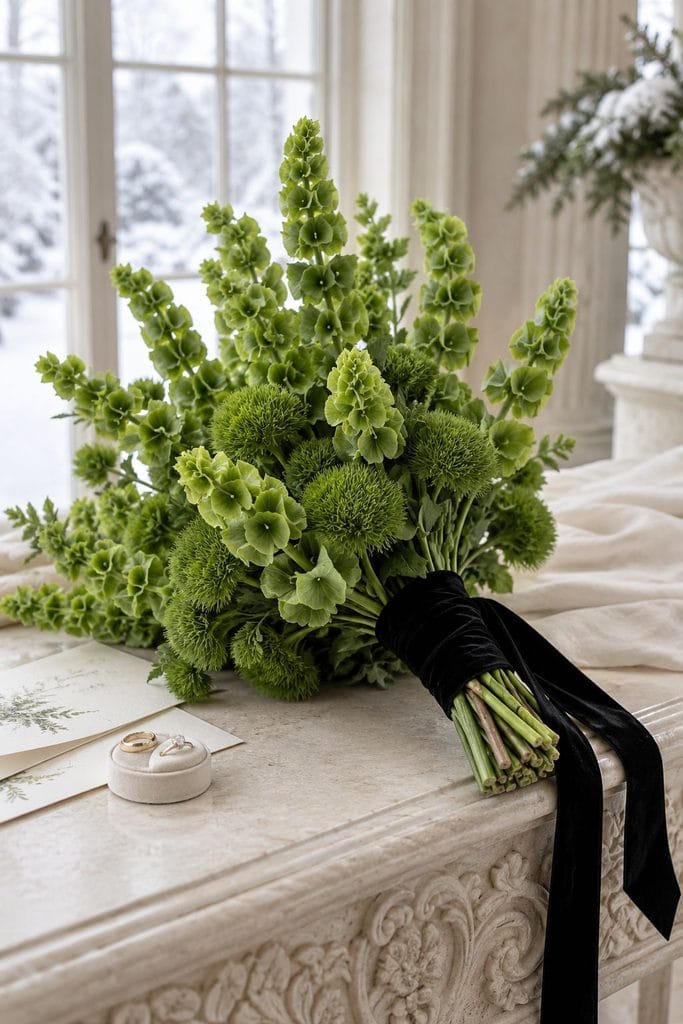
Tall bells of Ireland and fuzzy green trick dianthus make a fully green bouquet that feels crisp and modern. It looks especially sharp against snowy backdrops and black-tie palettes.
42. Gold-Tipped Brunia and Pepperberry Bouquet

Golden brunia berries and pink pepperberry add tiny glints of shimmer without any glitter. It’s a low-key way to sparkle, and it’s a smart match for a New Year’s Eve wedding.
43. Pussy Willow and Cream Tulip Presentation Bouquet
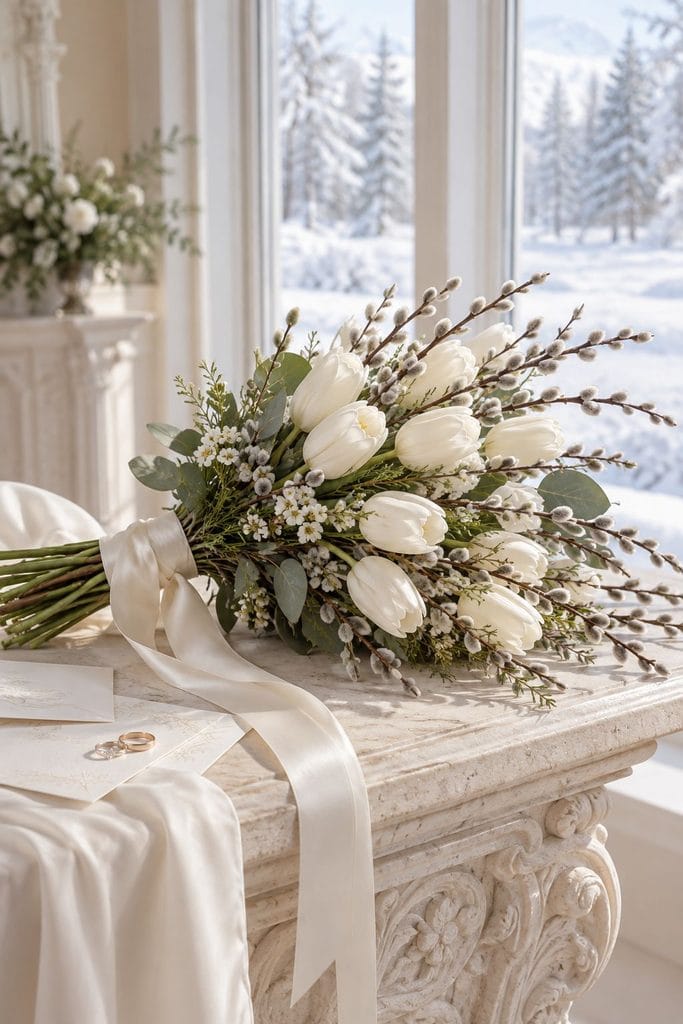
Long, curved pussy willow stems and cream tulips make a graceful presentation bouquet that rests in the crook of your arm. It’s a strong match for a simple, structured dress.
44. Mimosa and Plum Bouquet

Fluffy yellow mimosa is one of the few flowers that blooms in winter, and paired with deep plum it feels like sunshine in a velvet jacket. Mimosa sheds pollen, so ask your florist to shake off the loose bits before it gets anywhere near your dress.
45. Three-Stem Long Rose Bouquet
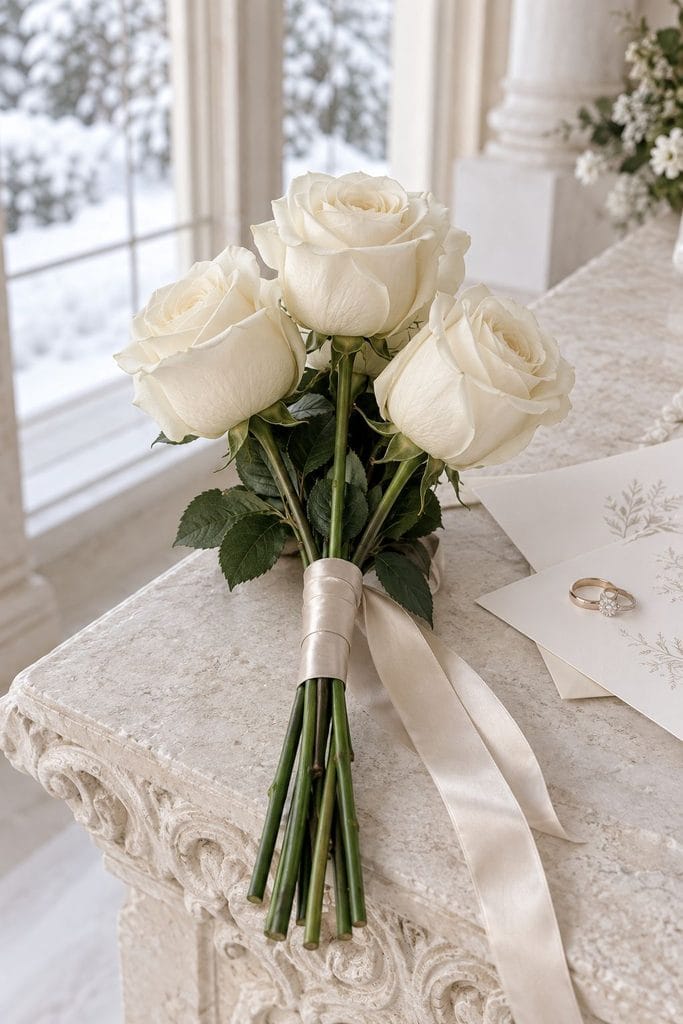
Three long-stem roses wrapped in satin ribbon is the definition of less is more. It’s perfect for a courthouse or elopement, and easy for a florist (or you) to whip together in minutes.
Budget-Friendly and DIY Winter Wedding Bouquets
46. Baby’s Breath Snow Cloud Bouquet
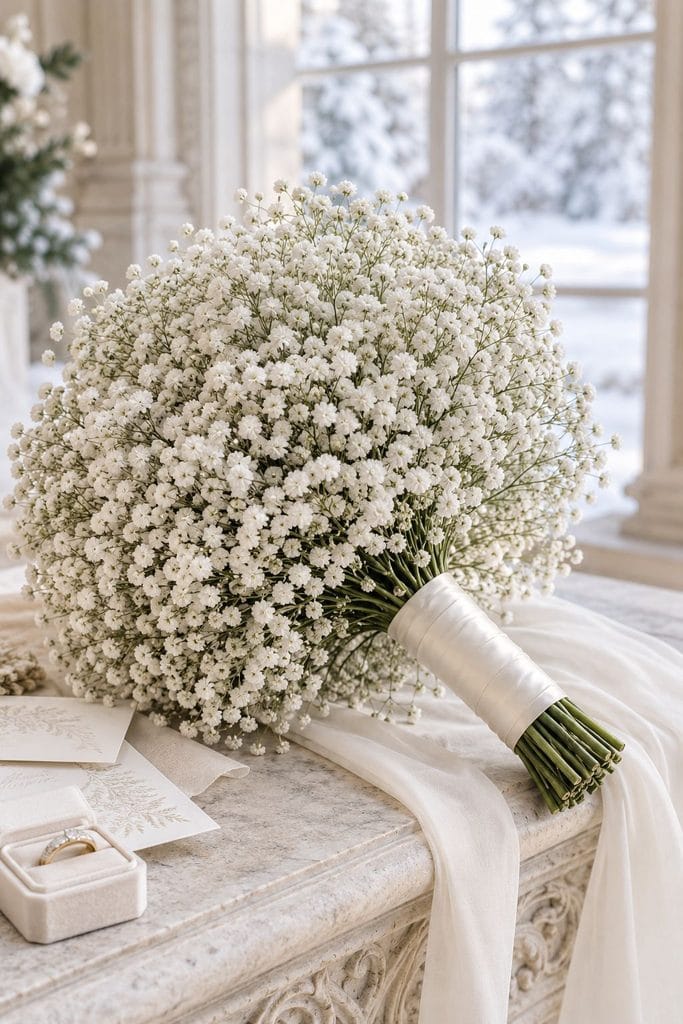
A fluffy mound of gypsophila looks like a bouquet made of snowflakes, and it’s one of the cheapest flowers you’ll find. Go for a big, tightly packed shape instead of a wispy one so it looks intentional.
47. Grocery Store Alstroemeria and Eucalyptus Bouquet

Alstroemeria lasts up to two weeks, shows up at most supermarkets, and looks polished mixed with a few eucalyptus stems. Pick up your bunches two days before the wedding and keep them in a cool room.
48. Silk Flower Keepsake Bouquet
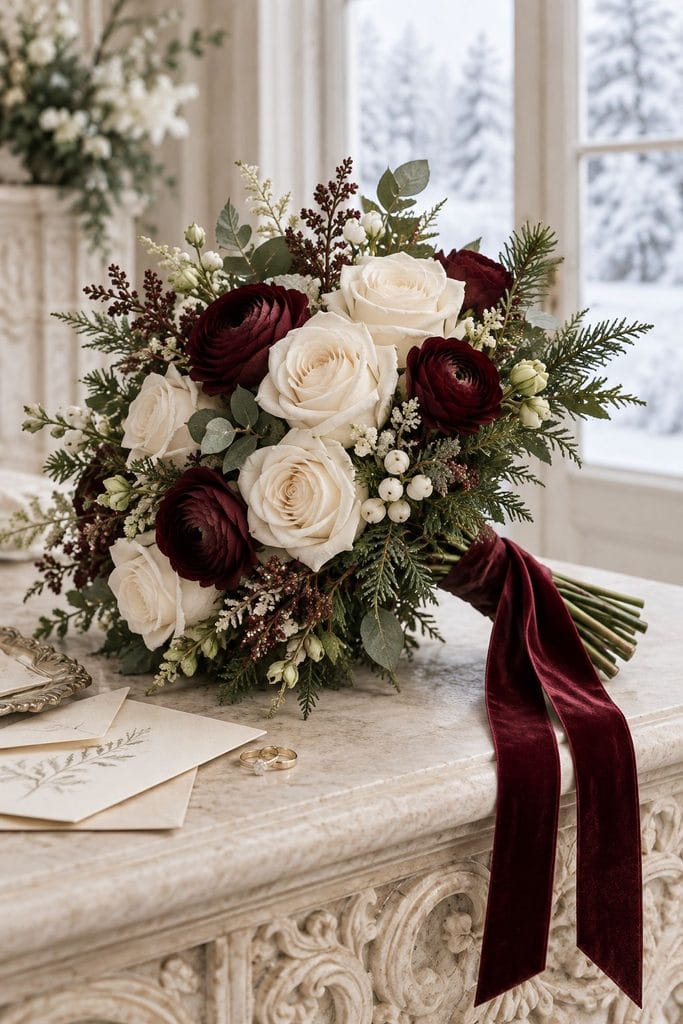
Quality silk flowers in ivory and burgundy look surprisingly real in photos and stay perfect forever. There’s zero wilting stress, and it doubles as home decor after the big day.
49. Vintage Brooch and Pearl Keepsake Bouquet
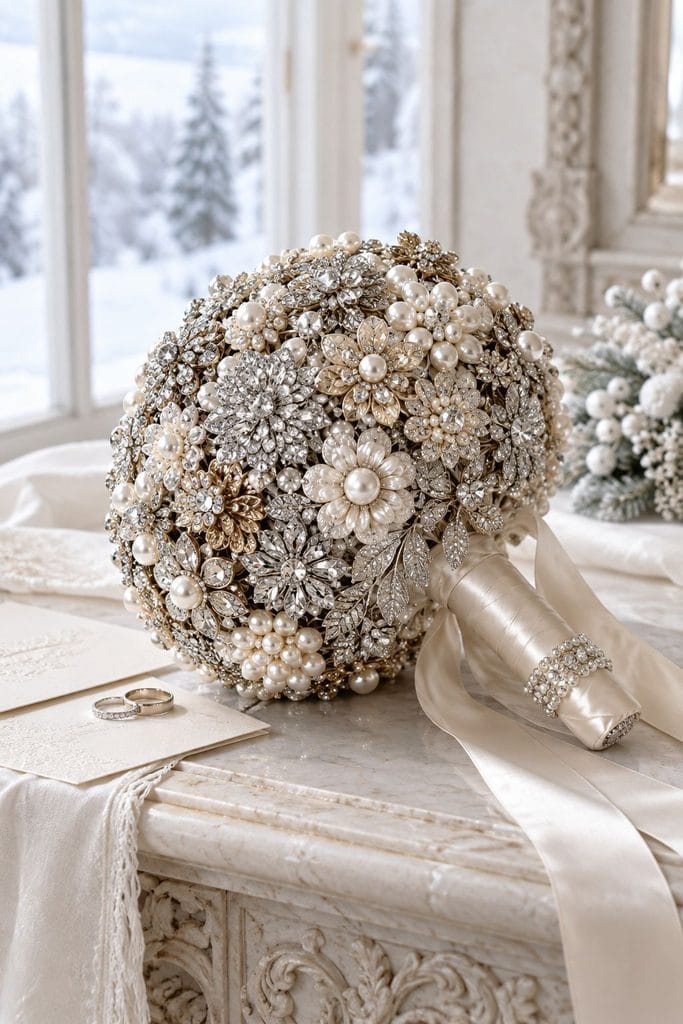
Family brooches, pearls, and crystals wired into a sparkling bouquet feel personal and heirloom-worthy. Each piece can carry a story, like something borrowed from grandma.
50. Crepe Paper Flower Bouquet

Handmade crepe paper peonies and roses can be crafted weeks in advance, which means no last-minute florist stress. Choose heavyweight paper for petals that look shockingly real.
51. Felted Wool Flower Bouquet
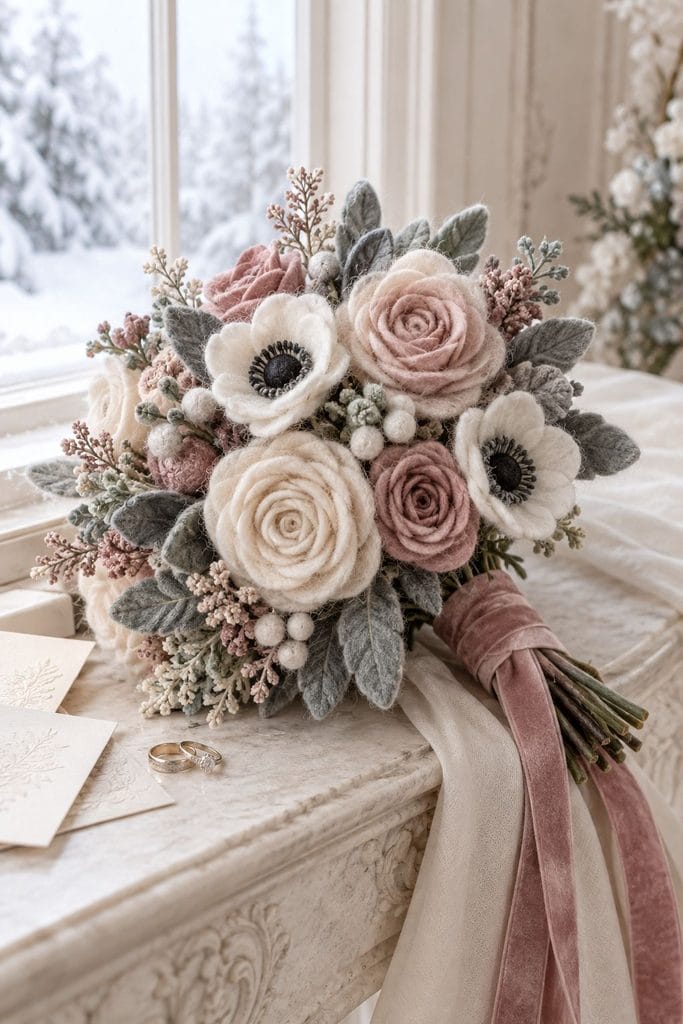
Soft wool blooms in cream, gray, and dusty rose are as snug as your favorite sweater. They’re a sweet fit for a winter wedding, and they’ll never wilt in the cold.
Showstopper Winter Wedding Bouquets Worth the Splurge
52. Cascading Garden Rose and Peony Bouquet
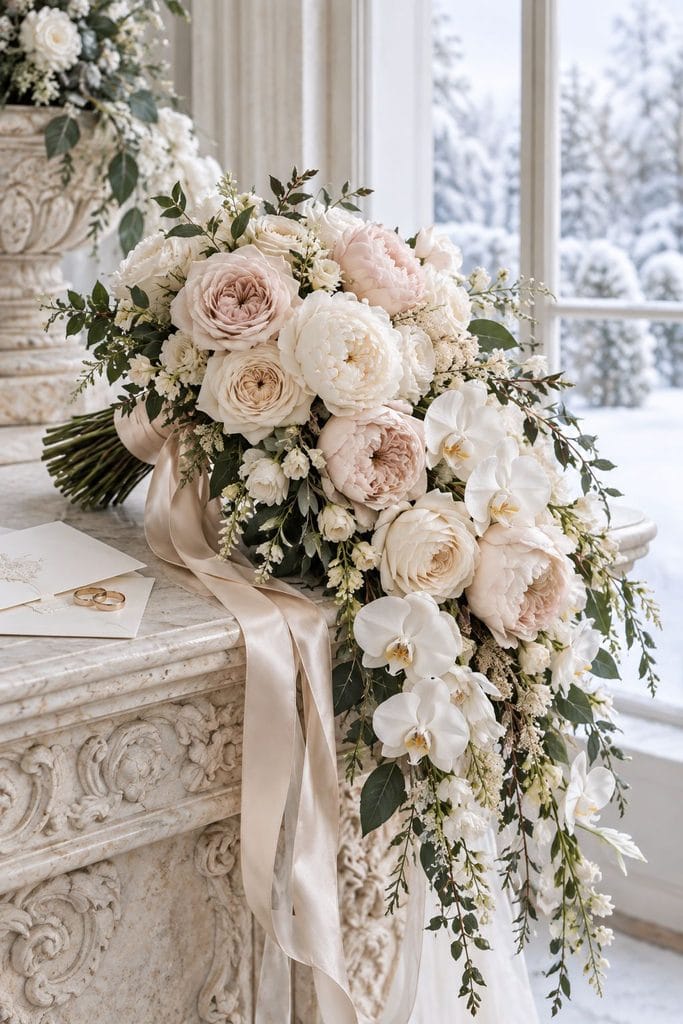
A waterfall of garden roses and fluffy peonies has the kind of lush richness that makes guests gasp. Peonies cost more in winter, so budget accordingly and tell your florist exactly how long you want the cascade.
53. Silk Ribbon Streamer Bouquet
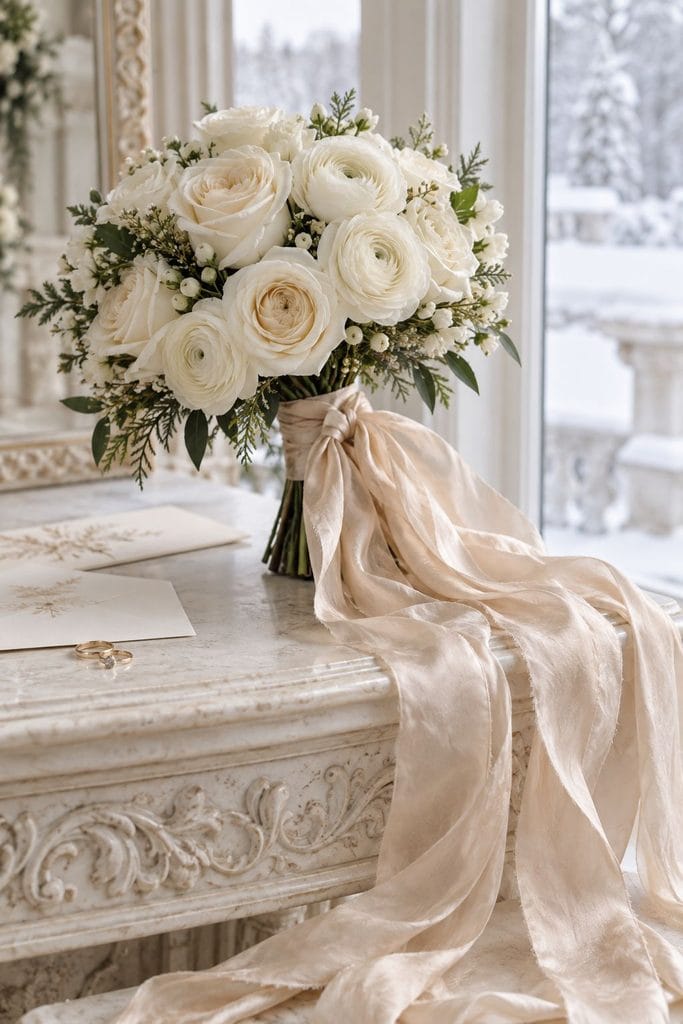
Yards of hand-dyed champagne silk ribbons trail from a tight, round bouquet and float with every step. The ribbons do most of the drama, so the flowers themselves can stay simple.
54. Faux Fur Muff Bouquet
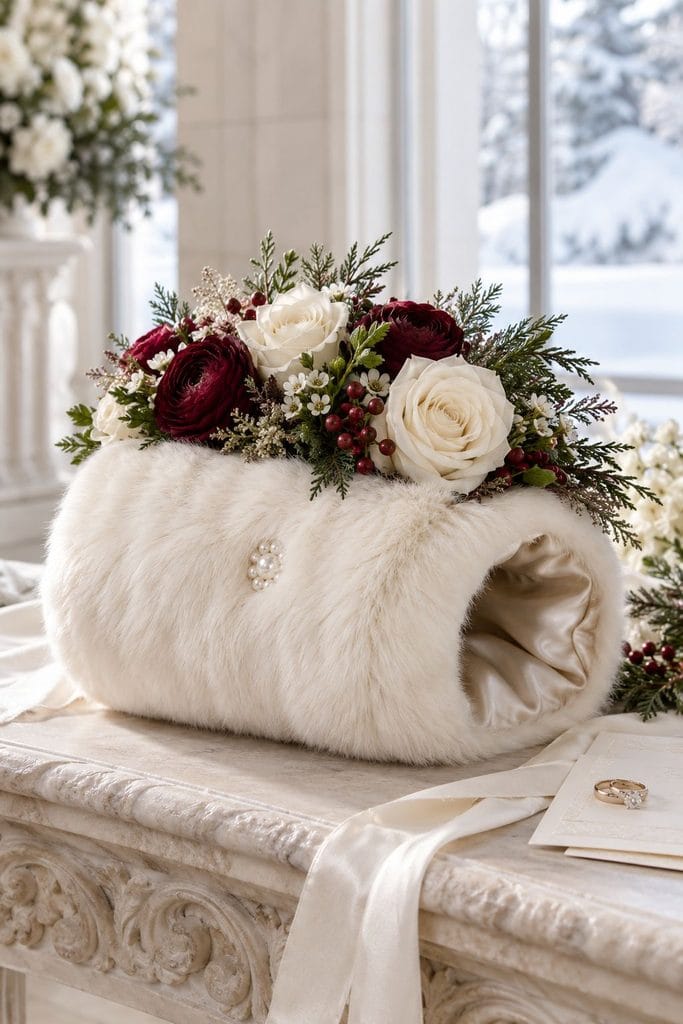
A plush faux fur muff tucked with roses and greenery keeps your hands warm and looks straight out of a Russian novel. It isn’t a bouquet in the traditional sense, but it’s practical and stunning for outdoor winter ceremonies.
55. Sugared Cranberry and Frosted Greens Bouquet
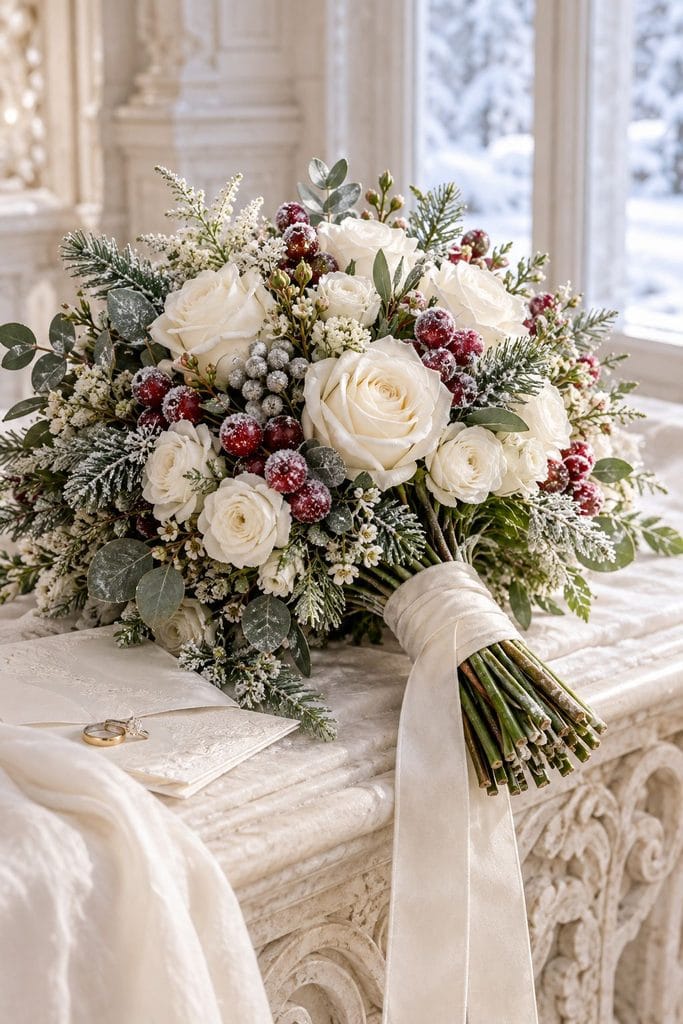
Sugared cranberries, frosted fir tips, and ivory roses catch the light like glittering ice. It’s labor-intensive to make, so ask your florist about lead time well before the wedding.
Common Mistakes to Avoid
- Ignoring the cold: Delicate blooms like sweet peas and cherry blossom can wilt fast outdoors, so keep them in water until the last moment and schedule outdoor photos quickly.
- Choosing flowers that are out of season: Off-season blooms can cost far more and arrive in worse shape, so ask your florist what’s freshest and most affordable in your month.
- Going too big: Heavy bouquets get tiring during a long day of photos, so aim for something you can hold comfortably for at least an hour.
- Forgetting scent sensitivities: Paperwhites and stock are gorgeous but strong, so check with guests or family members who might be sensitive.
- Skipping the ribbon or wrap: Stems get wet and scratchy, and winter coats snag on rough ones, so a soft satin or velvet wrap is worth it.
Frequently Asked Questions
What flowers work best for a winter wedding bouquet?
Ranunculus, anemones, amaryllis, roses, and tulips are all reliable choices for a winter wedding bouquet. Sturdy extras like eucalyptus, pine, and berries add texture and hold up well in cold weather.
How do I keep my bouquet fresh at an outdoor winter wedding?
Keep it in a vase of cool water until the moment you walk, and choose hardy stems like evergreens, protea, or dried elements. Ask your florist to hydrate delicate flowers with a water source and avoid leaving the bouquet in a hot car or near a heater.
How far ahead should I order my winter wedding bouquet?
Book your florist three to six months ahead, especially for December and February weddings. Popular flowers like peonies and amaryllis can sell out fast, so early planning gives you more options.
Are winter wedding bouquets more expensive?
Not necessarily. Winter wedding bouquet ideas built around greenery, dried flowers, or seasonal blooms can be very affordable, while imported peonies and garden roses cost more during cold months.
Can I make my own winter wedding bouquet?
Yes, especially with hardy materials like eucalyptus, alstroemeria, baby’s breath, or dried stems. Practice a trial bouquet a week or two ahead so you know exactly what to expect.
Where to Find Winter Wedding Bouquet Supplies and Inspiration
Your local florist is your best resource for seasonal advice, and farmers markets and grocery stores are great for budget-friendly stems. If you’re going the DIY route, dried elements are the easiest place to start, and a winter floral dried arrangement kit or a few dried wildflower bouquets takes most of the guesswork out. A handful of frosted white artificial branch stems adds a snowy touch to a homemade bouquet, and a faux fur shawl wrap keeps you warm during outdoor photos.


