
Spring Wedding Tablescape Ideas That Feel Fresh, Not Forced
Spring wedding tablescape ideas shine when they feel light, intentional, and rooted in the season rather than overly styled.
With longer days, fresh florals, and softer textures, spring naturally lends itself to tables that feel layered and effortless, where linens, place settings, and candlelight work together without competing.
The most memorable tablescapes embrace restraint and cohesion, creating a welcoming atmosphere that feels thoughtful, seasonal, and quietly romantic from the moment guests sit down.
This post may contain affiliate links, please refer to privacy policy for more information.
Start With the Table Itself

Every spring wedding tablescape begins with the table, yet it’s often the most overlooked design decision. Before florals, candles, or place settings come into play, the table itself sets the tone for the entire reception. The choice between bare wood, full linens, or soft runners instantly signals whether the atmosphere feels relaxed, refined, or somewhere comfortably in between.
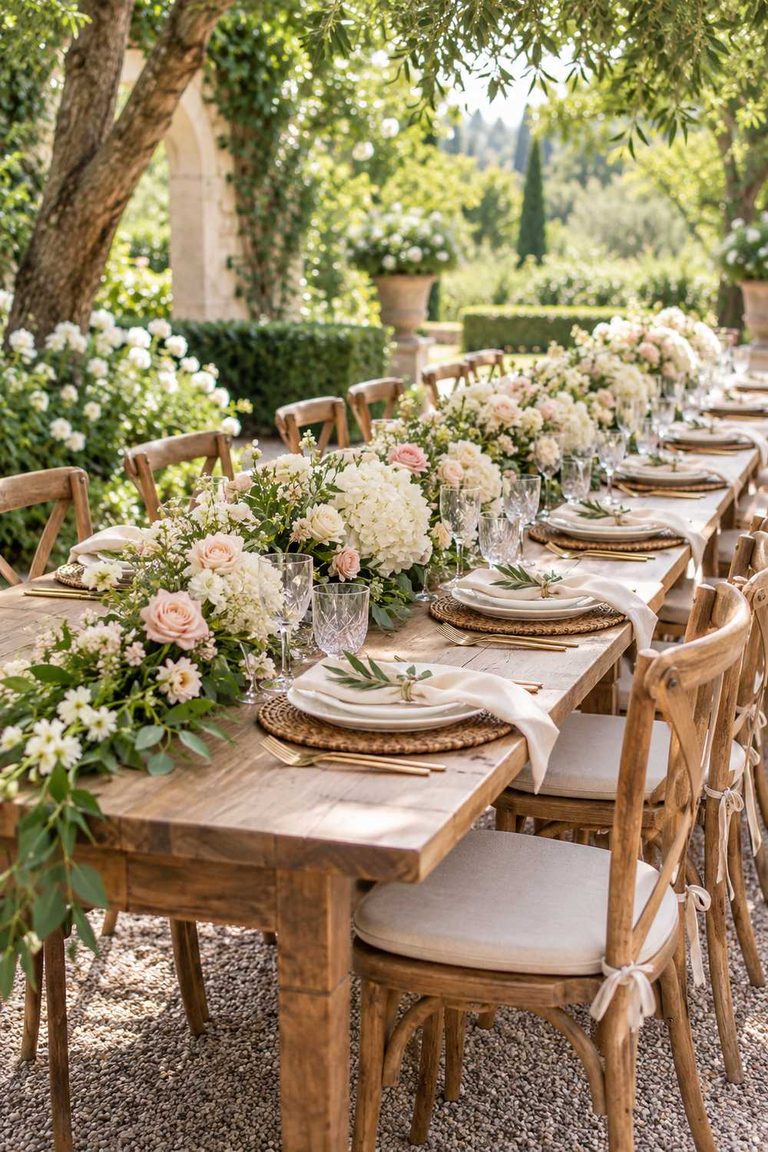
Farm tables work beautifully for spring weddings that lean natural or garden-inspired, especially when the wood grain adds warmth and texture on its own. For more formal spaces, full-length linens in ivory, stone, or soft taupe create a clean foundation that lets other elements shine. Spring is rarely the moment for heavy patterns; subtle texture almost always photographs better than bold prints.
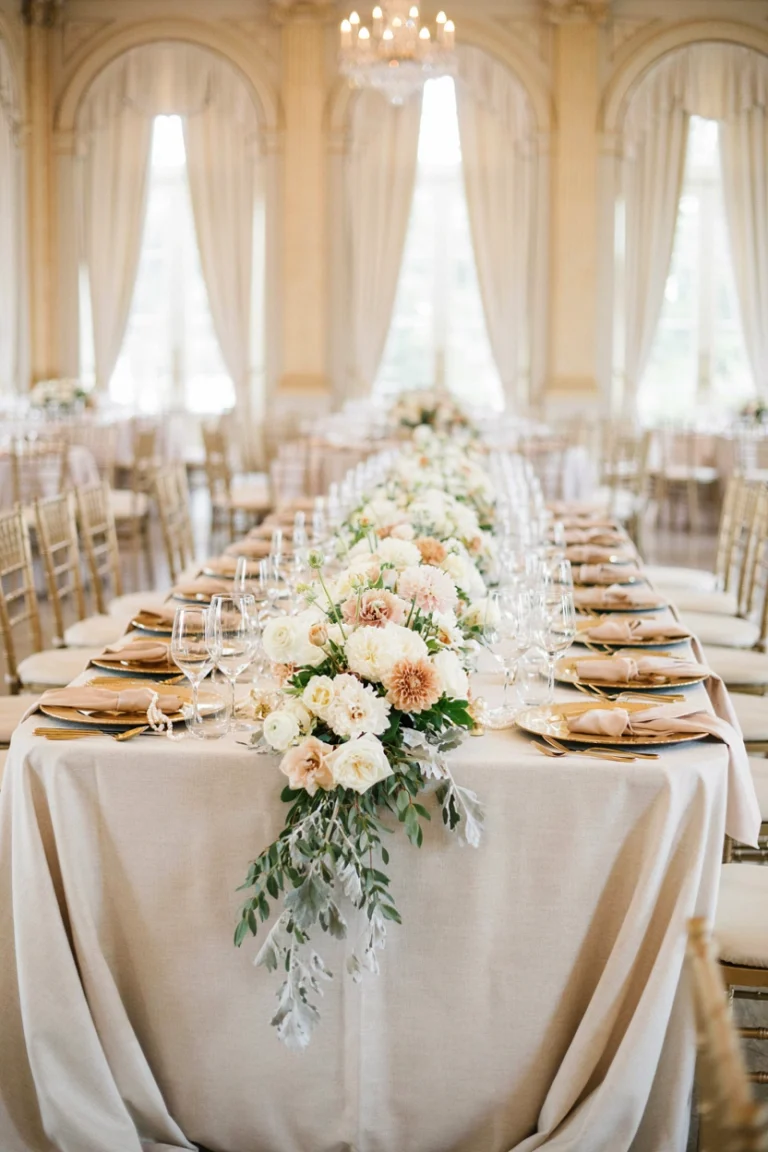
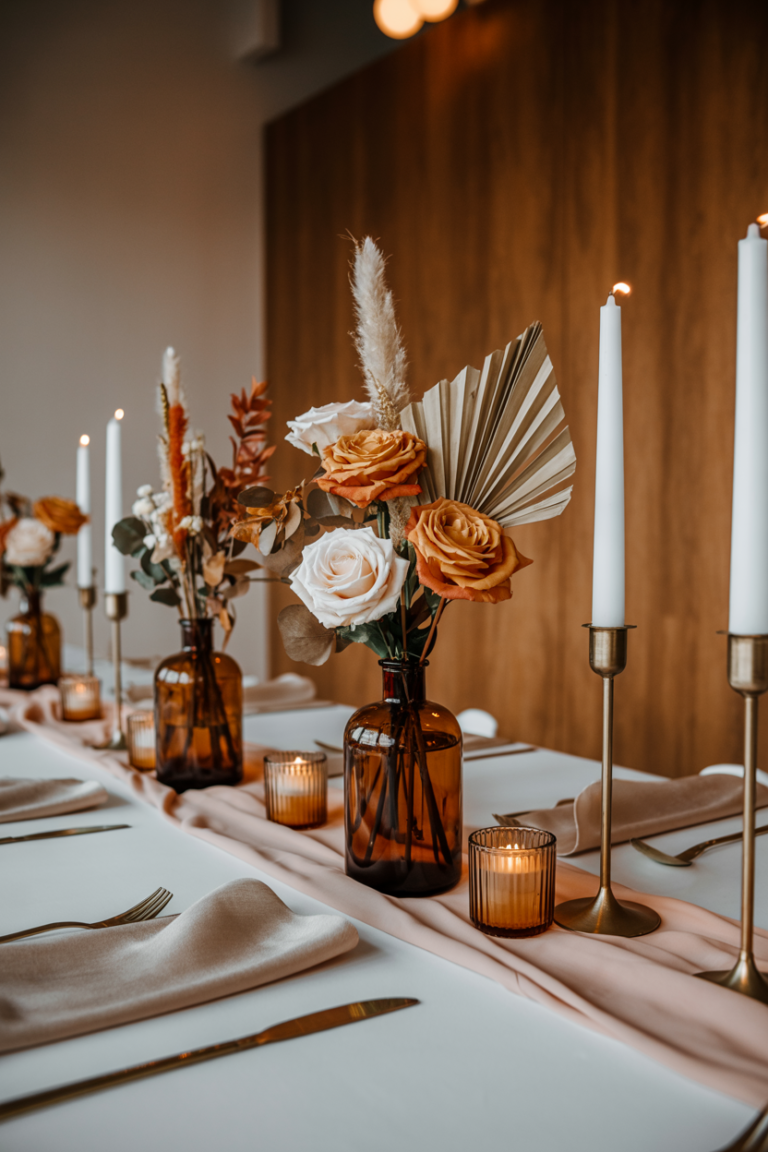
Runners can add softness without hiding the table entirely. Gauze, linen, or lightly crinkled cotton runners introduce movement and feel effortless, particularly for long banquet tables. Let edges fall naturally rather than pressing everything into perfection—spring tablescapes benefit from a slightly undone look.
If you’re incorporating color at the table level, keep it restrained and intentional. Muted hues layered into linens or runners pair best with seasonal florals and natural materials. This approach ties seamlessly into broader palette decisions and works especially well alongside thoughtfully chosen spring tones.
For couples still refining their palette, this approach pairs beautifully with guidance found in our spring wedding color ideas, where soft neutrals and fresh seasonal accents work together without overwhelming the table.
To anchor the look, consider understated table accents like simple table numbers or minimal runners that complement rather than compete. Clean lines at this stage make it easier to layer in florals, candles, and place settings later—creating a spring wedding tablescape that feels cohesive from the ground up.
Spring Florals That Feel Effortless

Florals are often the visual centerpiece of a spring wedding tablescape, but the most beautiful arrangements rarely look overly designed. Spring blooms naturally feel softer and more organic, and tablescapes benefit when flowers appear gathered rather than formally arranged. The goal is movement and freshness, not symmetry.
Seasonal flowers like ranunculus, tulips, garden roses, and sweet peas work especially well because they reflect what’s naturally in bloom. These varieties bring texture and variation to the table without feeling stiff. Mixing florals with light greenery keeps arrangements feeling airy and prevents them from looking dense or top-heavy.
Low centerpieces are a favorite for spring receptions because they encourage conversation and keep the table feeling open. Compote bowls, loose garden-style arrangements, or small clusters of bud vases create visual interest without blocking sightlines. Bud vases, in particular, allow for flexibility and feel intentionally undone when grouped in odd numbers.
Color choice matters just as much as flower selection. Soft tonal arrangements photograph beautifully in spring light, especially when paired with neutral linens and natural table textures. Rather than matching florals exactly to the wedding palette, allow them to complement it with subtle variation.
When planning floral design, many couples look to trusted industry insight for guidance on balance and proportion. Editorial features from Brides often highlight how restraint and seasonality elevate spring tablescapes without overpowering the setting.
To complete the look, simple vessels tend to work best. Clear glass, ceramic, or softly tinted vases allow the florals to take center stage while keeping the overall tablescape cohesive and refined.
Layered Place Settings That Feel Intentional

Place settings are where guests interact most directly with a spring wedding tablescape, making them one of the most impactful design elements. Thoughtful layering instantly elevates the table and signals a sense of care without feeling overly formal. In spring, lighter materials and softer finishes tend to feel more natural than anything too heavy or ornate.
Chargers can add structure to each setting, but they aren’t essential. When used, understated options like brushed gold, matte white, or woven natural chargers create definition without stealing attention from the plates themselves. For couples skipping chargers, beautiful dinnerware becomes the focal point—stoneware, soft-glazed ceramics, or subtly textured plates all photograph beautifully.
Flatware is another opportunity to add personality. Warm metallics, such as champagne gold or brushed brass, pair especially well with spring palettes and natural materials. Keeping the finish consistent across each place setting helps maintain a polished look, even when other elements vary.
Napkins play a surprisingly large role in the overall aesthetic. Linen napkins in neutral or muted seasonal tones add softness and dimension, particularly when loosely folded, knotted, or draped casually over the plate. Spring tablescapes benefit from movement, so perfection isn’t the goal here.
Menus and place cards complete the setting without clutter. Simple paper goods, acrylic accents, or hand-lettered cards add a personal touch while staying visually light. When layered thoughtfully, each element works together to create a place setting that feels cohesive, welcoming, and distinctly spring.
Color Palettes That Belong to Spring

Spring wedding tablescapes come alive when the color palette feels seasonal rather than forced. While pastels are often associated with spring, the most refined tablescapes use color with restraint, allowing natural light, florals, and textures to do much of the work. The goal is balance, not saturation.
Soft neutrals form the backbone of many spring tables, with shades like ivory, stone, and warm beige creating a calming foundation. From there, a single accent color—or a closely related group of tones—adds interest without overwhelming the table. Sage, muted blue, soft blush, and dusty lavender are perennial favorites because they complement spring florals so naturally.
Earth-inspired palettes have become especially popular for spring weddings, pairing gentle greens or clay tones with natural materials like wood and ceramic. These combinations feel grounded and timeless, translating beautifully across linens, napkins, and tabletop décor. Even bolder colors can work in spring when introduced sparingly, such as through glassware, taper candles, or floral accents.
The key is consistency. Repeating the same tones across multiple elements helps the tablescape feel intentional, even when textures and materials vary. Rather than introducing many colors, allow one or two to carry the design from table to table.
This approach works seamlessly alongside broader styling decisions, particularly when paired with cohesive inspiration from our spring wedding themes, where color plays a supporting role in creating an elevated seasonal atmosphere.
Centerpieces That Don’t Block Conversation

A spring wedding tablescape should invite guests to linger, and centerpieces play a major role in how comfortable the table feels. While statement arrangements can be beautiful, spring favors designs that feel open, light, and unobtrusive. The most successful centerpieces enhance the table without dominating it.
Low floral arrangements are a classic choice for good reason. They keep sightlines clear and allow conversation to flow easily across the table. Garden-style florals arranged loosely in ceramic bowls or shallow compotes feel especially appropriate for spring, offering texture and softness without visual weight.
Candles often act as the true anchor of a spring tablescape. Taper candles in soft neutrals or muted seasonal tones add height without bulk, while clusters of votives create warmth as daylight fades. Mixing candle heights subtly—rather than dramatically—keeps the look refined and cohesive.
Glass hurricanes are particularly useful for spring weddings, especially for outdoor or tented receptions where wind is a concern. Clear glass maintains an airy feel while protecting the flame. A set of simple glass hurricanes like these cylindrical glass candle holders blends seamlessly into nearly any spring palette.
For taper candles, opt for clean silhouettes and soft finishes. Neutral tapers such as ivory or blush taper candles work across a wide range of table styles, while understated holders like simple gold or clear glass candle holders add just enough polish without drawing attention away from the florals.
When layered thoughtfully, florals and candlelight work together to create a centerpiece that feels balanced, intimate, and perfectly suited to a spring celebration—beautiful to look at and easy to gather around.
Natural Materials That Elevate the Table

Spring wedding tablescapes feel most authentic when natural materials take center stage. Elements like wood, stone, glass, and ceramic add warmth and texture without overwhelming the table, creating a look that feels grounded and intentional. These materials pair effortlessly with spring florals and soft color palettes, helping the overall design feel cohesive.
Wood accents are especially effective for spring receptions, whether incorporated through chargers, table numbers, or subtle decorative details. Light or medium wood tones complement seasonal greenery and soften more formal table settings. Options like wood table number holders or natural wood chargers add texture while keeping the look refined.
Stone and ceramic elements bring a tactile quality that feels both modern and timeless. Marble place cards, hand-thrown ceramic bowls, or softly glazed vessels introduce variation without visual clutter. Even small details—such as marble place card holders—can subtly elevate the table when layered thoughtfully.
Glass plays a balancing role, keeping the tablescape light and reflective. Clear vases, votives, and water goblets allow other materials to shine while maintaining an airy feel. Mixing glass finishes—clear with a hint of smoke or blush—adds depth without distracting from the overall design.
This approach works beautifully for couples drawn to outdoor-inspired aesthetics. Natural materials pair seamlessly with garden and woodland settings, echoing ideas found in our garden wedding ideas and forest wedding ideas, where organic textures help the tablescape feel connected to its surroundings.
By keeping materials honest and finishes understated, spring wedding tablescapes gain a sense of ease—elevated, tactile, and perfectly in tune with the season.
Outdoor vs. Indoor Spring Tablescapes

The setting of a spring wedding has a direct impact on how the tablescape should be styled. Outdoor and indoor receptions call for different design considerations, even when the overall aesthetic remains consistent. The key is allowing the environment to guide practical choices without compromising the visual story.
For outdoor spring weddings, nature becomes part of the tablescape. Sunlight, breeze, and surrounding greenery all influence how décor appears and functions. Low-profile centerpieces, weighted linens, and protected candlelight help prevent distractions. Glass hurricanes and enclosed votives are especially useful for keeping candles steady while maintaining a light, elegant look.
Table linens matter more outdoors, where uneven surfaces and wind can quickly disrupt the setup. Linen runners with natural weight or textured fabrics help anchor the table visually and physically. Simple table décor, like weighted table numbers, ensures the styling stays intact throughout the event.
Indoor spring tablescapes offer greater control, allowing couples to lean into softer candlelight and more delicate materials. Since lighting can be managed more easily, layering candles at varying heights creates intimacy without competing with the space. Indoors, decorative accents can feel slightly more refined, with polished flatware and glassware standing out under ambient lighting.
Tented receptions often fall somewhere in between, blending outdoor atmosphere with indoor comfort. In these spaces, combining natural textures with subtle lighting elements creates balance. Ideas drawn from romantic outdoor settings, like those found in our fairy garden wedding inspiration, translate especially well to spring tables beneath a canopy.
By adapting the tablescape to its surroundings, the design feels effortless and intentional—enhancing the setting rather than working against it.
Personal Details Guests Actually Notice

The most memorable spring wedding tablescapes are often defined by the smallest details. While florals and linens set the scene, it’s the personal touches at each place setting that guests interact with—and remember. These elements should feel thoughtful and integrated, never like an afterthought.
Place cards are one of the simplest ways to personalize the table. Whether printed, hand-lettered, or set in minimalist holders, they create an immediate sense of care.
Menus add both style and function when designed with restraint. Single cards placed at each setting or shared menus down long tables create rhythm without clutter. Soft paper textures or subtle color accents keep menus feeling light and seasonal.
Favors, when thoughtfully chosen, double as décor. Edible treats, small botanical gifts, or keepsakes placed at each setting contribute to the overall design while giving guests something to take home. Displaying favors in understated packaging—such as neutral favor boxes keeps the table from feeling crowded.
This approach works especially well for spring celebrations, where favors often reflect the season itself. Ideas from our spring wedding favor ideas guide pair beautifully with layered tablescapes, adding personality without disrupting the visual flow.
When personal details are woven naturally into the table design, the tablescape feels curated rather than decorated—inviting guests to slow down and take it all in.
Spring Wedding Tablescape Mistakes to Avoid

Even the most beautiful spring wedding tablescape ideas can fall flat when a few common missteps creep in. Spring styling works best when it feels light and intentional, so overcomplicating the table is often the fastest way to lose that sense of ease. Restraint is not a lack of effort—it’s a design choice.
One of the most frequent mistakes is overcrowding the table. Too many decorative elements compete for attention and leave little room for guests to actually enjoy the meal. When in doubt, remove one layer rather than adding another. Open space is part of the design.
Another issue is ignoring guest comfort. Centerpieces that block conversation, candles placed too close together, or oversized favors can disrupt the experience. Tablescapes should enhance the reception, not become an obstacle to it.
Color overload is also common in spring weddings. While the season invites freshness and color, using too many hues at once can make the table feel chaotic. Sticking to a controlled palette and repeating tones thoughtfully keeps the look cohesive and editorial.
Finally, décor that doesn’t hold up throughout the day can quickly undermine the overall effect. Lightweight linens that shift, candles that can’t withstand a breeze, or unstable table numbers create visual noise as the event unfolds. Practical choices, often highlighted in expert planning guidance from The Knot, help ensure the tablescape looks as good at dinner as it did at the start of the celebration.
A successful spring wedding tablescape balances beauty with function, allowing the design to quietly support the experience rather than distract from it.
Frequently Asked Questions About Spring Wedding Tablescapes

What flowers work best for spring wedding tablescapes?
Seasonal blooms like tulips, ranunculus, garden roses, and sweet peas are ideal for spring tablescapes. They feel fresh, photograph beautifully, and naturally reflect the season. Using in-season florals also helps arrangements look more organic and less structured.
Do spring wedding tablescapes need to use pastel colors?
Pastels are popular, but they’re not required. Many spring tablescapes rely on soft neutrals with one muted accent color for balance. Earthy tones, gentle greens, and warm metallics often feel more modern and editorial.
How much décor is too much for a reception table?
If guests struggle to find space for place settings or conversation feels blocked, the table is overcrowded. A well-designed tablescape leaves breathing room. Open space allows each element to feel intentional rather than excessive.
Are charger plates necessary for spring weddings?
Chargers are optional and largely stylistic. They can add structure and polish, but beautiful dinnerware alone can be just as effective. Spring tablescapes often benefit from lighter, simpler place settings.
What candle styles work best for spring receptions?
Taper candles and low votives are the most versatile options. They add warmth without overwhelming the table and transition well from daylight into evening. Enclosed candles are especially practical for outdoor spring weddings.
How do you decorate tables for an outdoor spring wedding?
Outdoor tablescapes should prioritize stability and simplicity. Weighted linens, low centerpieces, and protected candlelight help prevent disruptions from wind. Natural materials blend seamlessly with the surrounding environment.
Can you mix metals in a spring wedding tablescape?
Yes, as long as the mix feels intentional. Warm metals like gold and brass pair beautifully with spring palettes, especially when balanced with neutral linens and organic textures. Limiting the mix to two finishes keeps the look cohesive.
How can spring wedding tablescapes stay budget-friendly?
Focusing on fewer, higher-impact elements helps control costs. Bud vases, candles, and simple linens go a long way without requiring elaborate arrangements. Repetition across tables often looks more polished than over-customization.
Final Thoughts: Designing a Tablescape That Feels Like You
The most successful spring wedding tablescape ideas are rooted in intention rather than excess. When each layer—from the table itself to the smallest personal detail—works together, the result feels effortless, cohesive, and inviting. Spring naturally brings softness and light to a celebration, and the best tablescapes allow those qualities to lead.
By focusing on seasonal florals, natural materials, and thoughtful restraint, couples can create tables that feel elevated without being overstyled. The goal isn’t perfection, but balance—a design that enhances the experience for guests while reflecting the couple’s style in a subtle, meaningful way.
A spring tablescape should feel welcoming from the moment guests take their seats, encouraging conversation, connection, and a sense of ease. When designed with care, it becomes more than décor—it becomes part of the memory of the day itself.


One Comment