May Wedding Flower Ideas
May sits in that rare, generous space on the wedding calendar where spring is fully awake but summer hasn’t started making demands yet. Flowers are fresher, color palettes feel effortless, and the pressure to overdesign simply isn’t there. For couples planning a May celebration, this month offers something every other season quietly envies: abundance without excess.
Choosing May wedding flowers isn’t about chasing what’s trending on Instagram or forcing blooms that haven’t quite arrived. It’s about working with what’s naturally at its best—soft garden flowers, flexible greenery, and transitional color stories that photograph beautifully in both indoor and outdoor settings. When couples lean into what May already does well, arrangements tend to look fuller, more intentional, and yes, often more expensive.
This guide breaks down the flowers that truly shine in May, the palettes that feel timeless rather than dated, and the design decisions that make the most of this in-between month. Whether the vision is romantic, relaxed, or quietly modern, May has a way of making floral design feel easy—when it’s done with intention.
This post may contain affiliate links, please refer to privacy policy for more information.
The Best Flowers in Season for May Weddings

May is generous, but not indiscriminate. The flowers that shine this month do so because they’re naturally ready—open, expressive, and resilient. When couples build their designs around these blooms, arrangements tend to look intentional rather than forced, even when the overall style is relaxed.
Soft & Romantic Flowers
For classic May weddings, this is where most couples begin. Peonies often steal the spotlight in early to mid-May, offering full, layered petals that instantly elevate bouquets and centerpieces. Availability varies by region and year, which is why experienced florists treat peonies as a feature rather than a guarantee.
Garden roses, ranunculus, and sweet peas are more reliable throughout the month. These flowers bring movement and softness without overpowering a design, making them ideal for hand-tied bouquets and loosely styled arrangements. Their tones—blush, cream, soft peach—photograph beautifully in natural May light.
Fresh, Garden-Forward Blooms
May is when arrangements start to feel less precious and more organic. Lilac, stock, tulips, and anemones add height and texture while still reading as refined. These flowers work especially well for couples drawn to an unfussy, garden-inspired look rather than tightly structured designs.
This is also where seasonal styling begins to overlap with a more natural aesthetic. If that direction resonates, exploring garden-style wedding bouquet ideas can help clarify how these blooms translate into finished arrangements.
Bright & Transitional Accents
May quietly welcomes brighter flowers without tipping fully into summer. Spray roses, viburnum, scabiosa, and poppies introduce color and contrast while still feeling seasonally grounded. Used sparingly, they keep arrangements from feeling too pastel-heavy or overly traditional.
These blooms are often paired with lighter greenery to maintain balance, especially for couples leaning toward a relaxed or slightly modern look. This approach overlaps naturally with wildflower-inspired designs, which you can see styled more intentionally in wildflower bouquets that still feel wedding-appropriate.
The key with May flowers isn’t using everything available—it’s choosing a small mix that feels cohesive. When florals reflect the season they’re grown in, they tend to look effortless, even when the design itself is carefully considered.
May Wedding Flower Color Palettes That Feel Natural, Not Forced

Color is where May really earns its reputation. This is the month where palettes don’t have to work so hard to make sense—soft tones still feel right, brighter hues don’t feel rushed, and neutral foundations keep everything grounded. The most successful May weddings tend to choose palettes that echo the season rather than compete with it.
Blush, Cream, and Soft Green
This palette remains a favorite for a reason. Blush and cream flowers paired with fresh greenery feel timeless without reading as predictable, especially in May when foliage is at its most vibrant. It’s a forgiving color story that works across venues, from formal indoor spaces to relaxed garden settings.
Butter Yellow and Warm Neutrals
Yellow in May feels intentional rather than bold. Butter yellow, pale chamomile, and soft gold tones add warmth without overwhelming an arrangement. Paired with ivory or soft peach, this palette feels elevated and subtly joyful—ideal for couples who want color without committing to brights.
Citrus-Inspired Palettes
Late spring is when citrus tones start to feel believable. Soft coral, pale orange, and fresh greenery bring energy to May weddings without tipping fully into summer. These palettes work especially well for destination-inspired or outdoor celebrations where light and texture do most of the work.
For couples drawn to this look, island citrus bouquet color ideas offer a clear example of how to balance warmth with restraint.
Pastel Meadow Mixes
May is peak season for softer wildflower palettes—think dusty lavender, pale blue, blush, and creamy white mixed with loose greenery. The key is keeping the mix intentional rather than chaotic, allowing one or two tones to lead while the rest support.
This approach overlaps naturally with relaxed, seasonal styling. Couples who love this look often gravitate toward designs like those featured in beautiful wildflower wedding ideas, where color variation feels organic rather than unstructured.
Ultimately, the best May color palettes don’t announce themselves—they settle in quietly. When the colors mirror what’s happening naturally outdoors, the entire floral design feels more cohesive, and far less trend-dependent.
How to Style Bouquets, Centerpieces, and Ceremony Flowers in May

May flowers tend to look best when they’re allowed a little breathing room. This isn’t the month for overly tight arrangements or heavy symmetry. Because blooms are naturally fresh and expressive, looser styling often reads as more refined—and far more current.
Bridal and Bridesmaid Bouquets
Hand-tied bouquets with visible stems feel especially right in May. Slightly asymmetrical shapes, soft movement, and a mix of focal blooms with supporting flowers create a look that feels intentional without being overworked. Bridesmaid bouquets benefit from subtle variation—using the same palette but shifting proportions keeps the overall look cohesive while avoiding uniformity.
Garden-forward styles work particularly well here, and many couples lean toward inspiration similar to garden-style wedding bouquets that feel natural in the hand and effortless in photos.
Centerpieces That Don’t Overwhelm the Table
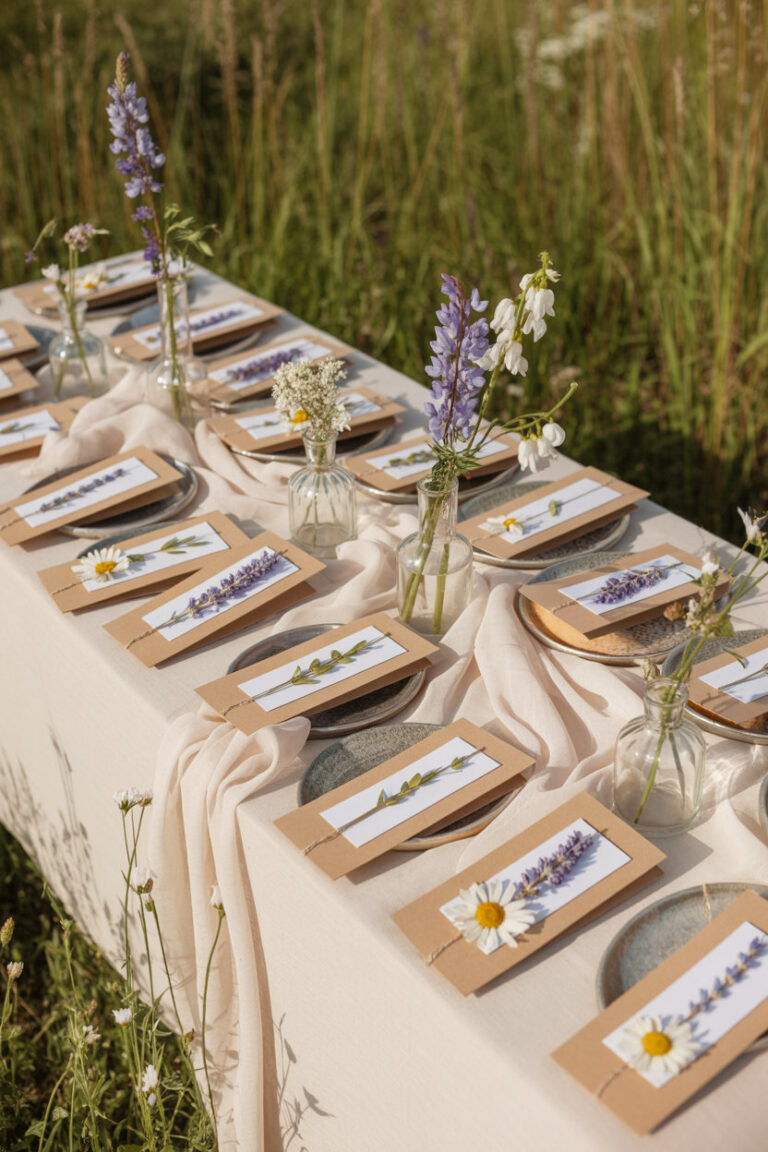
In May, scale matters more than stem count. Low, airy centerpieces or clusters of bud vases allow seasonal flowers to shine without blocking sightlines. This approach also adapts well to mixed table layouts, where some tables feature fuller arrangements and others rely on simple, repeated elements.
According to The Knot, late spring weddings benefit from centerpieces that feel integrated with the environment rather than staged on top of it—a design philosophy that aligns perfectly with May’s natural abundance.
Ceremony Flowers and Installations
May ceremonies often look best with grounded floral designs rather than towering structures. Meadow-style aisle arrangements, lightly dressed arches, or floral clusters at the altar feel organic and photograph beautifully in natural light. These designs also repurpose easily, allowing couples to move ceremony flowers into the reception space.
The goal with May florals isn’t to make a statement at every turn—it’s to create continuity. When bouquets, tables, and ceremony designs speak the same visual language, the entire wedding feels more considered, even when the styling itself is relaxed.
How to Make May Wedding Flowers Look More Expensive Than They Are

May already gives couples a head start—fresh blooms, better availability, and fewer sourcing compromises. The difference between flowers that look “nice” and flowers that look editorial often comes down to execution, not budget. Strategic choices matter more than stem count.
Choose One Hero Flower
Instead of spreading the budget thin across too many varieties, anchor arrangements around one standout bloom. In May, that might be peonies, garden roses, or ranunculus. Supporting flowers and greenery should frame the hero, not compete with it.
Let Mechanics Do the Heavy Lifting
Clean structure is what allows loose designs to still feel intentional. Tools like flower frogs, floral cages, and water tubes help create shape without excess product. These mechanics are especially useful for bud vase groupings and ceremony arrangements that need to hold up through the day.
Behind-the-scenes supplies florists rely on—like flower frogs, water tubes, and floral wire—make a noticeable difference in how arrangements hold their shape.
Scale Over Quantity
One well-scaled arrangement will always look more refined than several undersized ones. In May, compotes and low bowls filled loosely with seasonal flowers create fullness without heaviness. Even simple vessels feel elevated when proportions are right.
Many couples opt for reusable pieces like compote bowls or clean-lined bud vases, which allow flowers to shine without visual clutter.
Finish With Thoughtful Details
Small details quietly elevate the entire design. Clean ribbon finishes on bouquets, trimmed stems, and well-conditioned flowers all contribute to a polished look. Even practical tools—like floral shears and flower food packets—help maintain freshness and structure.
When couples lean into May’s natural strengths and focus on restraint rather than excess, the result feels intentional, elevated, and far more expensive than the line item suggests.
What to Skip or Rethink When Choosing May Wedding Flowers

May offers abundance, but that doesn’t mean everything works simply because it’s available. Some of the most common floral regrets come from treating May like early summer—or trying to force a vision that belongs to a different season entirely.
Overcommitting to Peak-Summer Flowers
Not every summer bloom is ready to perform in May. Flowers that thrive in sustained heat can be fragile in cooler spring temperatures, leading to inconsistent quality or higher substitution risk. When a florist hesitates about availability, that pause is worth listening to.
Overly Rigid Color Matching
May flowers naturally vary in tone, even within the same color family. Expecting perfect uniformity—especially in pastels—often results in unnecessary stress or higher costs. Slight variation reads as organic and intentional, particularly in garden-style designs.
Too Many Statement Pieces
May florals are at their best when the eye can rest. Multiple large installations can compete rather than complement, especially in outdoor or light-filled venues. One strong focal moment supported by simpler arrangements usually feels more refined.
Ignoring Local Seasonality
What’s “in season” can shift depending on location. Trusting locally available blooms often results in fresher flowers and fewer compromises. A seasonally grounded design almost always outperforms one built around imported expectations.
Common Questions About May Wedding Flowers

Are peonies guaranteed in May?
No. Peonies often appear in early to mid-May, but timing varies by region and weather. Many florists treat them as a flexible feature rather than a promise, offering similar blooms as backups.
Are May wedding flowers more affordable than summer flowers?
Often, yes. Because many flowers are naturally in season, fewer imports and substitutions are needed. This can translate to better quality at a similar or slightly lower cost than peak summer months.
What flowers hold up best for outdoor May weddings?
Garden roses, ranunculus, stock, and greenery tend to perform well. Cooler mornings and moderate temperatures help flowers last longer than they might later in the summer.
Can I still have a wildflower look in May?
Absolutely. May is ideal for relaxed, meadow-inspired designs, especially when the palette is restrained. The key is intentional mixing rather than trying to include every available bloom.
How far in advance should florals be booked for a May wedding?
Most couples book 6–9 months in advance, especially for popular dates. May is a high-demand month, and earlier booking allows more flexibility with flower choices.
What colors photograph best in May?
Soft neutrals, blush tones, butter yellow, and gentle pastels photograph beautifully in May’s natural light. Bright accents work best when balanced with lighter supporting colors.
Should ceremony flowers be repurposed?
Yes, whenever possible. Meadow arrangements, aisle pieces, and altar florals often transition easily into reception décor, maximizing both budget and visual impact.
Final Thoughts on Choosing Flowers for a May Wedding
May is generous, but it rewards restraint. When couples work with what’s naturally in season—rather than forcing a trend or a specific bloom—the results tend to feel more polished, more personal, and far less stressful to execute.
The best May wedding flowers don’t announce themselves. They support the setting, echo the season, and let the day feel cohesive rather than overdesigned. Whether the vision leans romantic, relaxed, or quietly modern, May offers the flexibility to get there without compromise.
Thoughtful choices, seasonal awareness, and a willingness to let the month lead are what turn May flowers from simply pretty into genuinely memorable.