
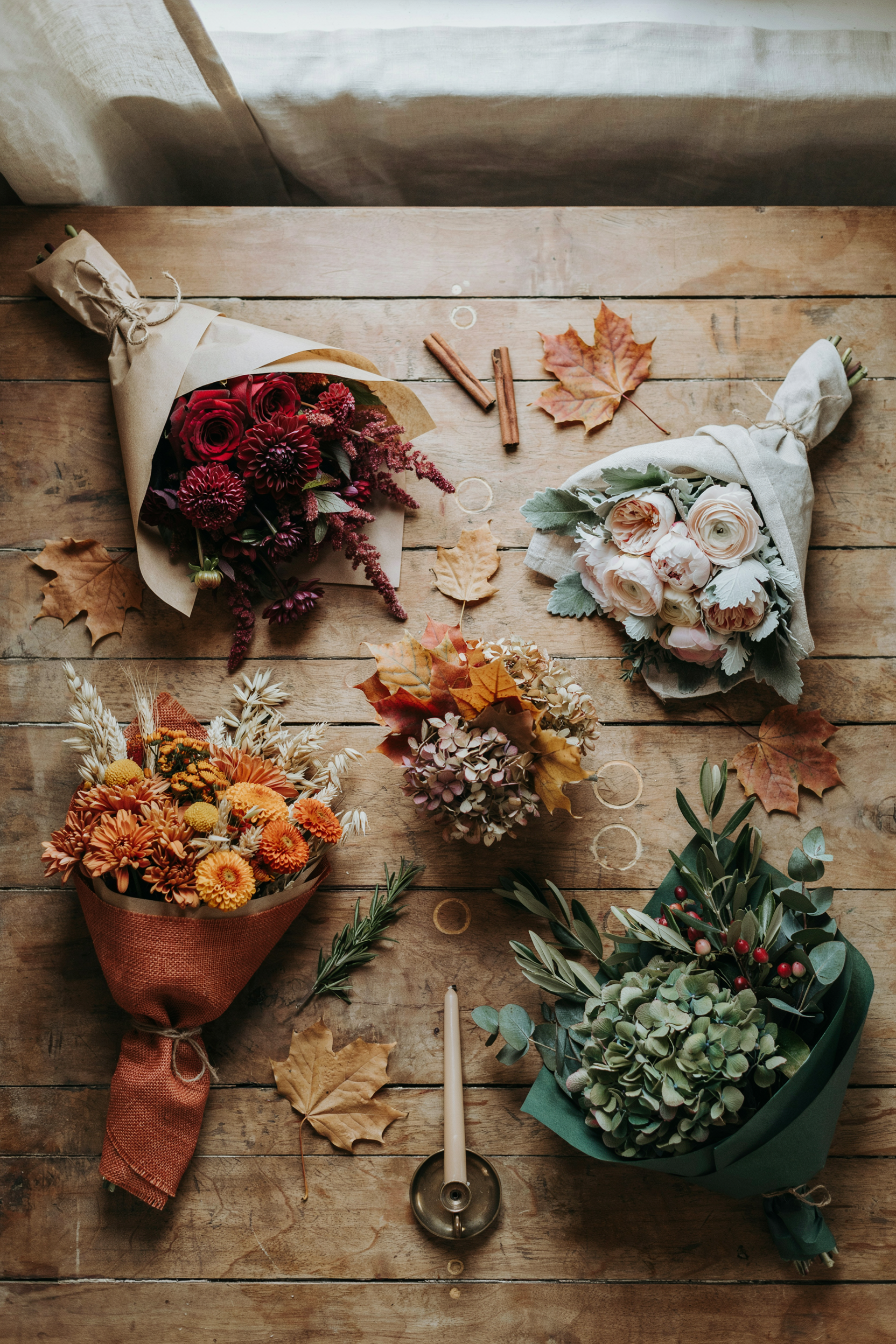
40 Beautiful Fall Wedding Bouquet Ideas for Every Style
Quick Answer: Fall wedding bouquets feature rich burgundy, burnt orange, blush, and deep green blooms with dried grasses, berries, and feathered elements. Choose warmly toned roses, dahlias, ranunculus, and garden roses paired with eucalyptus or ruscus for a romantic, moody, or rustic vibe—depending on your wedding style and venue.
Fall weddings demand bouquets that glow. The season gifts you rich jewel tones, beautiful texture, and moody romance that simply can’t be recreated any other time of year. Autumn florals lean into warm depths—burgundy, rust, gold—mixed with dried grasses, berries, and garden-grown flowers that feel organic and impossibly romantic.
Whether your wedding is a rustic garden celebration, a moody evening affair, or something elegantly classic, fall gives you endless bouquet possibilities. Here are 40 autumn bouquets that span every color palette, every style, and every bride’s vision.
This post may contain affiliate links, please refer to privacy policy for more information.
Burgundy & Wine Bouquets
1. Deep Burgundy Roses with Eucalyptus

Burgundy is the signature fall flower color, and for good reason. This bouquet layers deep burgundy David Austin roses with soft gray-green eucalyptus, creating an heirloom-quality look that photographs beautifully in every light.
The Flowers: Deep burgundy garden roses are the anchor here, chosen for their full, romantic shape. The eucalyptus adds breathing room and texture without competing for attention.
Styling Tips: Carry this with ivory satin ribbon for maximum romance. The deep burgundy reads luxe against any white or ivory gown. Keep the greenery minimal—let the roses do the talking.
Best For: Formal evening weddings, black-tie affairs, classic brides.
2. Wine Dahlias with Hypericum Berries

Dahlias are the workhorse of fall florals, and wine-colored varieties bring drama without heaviness. This combo layers texture through berry clusters and silvery foliage.
Personality Match: Romantic, garden-loving brides who want movement and dimension in their hands.
Seasonal Elements: Hypericum berries are at peak availability in fall, offering berry-forward color that dahlias alone can’t achieve. The texture story here is all about layers and depth.
Color Notes: Wine burgundy reads deeper than true red—it’s sophisticated without feeling heavy or costume-like.
Styling Tips: Mix with generous greenery to balance the full heads of dahlias. Keep stems wrapped in deep plum or burgundy ribbon for continuity.
3. Burgundy Garden Roses and Ranunculus

This is the bride who wants romance without drama. Burgundy garden roses paired with their lighter counterpart—ranunculus in cream—creates depth through color, not texture.
The Flowers: adds fullness and an unexpected light layer.
Best For: Black-tie optional weddings, indoor garden venues, romantic brides with a minimalist streak.
Styling Tips: The cream ranunculus is what makes this bouquet feel modern and fresh. Don’t let it get lost—keep burgundy elements visible but balanced.
4. Oxblood Dahlias with Celosia
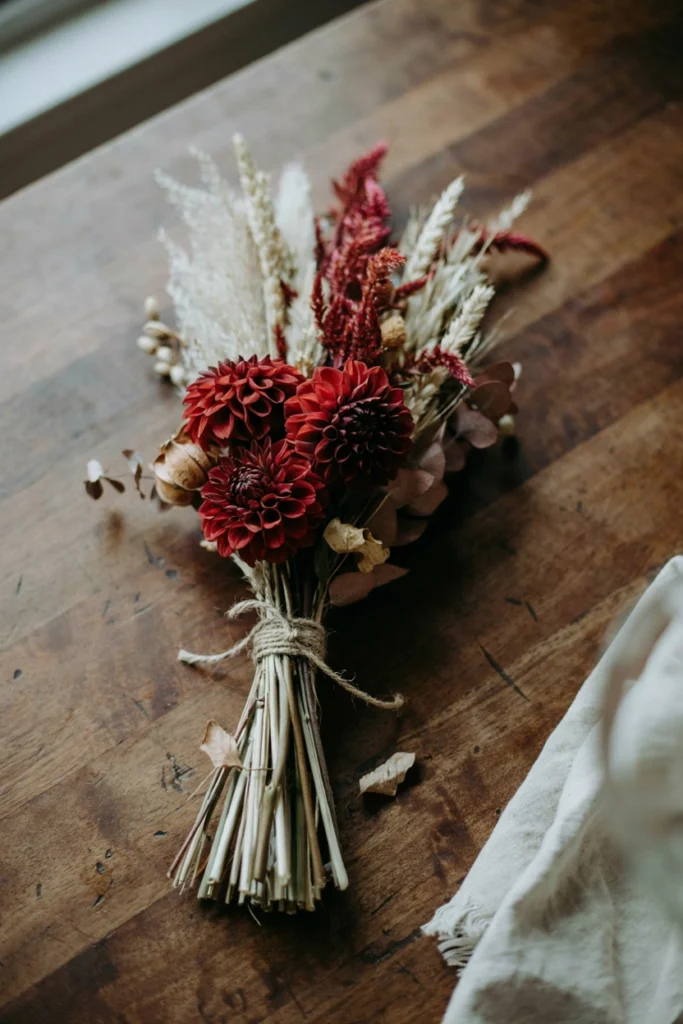
Oxblood dahlias are darker than wine, almost black-red in certain lights. Pair them with feathery celosia (also called cockscomb), and you have a bouquet with serious textural interest.
Texture Story: The smooth, geometric heads of dahlias contrast beautifully with the soft, feathery texture of celosia. This is a bouquet that invites close-up photography.
Venue Fit: Barn weddings, outdoor summer-to-fall celebrations, garden parties at dusk.
Styling Tips: Keep the palette tight—oxblood + celosia + green only. The drama comes from texture, not color chaos. Tie with twine or deep ribbon.
5. Burgundy Calla Lilies with Black Hellebore
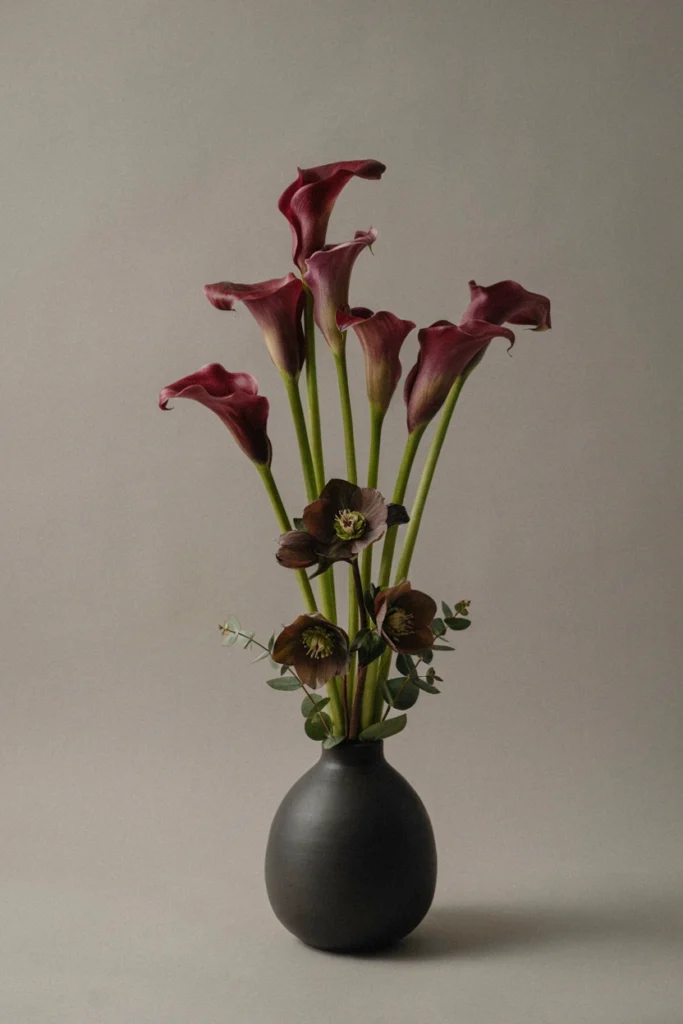
This is the bride who doesn’t want a traditional flower shape. Burgundy calla lilies are architectural and unexpected; paired with dark hellebore, the entire bouquet reads moody and contemporary.
Best For: Modern brides, black-tie weddings, minimalist aesthetics, indoor venues with dramatic lighting.
Color Notes: The near-black hellebore is what pushes this into “moody” territory. Use it sparingly—just enough to deepen the overall tone.
Styling Tips: This bouquet is all about clean lines. Wrap tightly in deep burgundy or black ribbon. Minimal greenery. Maximum drama.
6. Burgundy Roses with Amaranthus
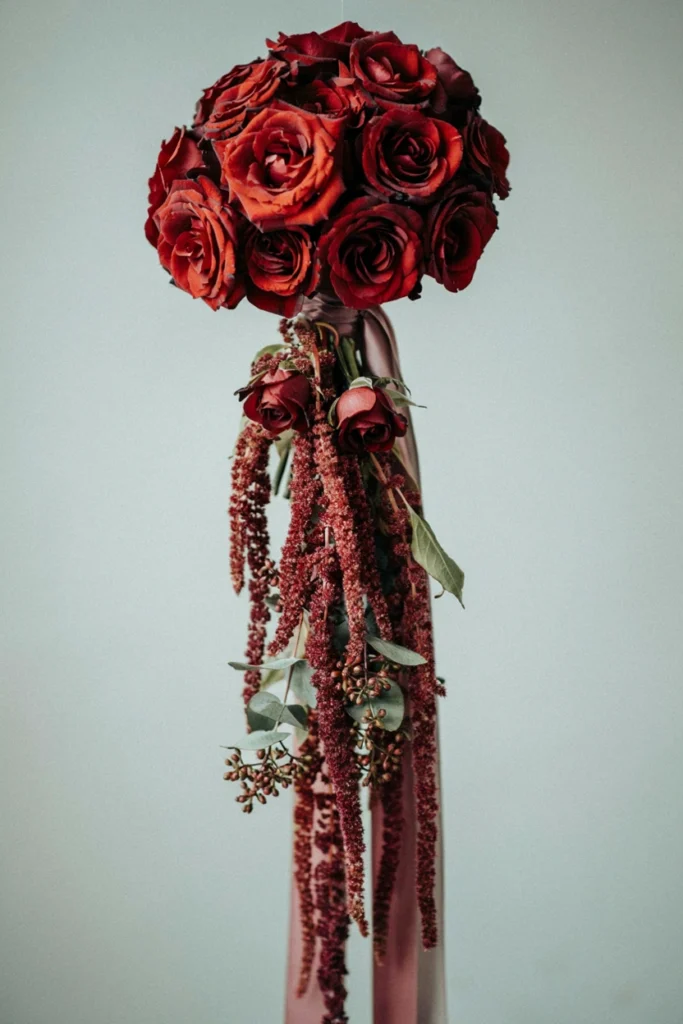
Amaranthus (also called love-lies-bleeding) adds movement and a flowing quality that static flower shapes can’t. This bouquet feels romantic and slightly bohemian without losing elegance.
Seasonal Elements: Amaranthus is at peak in late summer through fall, making it a natural autumn choice.
Styling Tips: The key to this bouquet is letting the amaranthus strand beyond the hand bouquet—it should move as you walk. Don’t cut it short.
Personality Match: Brides who want classic beauty with a subtle edge.
7. Oxblood Roses with Burgundy Carnations

Carnations get underrated. Here, deep burgundy carnations bulk up what would otherwise be a tight, expensive bouquet of oxblood roses alone. The result is lush and full without breaking the budget.
Budget Notes: This is an accessible way to achieve a high-end bouquet look. Carnations are affordable yet gorgeous when chosen in rich colors.
Best For: Brides prioritizing volume and fullness, budget-conscious weddings, bridesmaids’ bouquets.
Styling Tips: Mix in plenty of greenery to separate the layers visually. The combination reads expensive when the structure is thoughtful.
8. Burgundy Lisianthus with Plum Astilbe

Lisianthus looks like a tiny rose but with a more delicate, almost tissue-paper quality. Combined with the feathery texture of astilbe, this bouquet is soft, romantic, and surprisingly textural.
The Flowers: Lisianthus in burgundy is available seasonally and reads romantic without being fussy. Astilbe adds cloud-like texture.
Best For: Garden weddings, outdoor venues, romantic brides, early fall celebrations.
Styling Tips: This bouquet needs space to breathe. Don’t overstuff it. The beauty is in the airiness.
9. Wine Velvet Roses with Sedum

Wine velvet roses are luxuriously soft to the touch (hence the “velvet” name). Pair them with sedum for unexpected texture, and you have a bouquet that’s beautiful from every angle.
Texture Story: Velvet roses + sedum berries create multiple textures—soft petals against tiny geometric flowers. It’s tactile and visually interesting.
Color Notes: Wine velvet reads more subtle than oxblood—perfect for brides who want burgundy but softer.
Styling Tips: Sedum can feel modern or rustic depending on context. Here, it keeps the bouquet feeling fresh and seasonal.
10. Deep Burgundy Ranunculus with Spray Roses
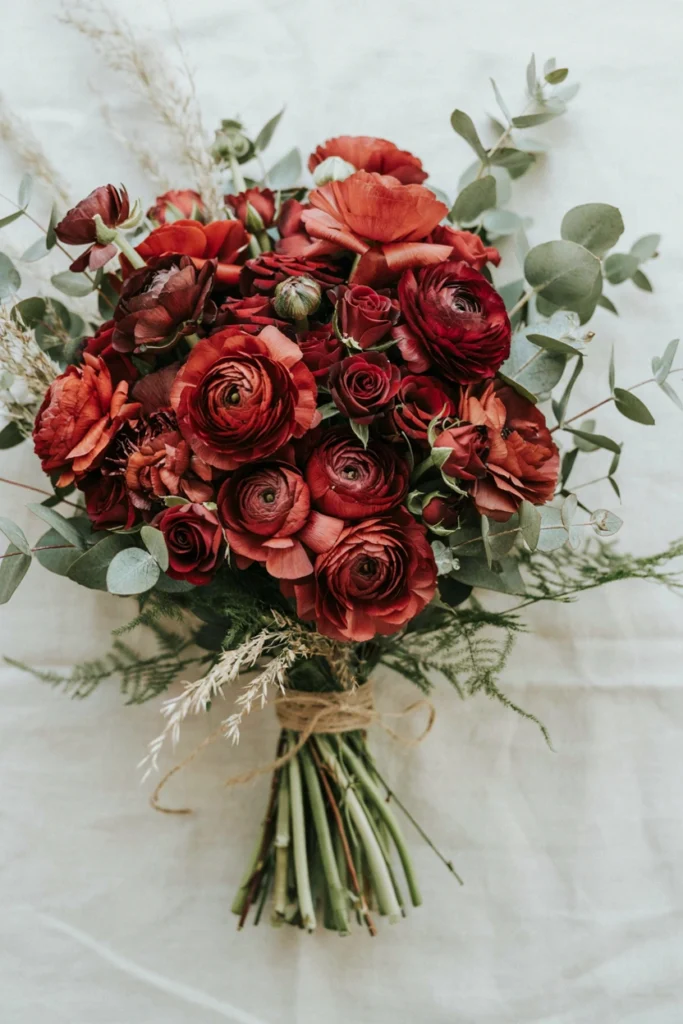
Ranunculus comes in deep, saturated burgundies that rival roses in richness. Layer them with smaller spray roses, and you have a bouquet that’s full and romantic.
The Flowers: Ranunculus has that coveted full, peony-like shape in a smaller package. Spray roses add filler and movement.
Best For: Romantic brides, garden-style weddings, classic aesthetics.
Seasonal Elements: While ranunculus peaks in spring, fall varieties are available and especially rich in color.
Styling Tips: Build this bouquet densely. Ranunculus are small, so you need volume. Keep the greenery soft and delicate.
Burnt Orange & Terracotta Bouquets
11. Burnt Orange Dahlias with Rust Garden Roses

Burnt orange is the color of fall. This bouquet leans fully into warm tones, layering large dahlias with smaller garden roses in complementary rust shades. The result feels like autumn captured in a bouquet.
The Flowers: Burnt orange dahlias are voluminous and dramatic. Rust garden roses provide a secondary color that deepens without competing.
Best For: Burnt orange wedding themes, outdoor fall celebrations, rustic venues.
Styling Tips: Add dried grasses and seed pods to emphasize the harvest feel. Wrap in natural twine or burnt orange ribbon for authenticity.
12. Terracotta Roses with Peach Ranunculus

This is the softer side of burnt orange. Terracotta roses are warm without being dark, and peach ranunculus adds a lighter, more romantic layer.
Personality Match: Romantic brides who love warm tones but want elegance over drama.
Color Notes: Terracotta is sophisticated—it reads as thoughtful and intentional, not costume-y.
Styling Tips: These warmer tones pair beautifully with blush or ivory accents. Don’t go too dark with greenery—let the warmth shine.
13. Burnt Orange Celosia with Terracotta Dahlias

Celosia in burnt orange has that feathery, almost prehistoric texture. Combined with terracotta dahlias, this bouquet is all about interesting shapes and warm color.
Texture Story: The soft, feathery celosia contrasts sharply with the structured dahlia blooms. This bouquet rewards close-up photography.
Best For: Barn weddings, outdoor rustic celebrations, brides who love texture and movement.
Styling Tips: Use natural elements—twine, dried seed pods, grasses. This bouquet lives in a rustic/natural aesthetic.
14. Apricot Dahlias with Burnt Orange Hypericum

Apricot dahlias are softer than burnt orange but still capture that warm harvest feeling. Burnt orange hypericum berries add concentrated color in small doses.
The Flowers: Apricot is a gateway warm tone—not as bold as orange, but warmer than peach. The hypericum provides berry-forward fall flavor.
Best For: Outdoor gardens, late summer-to-fall transitions, brides who love the idea of orange but want it softer.
Seasonal Elements: Hypericum berries are abundant in fall, making this very seasonally appropriate.
15. Terracotta Garden Roses with Copper Bells of Ireland

This bouquet uses height and shape to create interest. Terracotta roses are warm and romantic; Bells of Ireland add vertical movement and an unexpected pop of linear structure.
Best For: Modern brides, tall brides, contemporary or minimalist wedding aesthetics.
Styling Tips: The Bells of Ireland should extend above the roses—that height is what makes this bouquet visually striking.
Venue Fit: Modern spaces, indoor venues, anywhere that benefits from architectural lines.
16. Burnt Orange Spray Roses with Rust Sedum

Spray roses are smaller than garden roses but come in gorgeous warm tones. Build them densely for volume, and add sedum for textural surprise.
Budget Notes: Spray roses are more affordable than garden roses, making this a budget-friendly route to a full, gorgeous autumn bouquet.
Best For: Budget-conscious brides, bridesmaids’ bouquets, anyone who loves orange but needs volume.
Styling Tips: Mix lots of greenery to separate the small blooms. The sedum should peek through, not dominate.
17. Apricot Ranunculus with Terracotta Hypericum

Ranunculus in apricot feels almost spring-like, but when paired with terracotta hypericum, it reads firmly as fall. It’s warm, romantic, and unexpected.
Personality Match: Brides who want warm tones but prefer the romance of ranunculus over the drama of dahlias.
Color Notes: Apricot + terracotta is a sophisticated warm combo—it doesn’t feel juvenile or overly trendy.
Styling Tips: Let the ranunculus be the star. The hypericum is the supporting player adding berry-forward warmth.
18. Burnt Orange Calla Lilies with Peach Hypericum

For brides who want warm tones but prefer architectural shapes, burnt orange calla lilies are dramatic and unexpected. Peach hypericum softens without losing the warm palette.
Best For: Modern brides, black-tie optional weddings, minimalist aesthetics, indoor venues.
Styling Tips: Let the calla lilies be the story. Use hypericum sparingly as a pop of secondary color.
Texture Story: Calla lilies have a smooth, sculptural quality. Keep other elements minimal to honor that shape.
Blush, Cream & Ivory Bouquets
19. Blush Garden Roses with Ivory Ranunculus

This is the classic romantic fall bouquet. Blush roses are the safest romantic choice; layer them with ivory ranunculus for fullness and a light touch.
The Flowers: Blush garden roses are romantic staples. Ivory ranunculus adds volume without introducing a second color.
Best For: Classic brides, romantic aesthetics, outdoor garden venues, any bride who loves the “soft” version of fall.
Styling Tips: This bouquet is all about softness. Wrap in ivory or blush silk ribbon. Keep greenery light and airy.
20. Cream Dahlias with Ivory Astilbe

Cream is the warmer alternative to pure white. Dahlias in cream are gorgeous and full-bodied; astilbe adds texture and movement without introducing a new color.
Personality Match: Romantic brides who want the softness of blush but prefer the neutrality of cream.
Seasonal Elements: Cream dahlias are available year-round but feel especially lovely in fall when paired with warm greenery.
Styling Tips: This bouquet is soft and romantic. Keep it loose and unstructured. Let the astilbe create a cloud-like effect.
21. Blush Roses with Cream Lisianthus and Baby Eucalyptus

This bouquet prioritizes delicacy. Blush roses provide the anchor; cream lisianthus adds texture through multiple small blooms; eucalyptus keeps everything light.
Best For: Garden weddings, outdoor celebrations, brides who prefer the word “romantic” over “dramatic.”
Color Notes: Blush + cream + silver-green is a timeless, elegant color story that never feels dated.
Styling Tips: Build this bouquet loosely. You want to see each flower, not a tight knot.
22. Ivory Ranunculus with Blush Hypericum

Ivory ranunculus are densely packed, creating volume without needing multiple flower types. Blush hypericum adds berry-forward warmth.
The Flowers: Ranunculus creates that full, garden-rose appearance in a smaller package. Hypericum adds surprise and texture.
Best For: Romantic brides, bridesmaids’ bouquets, classic weddings, blush-and-gold color schemes.
Styling Tips: Build this bouquet densely. Ranunculus are small, so volume creates the impact.
23. Champagne Roses with Ivory Spray Roses and Ruscus

Champagne is the warm alternative to pure white or blush. Paired with ivory spray roses, it creates a monochromatic, sophisticated look.
Color Notes: Champagne is the color of elegance. It reads luxury without being dramatic.
Best For: Black-tie weddings, sophisticated brides, timeless aesthetics, formal venues.
Styling Tips: This bouquet should be wrapped in champagne or ivory ribbon. Keep greenery to a minimum—let the flowers shine.
24. Blush Peonies with Ivory Lisianthus

Late summer into early fall is still peony season in some regions. If you can source blush peonies, pair them with ivory lisianthus for a romantic, timeless bouquet.
Best For: Brides who love the romantic drama of peonies, late summer weddings transitioning into fall.
Seasonal Elements: Peonies require careful sourcing for fall dates—confirm availability with your florist early.
Styling Tips: Peonies are statement flowers. Keep supporting flowers subtle and greenery minimal.
25. Cream Carnations with Ivory Hypericum and Seeded Eucalyptus

Cream carnations are often overlooked, but in a dense, well-structured bouquet, they create a romantic, full look at a fraction of the cost of premium roses.
Budget Notes: This bouquet is exceptionally budget-friendly without sacrificing beauty or fullness.
Best For: Budget-conscious brides, any wedding where volume matters more than premium flower types.
Styling Tips: Structure is key. Build this tightly so the many small blooms read as one cohesive, romantic shape.
Personality Match: Practical brides who prioritize value without compromising on romance.
Deep Green & Jewel Tone Bouquets
26. Emerald Green Hydrangea with Burgundy Roses

Emerald hydrangea is moody and unexpected. Paired with burgundy roses, it creates a sophisticated, forest-inspired palette.
The Flowers: Emerald hydrangea is bold and architectural. The burgundy roses are the romantic counter-note.
Best For: Moody fall weddings, forest-inspired themes, dramatic brides, evening celebrations.
Venue Fit: Garden venues, wooded settings, forest weddings, indoor spaces with dramatic lighting.
Styling Tips: Let the emerald be the dominant color. The burgundy should peek through, not overwhelm.
27. Deep Plum Anemones with Burgundy Hypericum

Anemones are architectural and unexpected. In deep plum, they create a moody, contemporary look that feels very fall.
Personality Match: Modern, artistic brides who appreciate unusual shapes and moody color palettes.
Color Notes: Plum is deeper than purple—it reads moody without feeling costume-y.
Styling Tips: Anemones have a distinctive dark center. Emphasize that by keeping the bouquet relatively sparse so each bloom reads clearly.
28. Forest Green Trick Dianthus with Burgundy Calla Lilies

Trick dianthus (also called green trick) are greenery technically, but they read as flowers with their geometric, architectural quality. Pair them with burgundy calla lilies for a modern, moody look.
Best For: Modern brides, minimalist aesthetics, contemporary weddings, urban venues.
Styling Tips: This bouquet is about structure and shape. Keep it compact and architectural.
Texture Story: The geometric quality of both trick dianthus and calla lilies creates a very intentional, designed feeling.
29. Eggplant Dahlias with Black Hellebore

Eggplant dahlias are at the dark end of the purple spectrum. Combined with nearly-black hellebore, this is a bouquet for brides who love drama and depth.
Best For: Dramatic brides, evening weddings, moody aesthetics, brides who aren’t afraid of dark color.
Color Notes: Eggplant + black reads moody and luxurious, not Halloween-y, especially when paired with greenery.
Styling Tips: Use deep green or black ribbon. Keep supporting greenery rich and saturated.
30. Emerald and Burgundy Combination with Trick Dianthus

This bouquet essentially uses three shades of one color family—from light green to burgundy to dark plum. The monochromatic approach creates sophistication.
Personality Match: Brides who love jewel tones but prefer subtle, sophisticated combinations over bright color blocks.
Best For: Black-tie weddings, formal affairs, classic brides with a moody streak.
Styling Tips: The monochromatic approach means structure and shape matter more. Keep the bouquet well-constructed so each element is visible.
31. Purple Stock with Plum Hypericum and Dusty Miller

Purple stock is fragrant and creates fullness quickly. Combined with plum hypericum, it delivers depth and moody color.
The Flowers: Stock creates a tall, columnar shape that adds height to bouquets. Hypericum adds berry texture.
Best For: Brides who want fragrance, anyone who appreciates the classic look of stock flowers in a contemporary color.
Seasonal Elements: Purple stock is available year-round and feels especially lovely in fall when paired with berries.
Styling Tips: Stock can feel old-fashioned if overdone. Keep the color moody and pair with contemporary supporting elements.
32. Teal Brunia with Burgundy Roses and Eucalyptus

Brunia are tiny, geometric berries that add texture and unexpected color. Teal brunia brings a cool tone to an otherwise warm bouquet.
Texture Story: The tiny spheres of brunia contrasted against the soft petals of roses create visual interest and movement.
Best For: Modern brides, textural lovers, brides who like unexpected color combinations.
Styling Tips: Brunia should be distributed throughout, not clumped. It’s a supporting player that adds interest without dominance.
33. Deep Purple Ranunculus with Burgundy Roses

Deep purple ranunculus are sophisticated and romantic. Paired with burgundy roses, they create a monochromatic jewel-tone story.
Color Notes: Purple + burgundy is moody without being dark. It reads luxurious and intentional.
Best For: Romantic brides with a moody streak, evening weddings, purple-loving brides who want fall colors.
Styling Tips: Build this bouquet densely so the two flower types blend into a cohesive color story.
34. Sage Green Hydrangea with Plum Dahlias

Sage green is the softer side of green. Paired with plum dahlias, it creates a muted, elegant jewel-tone story.
Personality Match: Elegant brides who love jewel tones but prefer muted, sophisticated versions.
Best For: Garden weddings, outdoor celebrations, brides who prefer color harmony over drama.
Styling Tips: The sage and plum combination reads fresh and thoughtful. Wrap in sage ribbon for continuity.
Mixed Palettes & Dried Elements
35. Multi-Color Jewel Tone Mix with Pampas Grass

This bouquet says “yes” to all the jewel tones and warm tones fall offers. Tied together with dramatic dried pampas grass, it feels intentional and collected.
The Flowers: Layer burgundy + plum + blush + rust in small doses. No single color dominates; instead, they create a rich, complex palette.
Best For: Creative brides, eclectic aesthetics, bohemian-leaning celebrations, brides who can’t choose just one color.
Styling Tips: Build this thoughtfully so it doesn’t read chaotic. Each color block should be visible but integrated. Dried pampas grass is the unifier.
Dried Elements: High-quality dried pampas grass makes this bouquet. Choose it carefully for texture and color.
36. Burgundy, Blush, and Gold with Eucalyptus and Pampas

This bouquet layers warm tones (burgundy + blush + gold) with architectural dried elements. It feels romantic and intentional.
Color Notes: Burgundy + blush is a classic warm combo. The gold accent ties it to fall foliage.
Best For: Romantic brides with a bohemian edge, outdoor celebrations, garden parties, rustic weddings.
Styling Tips: The dried elements are not filler—they’re structural. Let pampas grass extend above the bouquet for drama.
37. Blush and Green with Dried Seedpods

This bouquet is soft on color but rich on texture. Blush flowers + green + dried seed pods feels garden-fresh and autumn-ready.
Texture Story: The softness of roses and lisianthus contrasted with the hardness of dried pods creates visual and tactile interest.
Best For: Garden-loving brides, outdoor venues, brides who prefer texture over drama.
Styling Tips: Seed pods should peek through, not dominate. They’re the unexpected textural surprise.
38. Burnt Orange and Green with Wheat and Grasses

This bouquet is explicitly harvest-inspired. Burnt orange flowers mixed with dried wheat and grasses reads like a fall celebration.
Best For: Harvest-themed weddings, outdoor barn celebrations, rustic wedding aesthetics, brides who love the season.
Styling Tips: Wrap in twine or natural ribbon. This bouquet should feel gathered and organic, not structured.
Seasonal Elements: Wheat and ornamental grasses are abundantly available in fall, making this very seasonally appropriate.
39. Moody Mix with Thistle and Sorghum

This is the most architectural fall bouquet. Thistle and sorghum add wild, organic texture to an already moody color palette.
Personality Match: Artistic, creative brides who appreciate unusual combinations and bold texture.
Best For: Non-traditional weddings, brides who want “different,” creative professionals, adventurous aesthetics.
Styling Tips: Don’t overthink this—let the natural, organic quality shine. The beauty is in the wildness.
40. Cream and Burgundy with Lavender and Dried Foliage

The final bouquet is a balance: romantic colors (cream + burgundy) grounded with dried, textural elements (lavender + foliage). It’s romantic and organic simultaneously.
The Flowers: Cream provides lightness; burgundy provides depth. Dried lavender adds fragrance and delicate texture.
Best For: Romantic brides with an earthy streak, rustic romantic weddings, brides who love the idea of their bouquet drying beautifully for preservation.
Styling Tips: This bouquet is keepsake-ready. The dried elements will preserve beautifully for display after the wedding.
Seasonal Elements: Dried lavender is widely available and adds an unexpected herbal note to the florals.
The Flowers That Define Fall Bouquets
Fall florals operate in a different color world than spring and summer. Knowing which flowers are in season helps you make choices that feel intentional and fresh.
| Flower Type | Peak Availability | Best Fall Color Range |
|---|---|---|
| Dahlias | August–October | Burgundy, oxblood, wine, burnt orange, eggplant, cream |
| Garden Roses | Year-round (peak in fall) | Burgundy, rust, terracotta, blush, cream, champagne |
| Ranunculus | September–November | Burgundy, blush, apricot, cream, deep purple |
| Hypericum Berries | September–December | Burgundy, rust, terracotta, cream, plum |
| Celosia (Cockscomb) | August–October | Burgundy, burnt orange, plum, cream |
| Lisianthus | Year-round (limited in summer) | Burgundy, blush, cream, white, purple |
| Astilbe | June–September (dried into fall) | Plum, blush, cream, burgundy |
| Spray Roses | Year-round | Burnt orange, terracotta, burgundy, blush, cream |
| Hydrangea | June–November (fall colors esp. moody) | Emerald, sage, burgundy, cream |
| Calla Lilies | Year-round | Burgundy, blush, cream, plum, black |
| Anemones | September–November | Plum, burgundy, blush, white |
| Sedum | August–October | Burgundy, rust, cream, plum |
| Eucalyptus (Greenery) | Year-round | Silver, olive, dusty green |
| Pampas Grass (Dried) | Year-round (peak in fall) | Natural cream, pink-tinted, bleached |
| Wheat & Grasses (Dried) | Year-round (harvest season peak) | Tan, rust, burgundy, cream |
Color Pairings That Work: Understanding Fall Bouquet Logic
The Burgundy Story (Rich & Classic): Burgundy + cream + soft green reads timeless. Burgundy + emerald reads moody and forest-inspired. Burgundy + blush reads romantic and soft. This is the color of wine, of earth, of sophisticated romance. Burgundy is the safe choice—it always reads fall, always reads elegant.
The Burnt Orange Story (Warm & Approachable): Burnt orange + terracotta + rust tells a story of harvest and abundance. Add dried grasses and wheat, and it becomes explicitly seasonal. This palette is the opposite of moody—it glows. Burnt orange is bold and joyful.
The Blush & Cream Story (Soft & Romantic): Blush + cream + ivory creates a monochromatic romantic story. Add greenery, and it feels garden-fresh. This palette is romantic without being dark. It works for brides who love warmth but prefer subtlety.
The Jewel Tone Story (Moody & Luxe): Emerald + plum + burgundy + eggplant creates sophistication and depth. This is the palette of evening weddings, of forest settings, of brides who aren’t afraid of dark, rich color. Add black hellebore or dark elements, and it becomes dramatically moody.
Working with Your Florist: The Conversation You Need to Have
Once you’ve found your favorite bouquets in this gallery, here’s how to move forward:
Save and Screenshot: Save or screenshot your favorites. Group them by style or color palette. This visual reference is invaluable.
Identify the Pattern: Do you keep gravitating toward burgundy? Blush? Moody jewel tones? Dried elements? Your florist needs to know your aesthetic preference pattern, not just a single bouquet.
Discuss Seasonality: Some of these flowers have limited availability. If your heart is set on dahlias or fresh hypericum berries, confirm they’ll be available on your wedding date. Have backup options ready.
Budget Honesty: Garden roses and dahlias are premium. Ranunculus and celosia are mid-range. Spray roses and carnations are budget-friendly. Be upfront about your budget so your florist can suggest options within your range.
Bring This List: Show your florist this seasonal flower table and ask which blooms will be in peak condition on your date. They’ll have sources you don’t.
If you’re planning a fall wedding with complementary centerpieces, consider how your bouquet will coordinate with your reception florals. Consistency across florals elevates the entire event.
Frequently Asked Questions
Can I use fresh flowers for a fall bouquet, or do I need dried elements?
Absolutely fresh. While dried elements add texture and longevity, they’re optional. Forty bouquets in this list feature fresh flowers. Dried elements simply add another layer of texture and seasonal intentionality. It’s a choice, not a requirement.
What’s the difference between a burgundy bouquet and a wine bouquet?
Burgundy is slightly brighter and more true-red. Wine is deeper and slightly more purple-toned. Both are beautiful; the difference is subtle. Discuss specific rose or dahlia varieties with your florist rather than just using the color name.
How do I keep a fall bouquet from looking too Halloween-y?
Use unexpected color combinations (blush + burgundy instead of orange + black), include flowers in multiple sizes and shapes (avoid all one type), incorporate rich greenery, and avoid orange unless it’s paired with sophisticated supporting colors. The bouquets in this guide all walk that line intentionally.
Are burnt orange bouquets only for rustic weddings?
No. While burnt orange pairs beautifully with rustic aesthetics, it works equally well in garden settings, contemporary venues, and anywhere you want warmth. The supporting flowers and styling determine whether it reads rustic or refined.
How many stems are in a typical wedding bouquet?
20–30 stems is a standard bridal bouquet. Bridesmaids’ bouquets are usually 10–15 stems. Groomsmen’s boutonnieres are 1–3 stems. Ask your florist for sizing recommendations based on the flowers you choose.
Should my bridesmaids’ bouquets match my bridal bouquet?
Traditionally, yes—in color family if not exact blooms. However, many modern brides opt for a coordinating but distinct bouquet for bridesmaids (slightly smaller, sometimes a different flower combination in the same color palette). This creates hierarchy without monotony.
How far in advance should I order my bouquets?
Book your florist 6–9 months in advance for peak season (fall is busy). Finalize your bouquet design 4–6 weeks before your wedding, especially if you’re requesting specific flower varieties that may have limited availability.
Can I DIY a fall wedding bouquet?
Yes, especially if you’re comfortable with florals. Start with greenery as your base, add focal flowers (roses, dahlias), then fill with secondary blooms and texture. The bouquets that look most natural often have more greenery than people expect. A floral design book or course is invaluable for DIY approaches.
How do I preserve my bouquet after the wedding?
Hang-dry it upside-down in a dark, dry location for 2–3 weeks. Dried bouquets in warm fall colors look stunning displayed. Avoid direct sunlight, which fades colors. Bouquets with lots of dried elements (grasses, seedpods) preserve more successfully than all-fresh florals.
Before You Say Yes to Your Bouquet
Fall is the season when florals feel at their richest. The color palette is expansive—from subtle blush to dramatic eggplant. The texture options are endless. The seasonal availability of dahlias, hypericum, celosia, and grasses means your bouquet will feel authentically autumn.
The 40 bouquets in this guide represent every style, budget, and aesthetic. The burgundy bouquets speak to tradition and romance. The burnt orange bouquets celebrate the season’s warmth. The blush bouquets offer softness. The jewel tones deliver drama. The mixed palettes with dried elements tell a story of autumn abundance.
Pick your favorites. Discuss them with your florist. Order early. And trust that fall wedding florals, done well, are unforgettable.
Your bouquet isn’t just a prop—it’s the floral story you’ll carry down the aisle.
More Fall Wedding Inspiration
Explore moody fall wedding ideas to see how these bouquets coordinate with overall wedding aesthetics.
If you’re planning a rustic fall wedding, these bouquets pair beautifully with barn venues and natural settings.
Learn more about burnt orange wedding color palettes to coordinate your bouquet with your overall décor.
Check out these fall wedding centerpiece ideas to ensure your florals are cohesive throughout your celebration.
Rustic wedding centerpieces complement fall bouquets beautifully if you’re leaning into that aesthetic.
And if you’re feeling creative, consider forest wedding ideas as inspiration for a moody, nature-inspired celebration featuring jewel-tone florals.
Planning Your Fall Wedding? Start Here.
If you’re in the thick of wedding planning and feeling overwhelmed, a wedding planner booklet can help you organize timelines, vendor contacts, and design decisions all in one place.



2 Comments