
30 Stunning Fall Wedding Centerpiece Ideas
The best fall wedding centerpieces combine seasonal textures — dahlias, dried pampas, copper foliage, and earthy greenery — with warm metallics or candlelight. Start with a base vessel, layer in greenery, add a focal flower, and finish with small seasonal accents like berries, gourds, or branches. Budget-friendly options start around $20 per table.
This post may contain affiliate links, please refer to privacy policy for more information.
Classic Elegance
1. Deep Burgundy Dahlia Towers in Tall Cylinder Vases
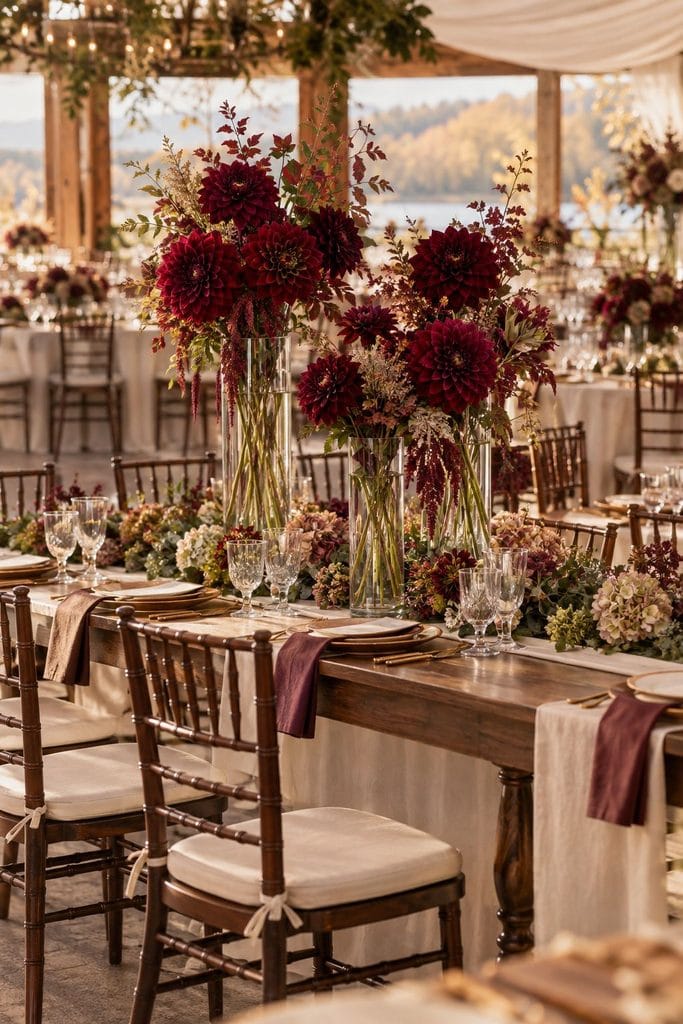
Three feet of moody burgundy dahlias spilling out of glass cylinders — this is the fall centerpiece that photographs beautifully from across the room and draws guests in up close. The transparency of the glass lets the stems become part of the display, especially when you bundle them with copper-tipped branches and a few sprigs of darkened eucalyptus weaving between blooms.
2. Ivory and Champagne Rose Compote Arrangements
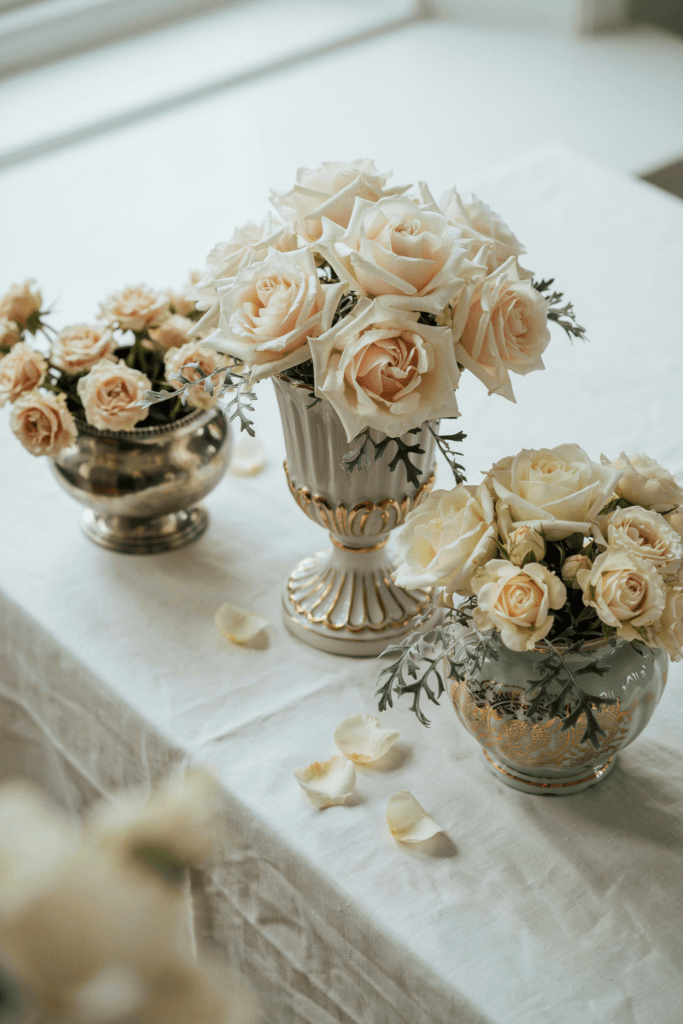
There’s a reason the garden rose compote arrangement has been a wedding staple for decades: it’s elegant, overflowing, and impossible to photograph badly. The compote’s pedestal silhouette elevates even the simplest bloom cluster, and ivory with champagne tones reads beautifully in warm candlelight — which is exactly the light you’ll have at a fall evening reception.
3. Cascading Candlelight with Seasonal Foliage Garlands
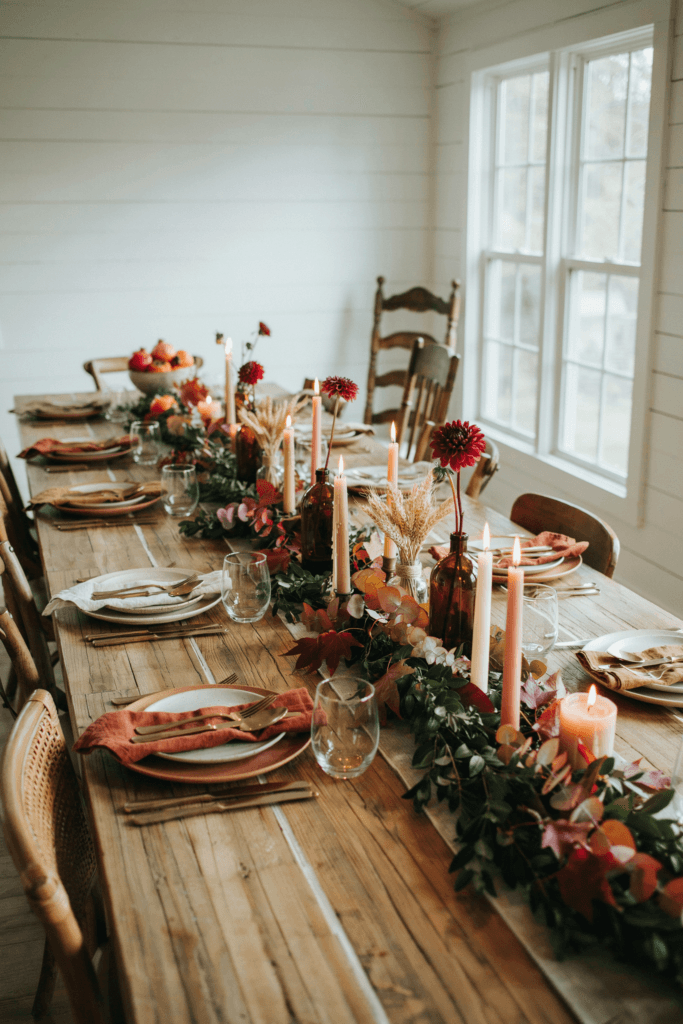
This isn’t a single centerpiece — it’s an experience running the full length of the table. A thick garland of copper beech leaves, preserved oak sprigs, and small burgundy blooms threads between pillar candles, creating the kind of reception table guests photograph compulsively. The trick is the candlelight: votives at the base, pillars in the middle, and tapers at the ends create layered warmth that makes the foliage glow amber.
4. Velvet Ribbon-Wrapped Bud Vase Collections
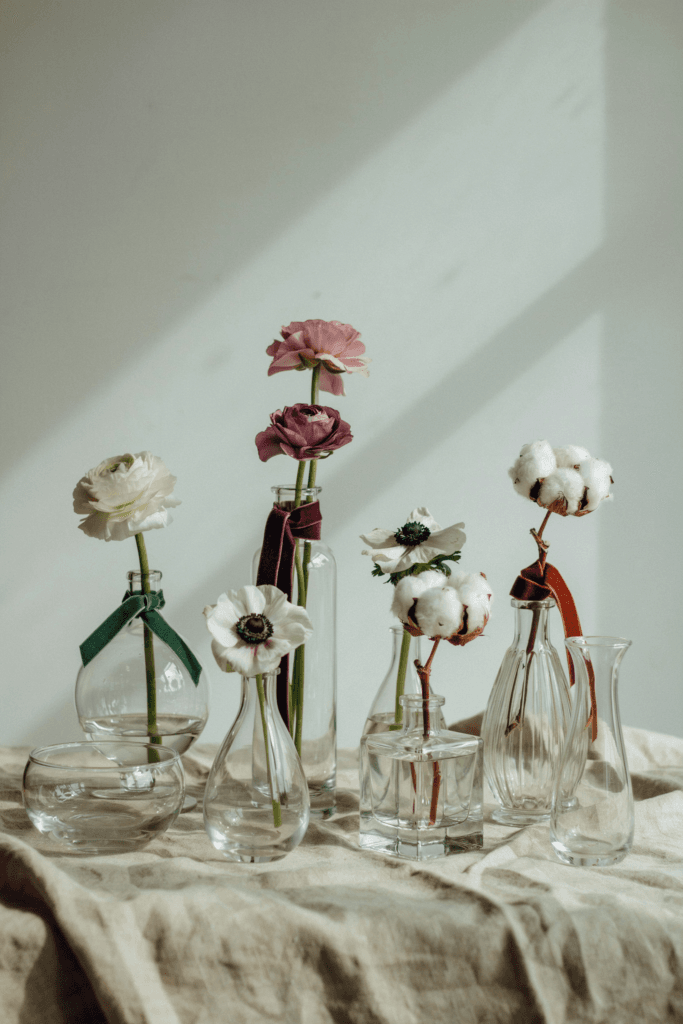
Single-stem bud vase clusters are the budget-conscious bride’s secret weapon — and when styled thoughtfully, they look more intentional than arrangements that cost five times as much. The velvet ribbon detail elevates the look instantly: a half-inch strip of plum, hunter green, or deep rust tied around each neck makes the collection feel cohesive and adds the tactile richness that fall demands.
Rustic and Farmhouse
5. Wooden Box Arrangements with Pumpkins and Herbs
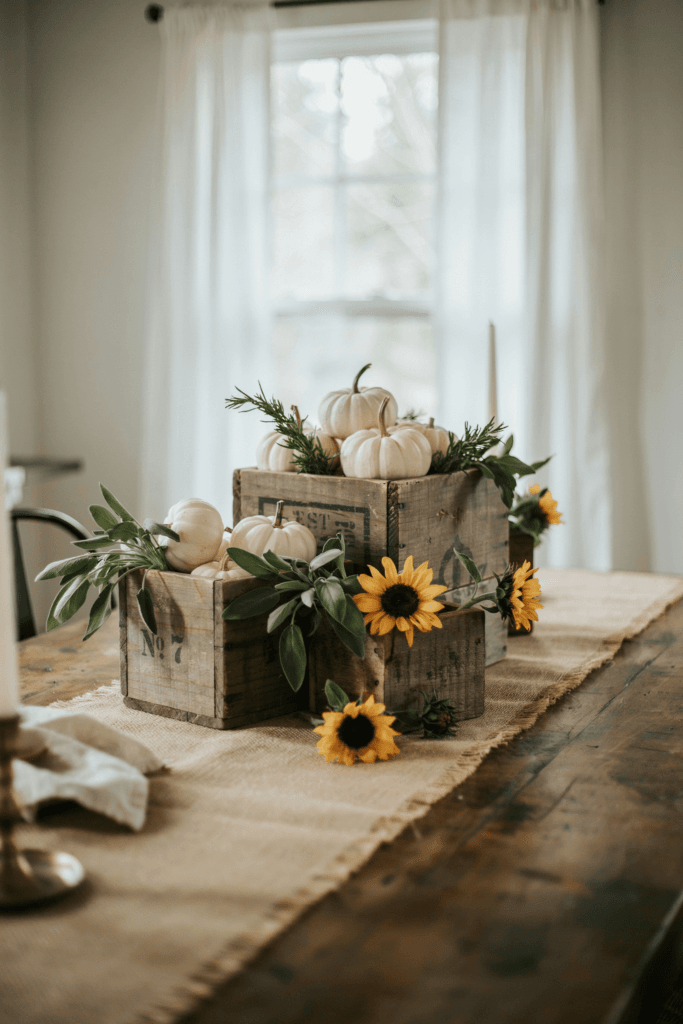
Wooden crates bring an earthy, farm-fresh energy that works beautifully at barn venues and outdoor fall weddings. This version leans sage and ivory rather than the predictable orange-and-rust palette — white pumpkins, dried rosemary, dusty sage greenery, and small cream sunflowers create something that feels curated rather than seasonal-by-default.
6. Mason Jar Clusters with Cotton Bolls and Wheat
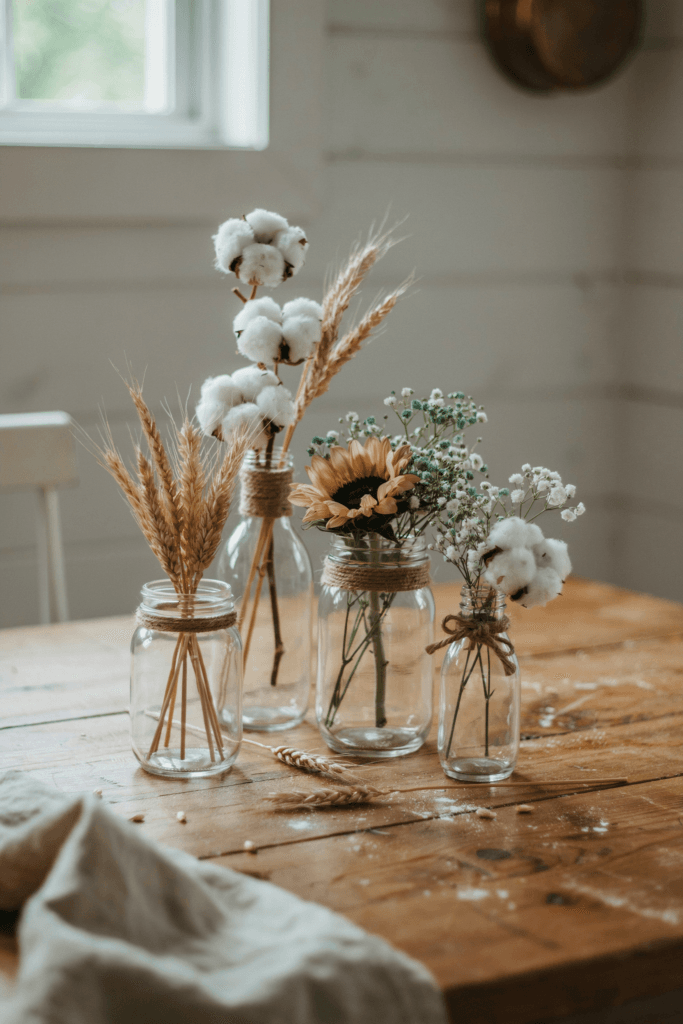
There’s a reason this look has endured: mason jars are incredibly forgiving to arrange, easy to transport, and they hold up all evening without special care. The cotton and wheat combination gives you the texture of a fall harvest field without a single pumpkin in sight — which makes it feel fresh rather than expected.
7. Lantern and Wildflower Combinations
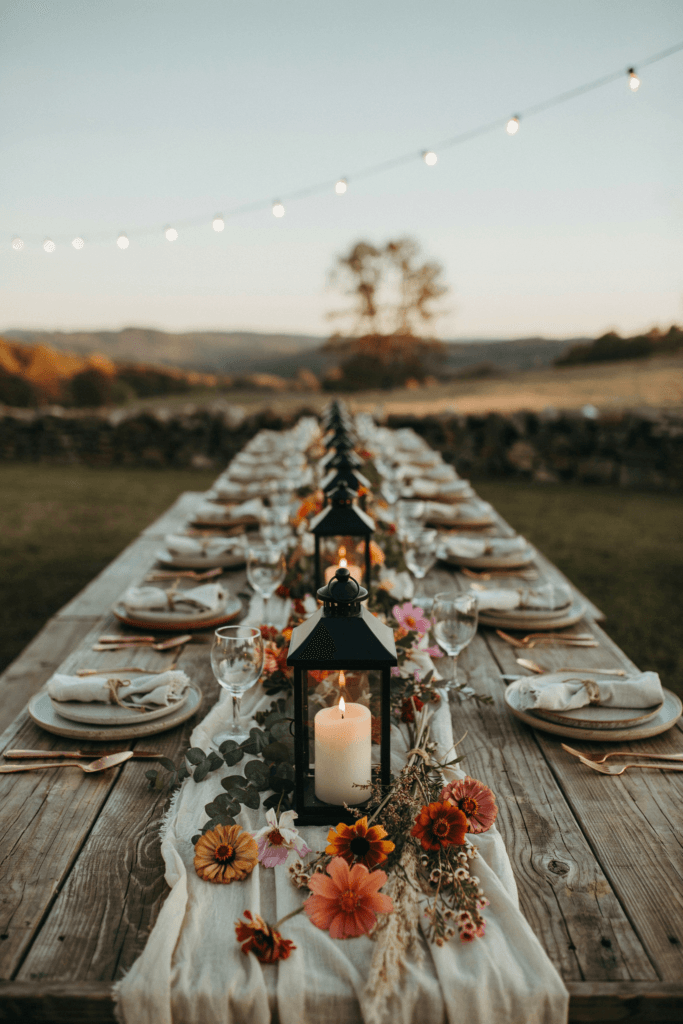
Black iron lanterns are one of the most versatile fall wedding props — they anchor a table visually, provide warm candlelight, and pair well with nearly any floral style. Surround each lantern with loose wildflower arrangements in amber, terracotta, and rust, and the setup looks like it grew naturally out of the landscape rather than being placed there by a florist.
8. Pumpkin Vase Arrangements
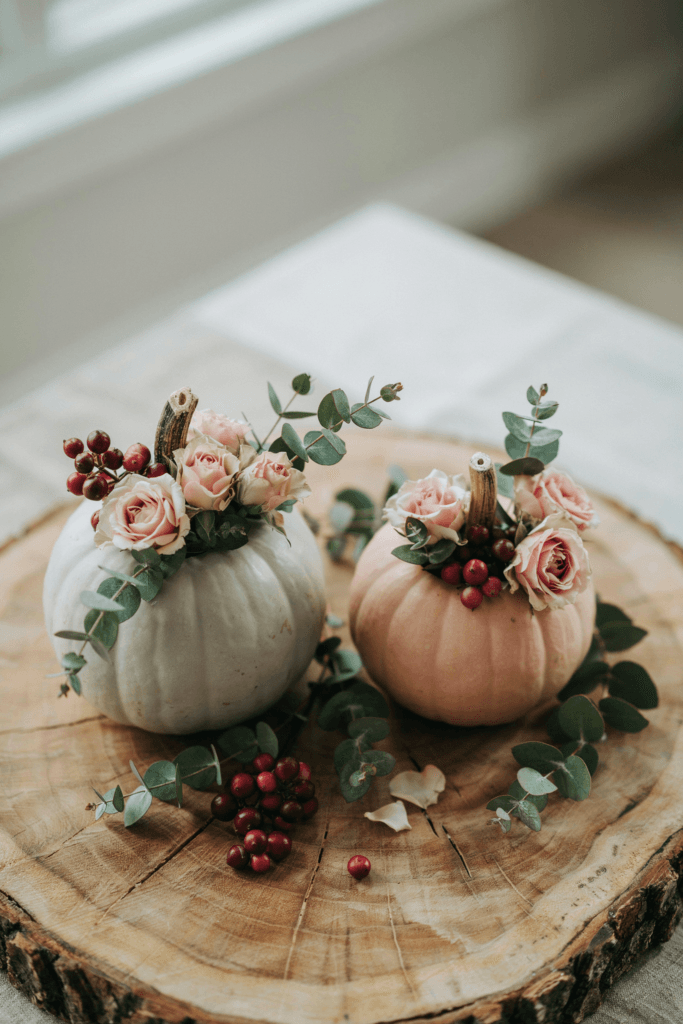
Carve the top off a white or blush pumpkin, drop in a small floral frog or water-filled cup, and you have a centerpiece vessel that took nature three months to grow. The trick is keeping the floral arrangement petite — a few garden roses, a sprig of eucalyptus, and a cluster of hypericum berries is all it needs. The pumpkin is the star; the flowers are the supporting cast.
Moody and Romantic
9. Deep Plum and Black Dahlia Arrangements
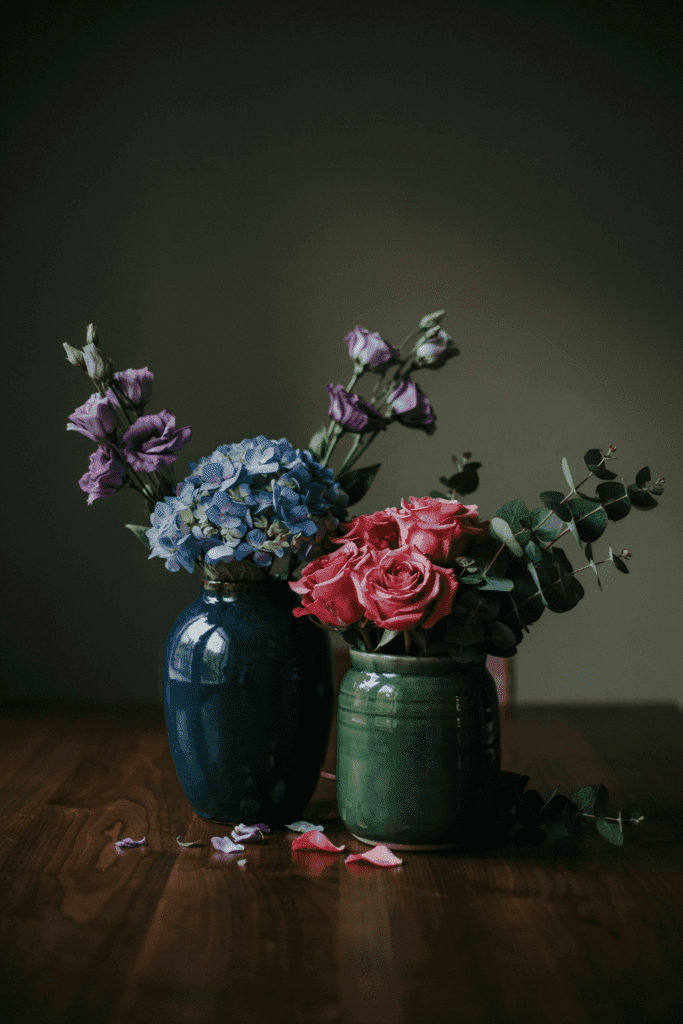
This is the centerpiece for the bride who’s done with blush and sage. Near-black dahlias — ‘Karma Choc’ or ‘Black Wizard’ varieties — have a velvety depth that photographs dramatically in low light, and paired with dark-stemmed eucalyptus and a single anemone with its characteristic black center, the arrangement reads as architectural and intentional. The matte black vessel disappears into the arrangement so the blooms own the table entirely.
10. Smoked Glass and Dried Pampas Arrangements
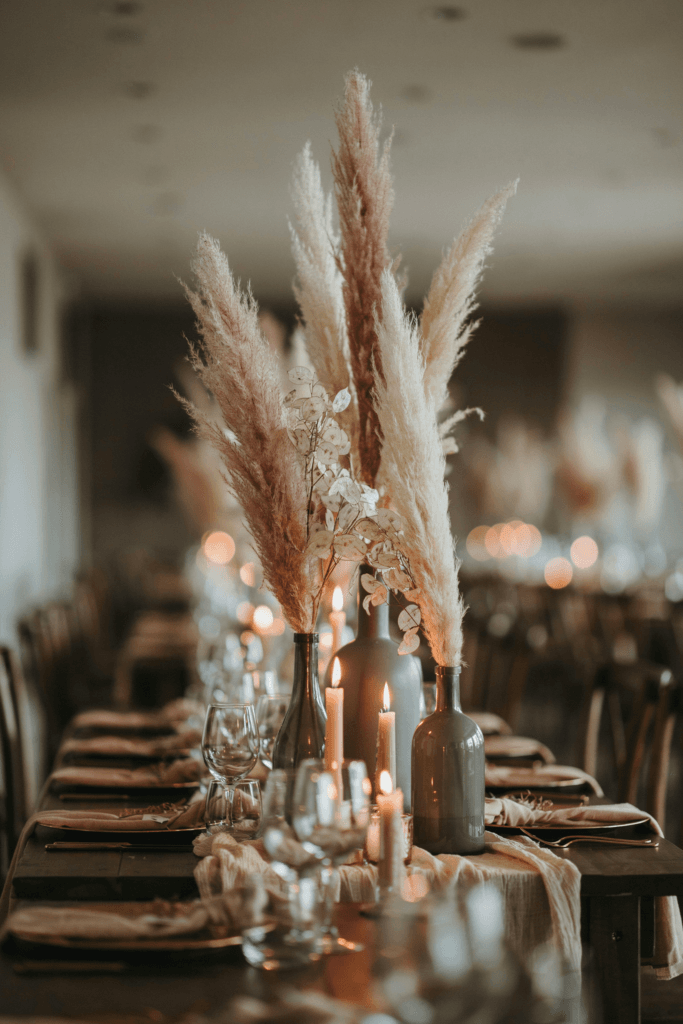
Dried pampas in smoked glass has a smoky, ethereal quality that works particularly well for evening fall weddings. The translucency of smoked glass catches candlelight differently than clear glass — it filters and softens it, casting a warm haze across the table. Dyed dusty rose pampas feels more romantic than natural cream, and the addition of dried lunaria (the silver dollar plant) adds a shimmering, paper-thin texture that catches light beautifully.
11. Taper Candle Forests with Berry Clusters
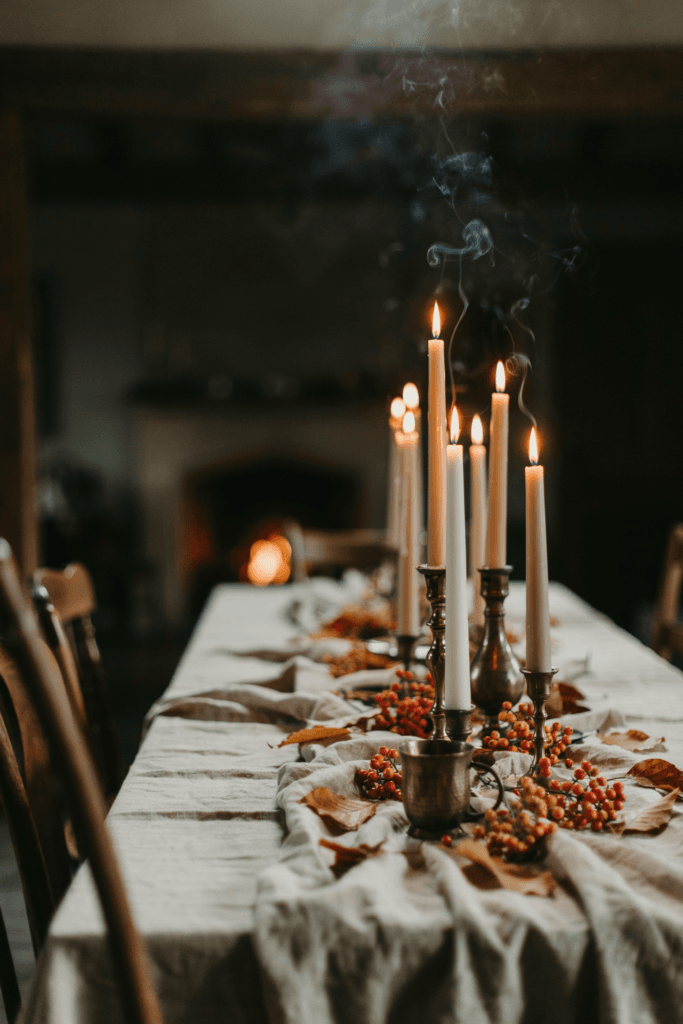
Sometimes the centerpiece is the candles. A forest of brass taper candles — seven to eleven per table, in mismatched holders from slim cylinders to ornate antique-style bases — creates a warm, flickering intimacy that no floral arrangement can replicate. Scatter loose hypericum berry stems and individual fall leaves between the holders, and the entire table glows as though it’s lit from within.
12. Oxblood and Bronze Arrangements with Trailing Amaranthus
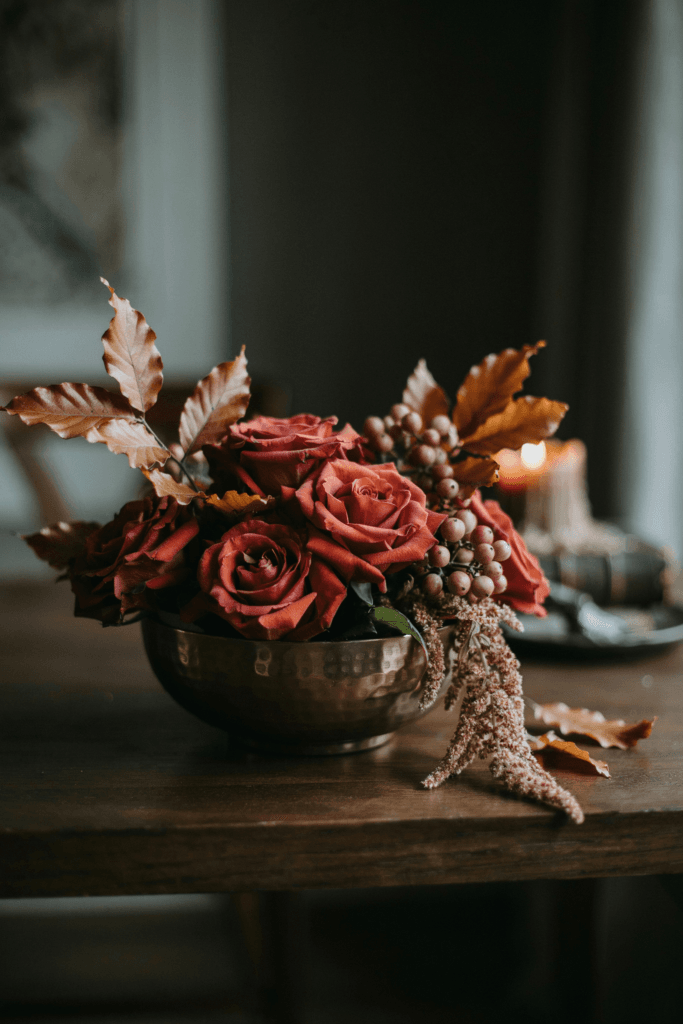
Trailing amaranthus — the variety that cascades in long, wine-colored ropes — is one of fall’s most underused elements. When it drapes over the edge of a hammered bronze compote filled with oxblood roses and copper beech foliage, it creates the kind of organic, overflowing richness that looks like it cost double what it actually did. The textural contrast between velvety amaranthus, waxy leaves, and soft rose petals is what makes this arrangement visually complex from across the room.
Boho and Garden Style
13. Wildflower Meadow Arrangements in Terra Cotta Pots
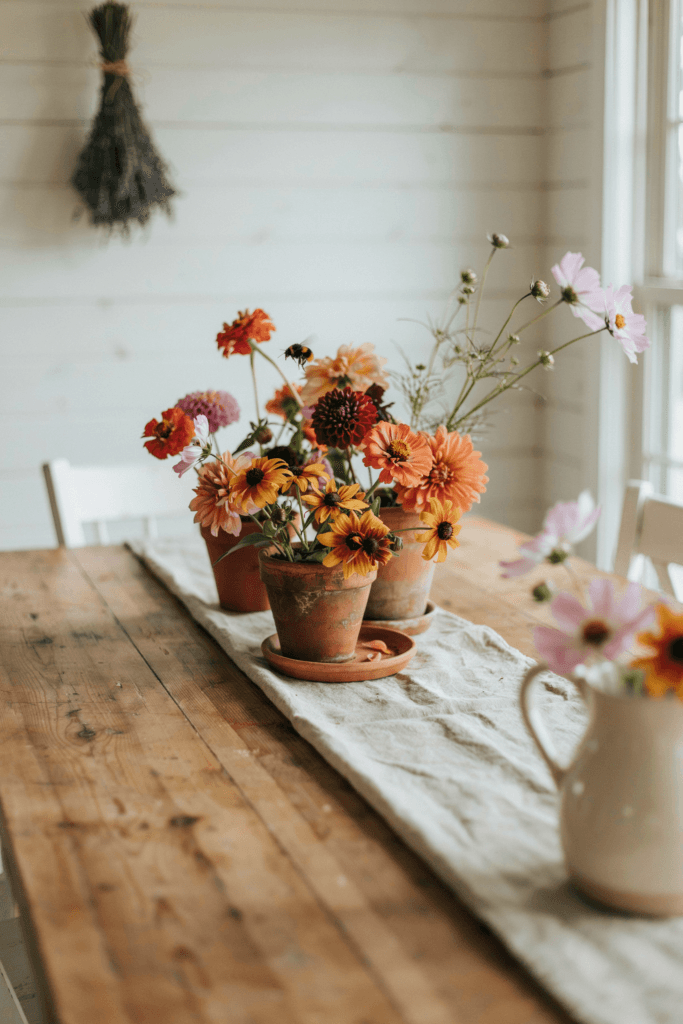
Terra cotta pots instantly signal warmth, imperfection, and a kind of effortless garden-party abundance that no engineered floral arrangement can imitate. Fill them generously with a mix of late-season wildflowers — zinnias in terracotta and coral, rudbeckia, small dahlias, and cosmos — and let the arrangement overflow without apology. The look is abundant, joyful, and completely approachable.
14. Dried and Pressed Botanical Arrangements
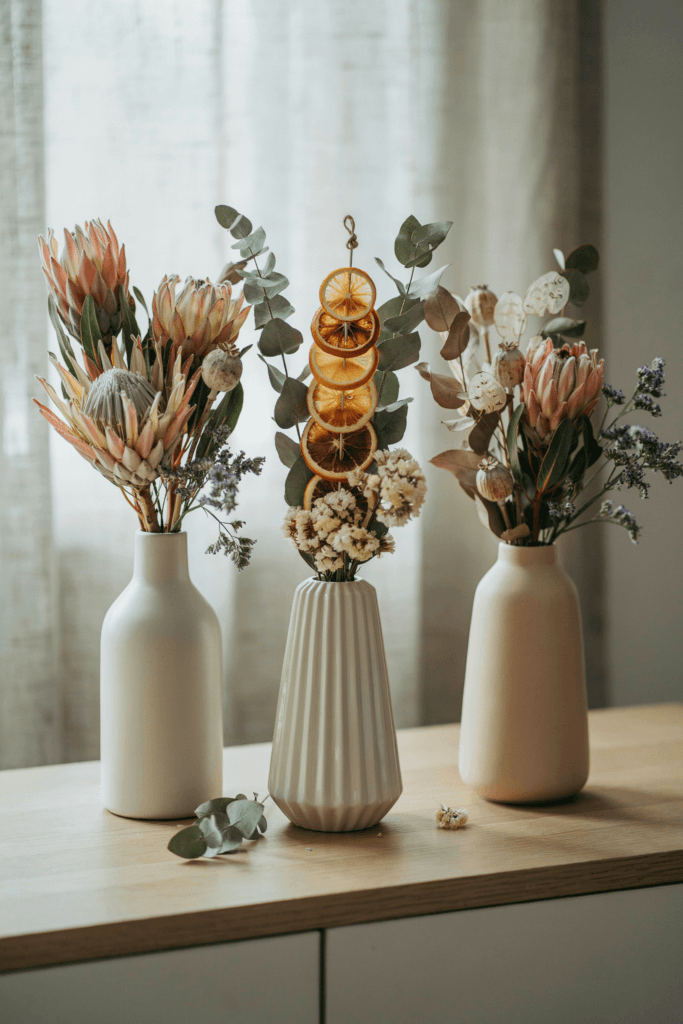
The dried botanical aesthetic sits squarely between art installation and centerpiece — structured, architectural, and designed to be admired rather than simply noticed. Dried protea is the anchor: its sculptural form holds up without water, ages beautifully over the course of an evening, and pairs unexpectedly well with citrus slices and bleached seed pods. This arrangement looks like something from a design studio, not a farmers market.
15. Eucalyptus and Peach Rose Low Arrangements
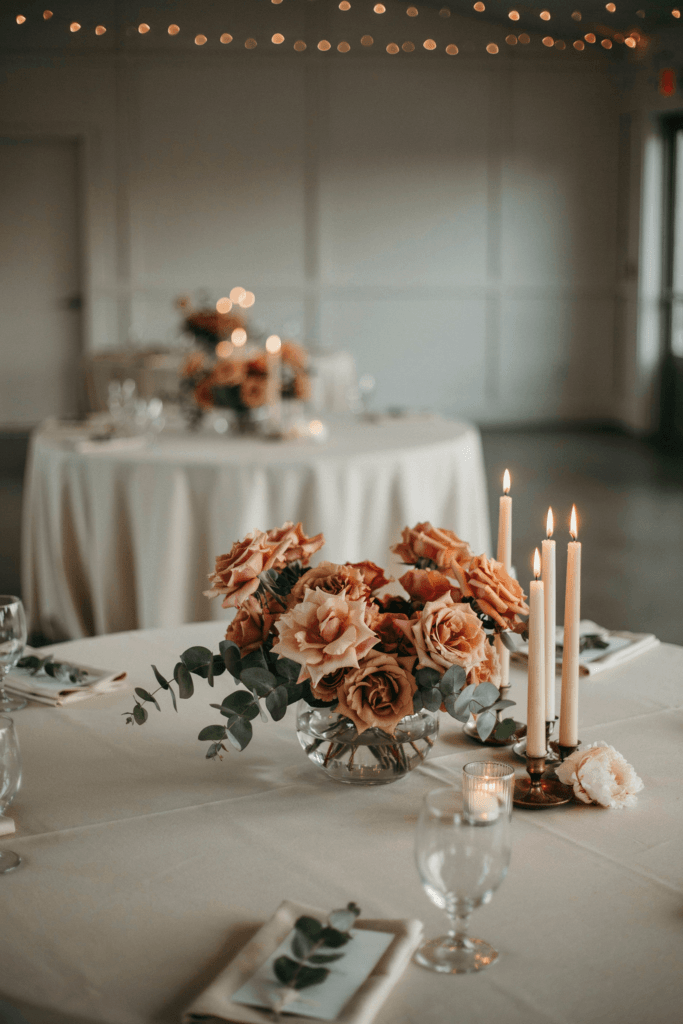
For round reception tables where sightlines matter, low arrangements are almost always the right call — and this eucalyptus and peach rose combination is about as universally flattering as centerpieces get. The soft peach reads warm and romantic in candlelight, the silvery eucalyptus prevents the arrangement from feeling too sweet, and the clear glass bowl keeps everything airy and unobtrusive.
Which Style Is Right for You?
With so many directions to go, it helps to anchor your decision in a few practical questions before falling in love with a look on Pinterest. Use this table to compare your top options:
| Style | Best Venue Type | DIY Difficulty | Cost Per Table | Seasonal Feel |
|---|---|---|---|---|
| Tall cylinder vases | Ballroom / barn | Medium | $40–$80 | Strong |
| Compote bowl | Ballroom / formal | Medium | $50–$90 | Moderate |
| Bud vase cluster | Any venue | Easy | $15–$35 | Flexible |
| Wooden crate | Barn / outdoor | Easy | $25–$50 | Strong |
| Candle forest | Any venue | Easy | $20–$45 | Moderate |
| Pumpkin vase | Barn / outdoor | Medium | $20–$40 | Very strong |
| Dried botanicals | Any venue | Easy | $25–$55 | Moderate |
| Garland runner | Long tables / barn | Advanced | $60–$120 | Very strong |
16. Copper and Blush Arrangements with Autumn Leaves
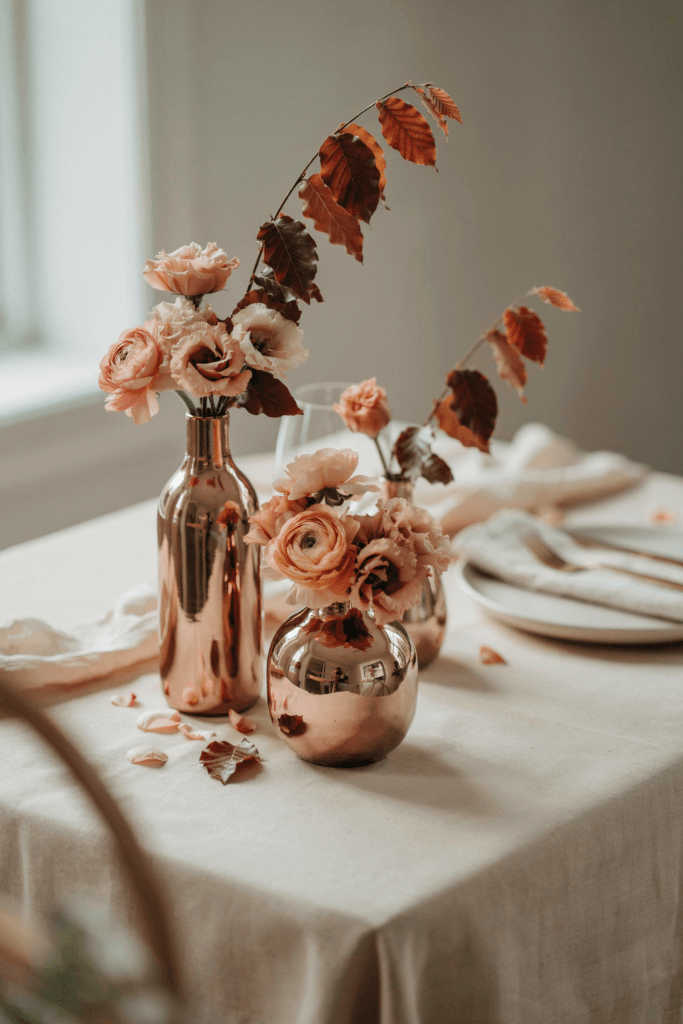
Copper metallics and blush florals are a combination that photography loves — the warm metallic reflects candlelight while blush tones stay soft and romantic without reading as “too pink.” Individual copper beech branches — their leaves a deep, burnished mahogany — give the arrangement genuine autumn identity without committing to the orange-dominant palette most fall weddings default to.
17. Thistle and Dusty Blue Arrangements
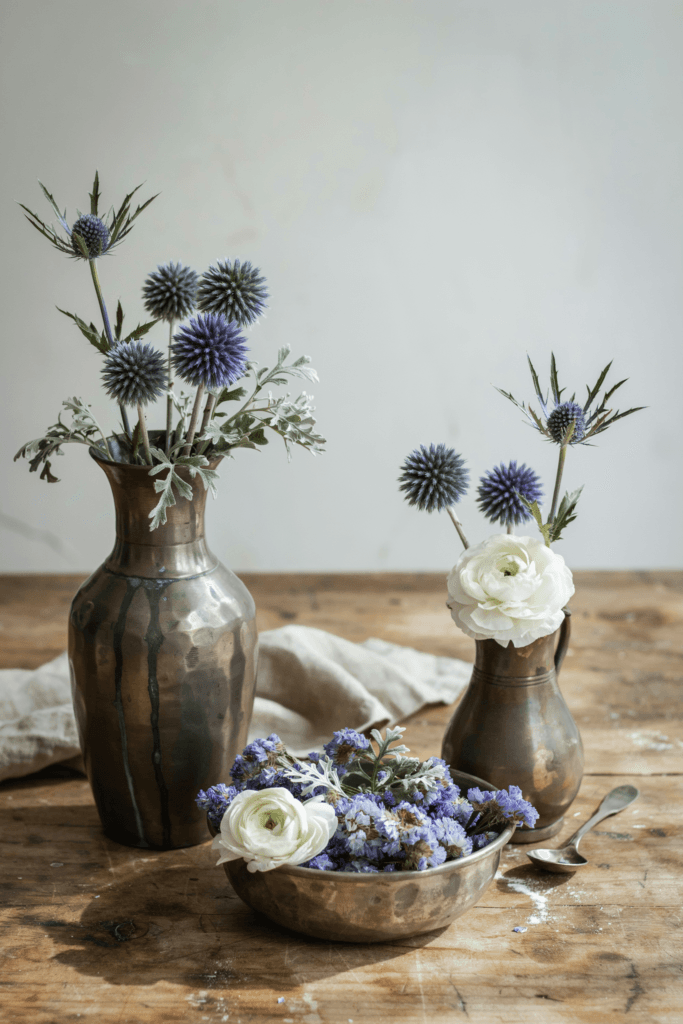
Blue in fall wedding florals is unexpected enough to make guests stop and look twice. Dried blue globe thistles have a structural, sculptural quality that no soft bloom can match — they hold their shape all evening, develop a more complex silvery-blue tone as they dry, and pair surprisingly well with white ranunculus and silver artemisia for a Celtic-influenced arrangement that feels genuinely distinctive.
18. Gold Geometric Terrariums with Succulents and Air Plants
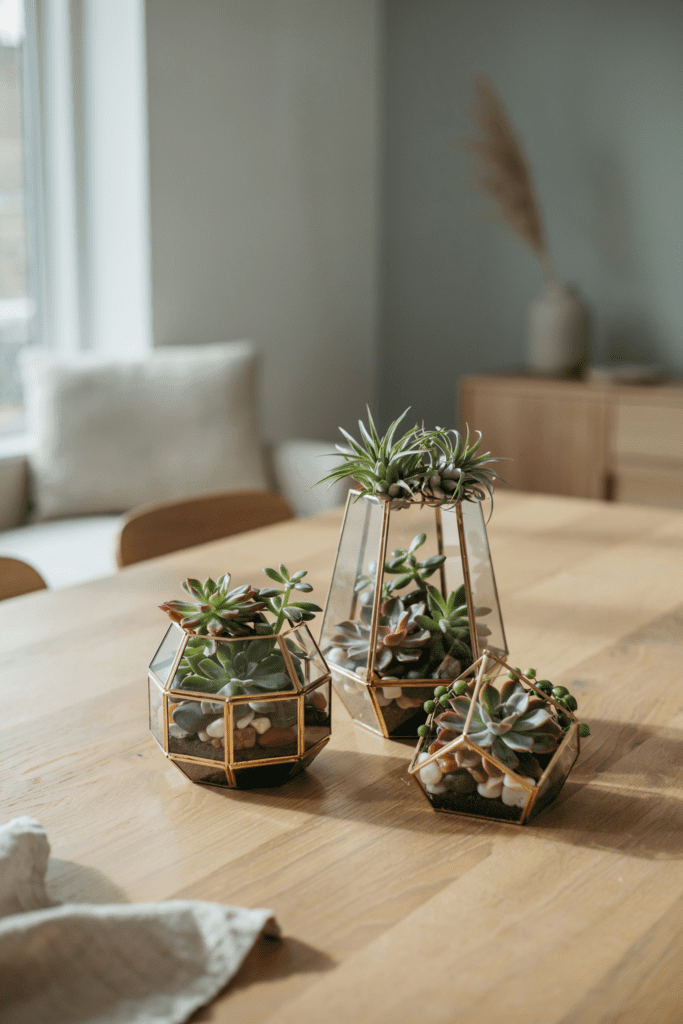
For the modern minimalist fall bride, geometric terrariums sidestep the flower-arrangement conversation entirely. The gold metal frame reads as autumn-adjacent without requiring a single seasonal flower, the succulents and air plants last indefinitely, and the angular geometry creates a dramatic visual contrast against the organic forms of everything else on a fall reception table.
DIY vs. Florist: What to Actually Consider
The decision to DIY your centerpieces is about more than budget — it’s about your timeline, tolerance for uncertainty, and whether you genuinely want to spend the morning of your wedding arranging flowers. Be honest with yourself about all three before committing.
| Factor | DIY | Hire a Florist |
|---|---|---|
| Cost per table | $15–$55 | $50–$200+ |
| Time commitment | High — 2–3 hrs prep per 10 tables | None — florist delivers and sets up |
| Flexibility | Full control over every element | Dependent on florist availability |
| Risk level | Higher — flowers can wilt or die | Lower — florist guarantees result |
| Best for | Brides with help, time, and crafting confidence | Brides who want zero wedding-day logistics |
| Tools needed | Floral foam, wire, tape, cutters | None — florist brings everything |
If you’re leaning DIY, a quality floral tool set with cutters, stem wire, floral tape, and arranging supplies is worth every cent — the right tools are what separate a professional-looking result from a frustrating one.
19. Amber and Cognac Arrangements in Vintage Bottles
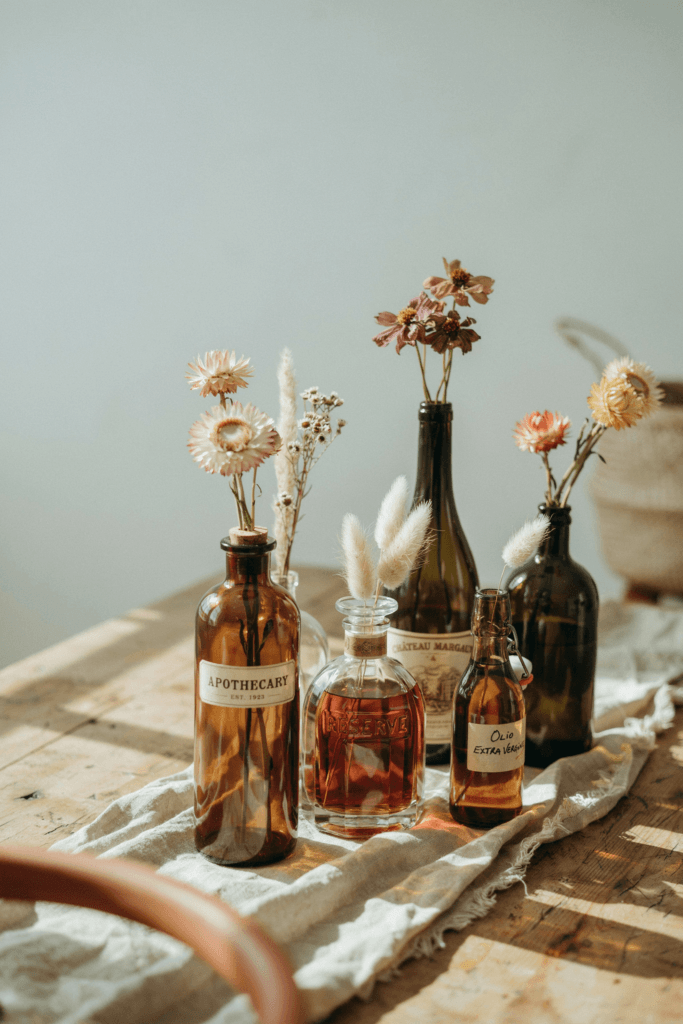
A collection of vintage bottles in amber, cognac, and smoke glass doesn’t need elaborate florals — one or two stems per bottle, and the bottles themselves become the visual interest. Sourced from thrift shops, estate sales, or online marketplaces, they’re genuinely unique: no two tables will be identical, which gives the reception an organic, eclectic energy that Pinterest-perfect arrangements rarely achieve.
20. Cascading Orchid and Fern Arrangements
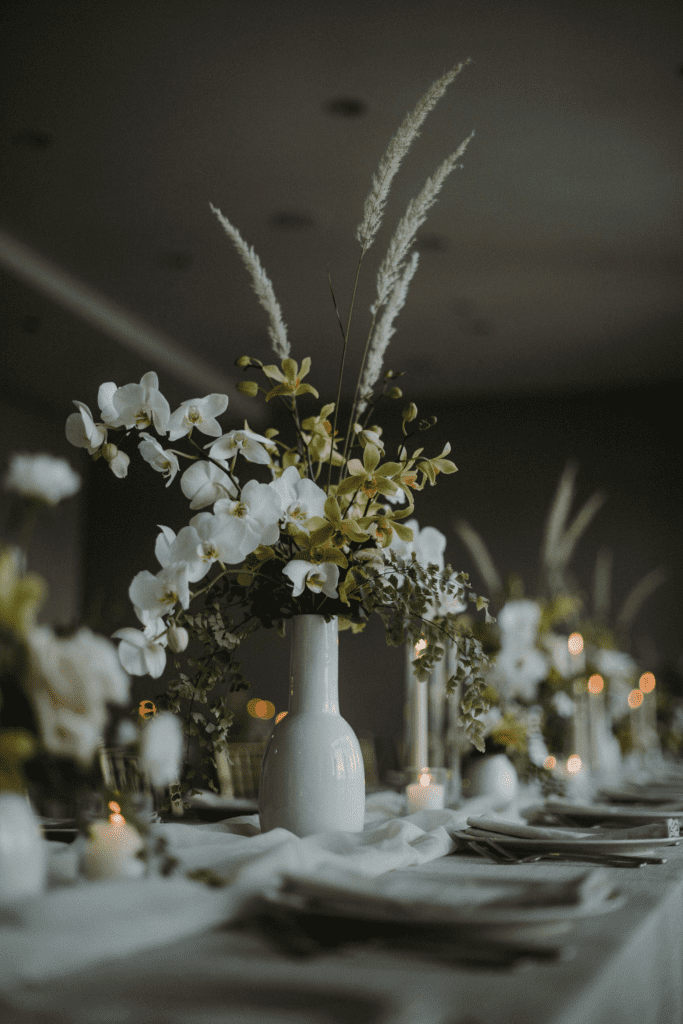
Orchids are a fall-wedding wildcard — they’re not seasonal, but their architectural drama is impossible to replicate with any other flower. Cascading stems of white phalaenopsis orchids with chartreuse accents create a long, arching silhouette that reads as elegant and slightly avant-garde, particularly against the warm wood tones of autumn venues. The trailing maidenhair fern softens the orchid’s structure without undermining its drama.
21. Sunflower and Sage Green Arrangements
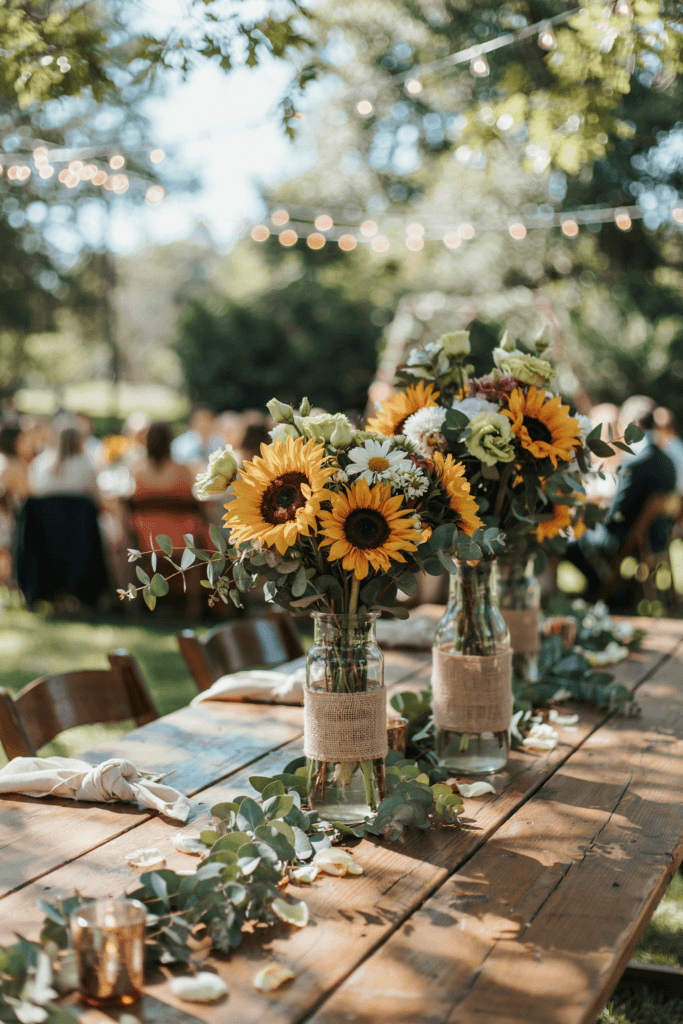
Sunflowers are the entry point that many fall brides start with — and for good reason. They’re reliably available from August through October, they photograph warmly in natural light, and they pair beautifully with sage green for a palette that feels distinctly autumnal without tipping into the orange-and-burgundy combination everyone expects. The jute-wrapped vase brings a tactile element that photographs as texture rather than effort.
22. Mushroom and Moss Tablescape Arrangements
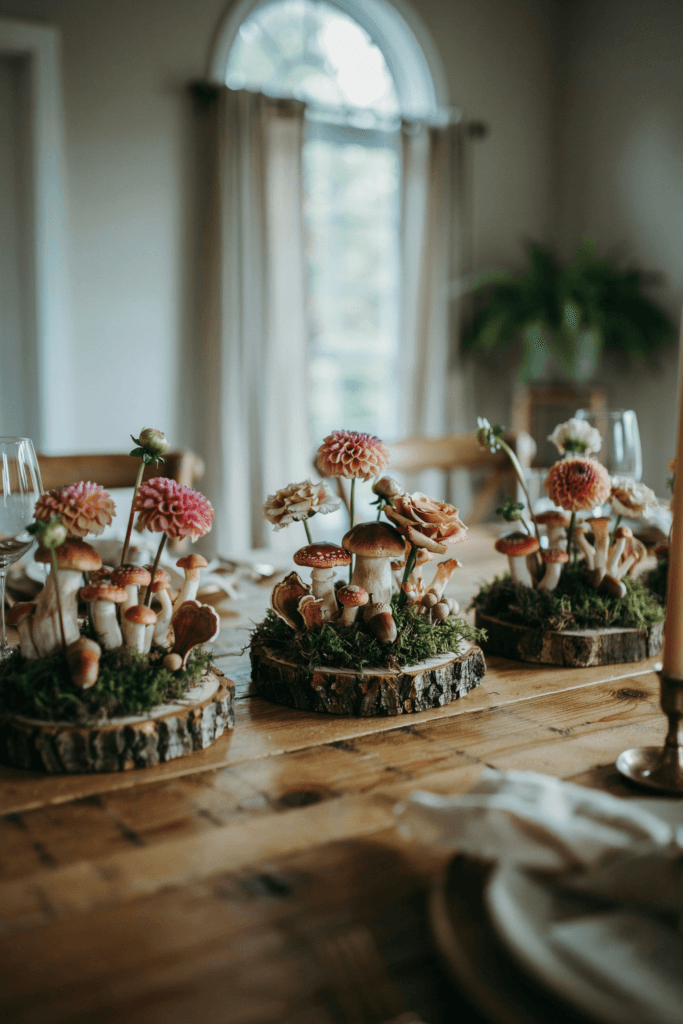
For the woodland bride who’s genuinely committed to the forest floor aesthetic, moss and mushroom arrangements occupy territory that no floral centerpiece can touch. Sheet moss creates a living-landscape base, decorative dried mushrooms provide height variation and texture, and scattered acorns and small fern fronds fill the gaps. This looks like something that grew there — which is precisely the point for a forest wedding theme.
23. Jewel-Toned Mixed Arrangements in Dark Vases
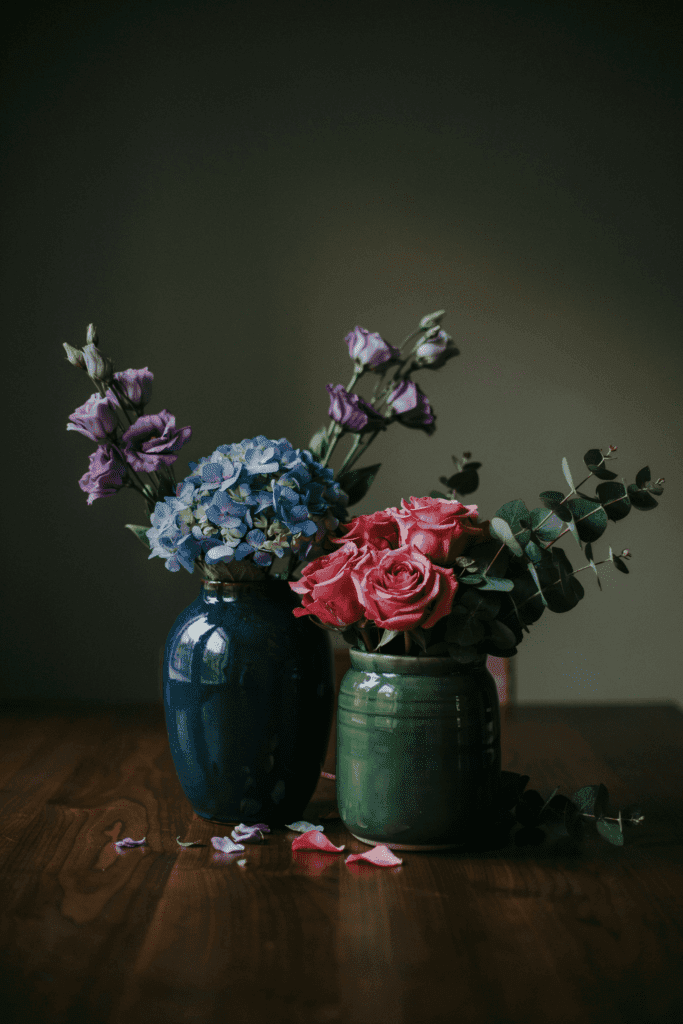
Jewel tones are a legitimate fall palette that most wedding planning content ignores in favor of burgundy and orange — which means this look photographs as something guests genuinely haven’t seen before. Deep sapphire hydrangea, amethyst lisianthus, and ruby roses against dark ceramic vessels create a richly saturated, almost Victorian abundance that reads as both seasonal and entirely individual.
Modern and Minimalist
24. Single-Stem Protea in Matte White Vessels
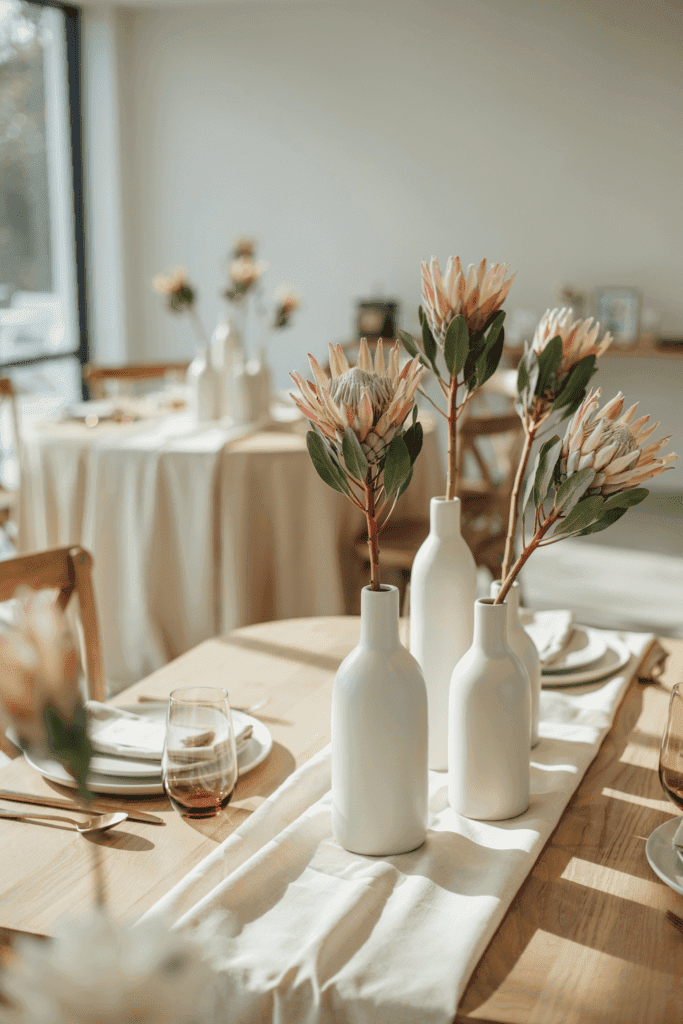
A single king protea in a matte white cylinder is a masterclass in restraint. The protea’s architectural form — its layered, globe-like head and robust stem — needs nothing around it. This is the centerpiece that makes guests stop mid-conversation and look at the table because something is clearly, intentionally different. The matte white vessel disappears; the protea commands the space entirely.
25. Olive Branch and White Peony Arrangements
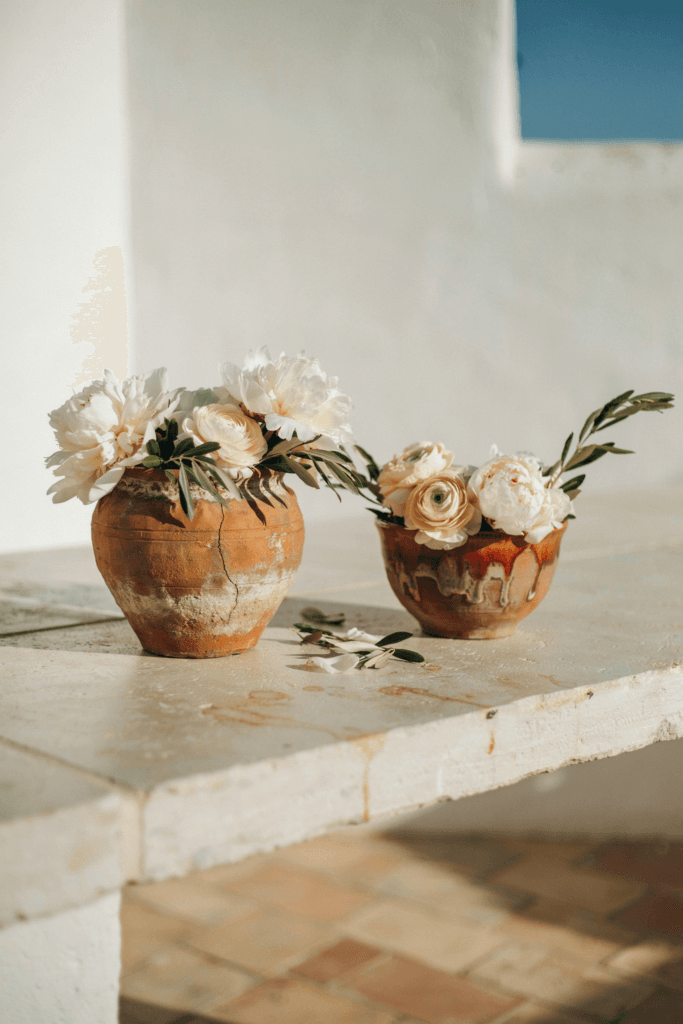
Olive branches are having a moment in wedding florals — and for fall weddings, their silvery-green, slightly draped foliage creates an atmosphere that feels simultaneously Mediterranean and autumnal. Paired with white peonies and cream ranunculus in aged terracotta, the combination reads as classic, quietly luxurious, and completely timeless. No pumpkins, no orange — just elemental beauty.
26. Wheat Sheaf and Linen Table Arrangements
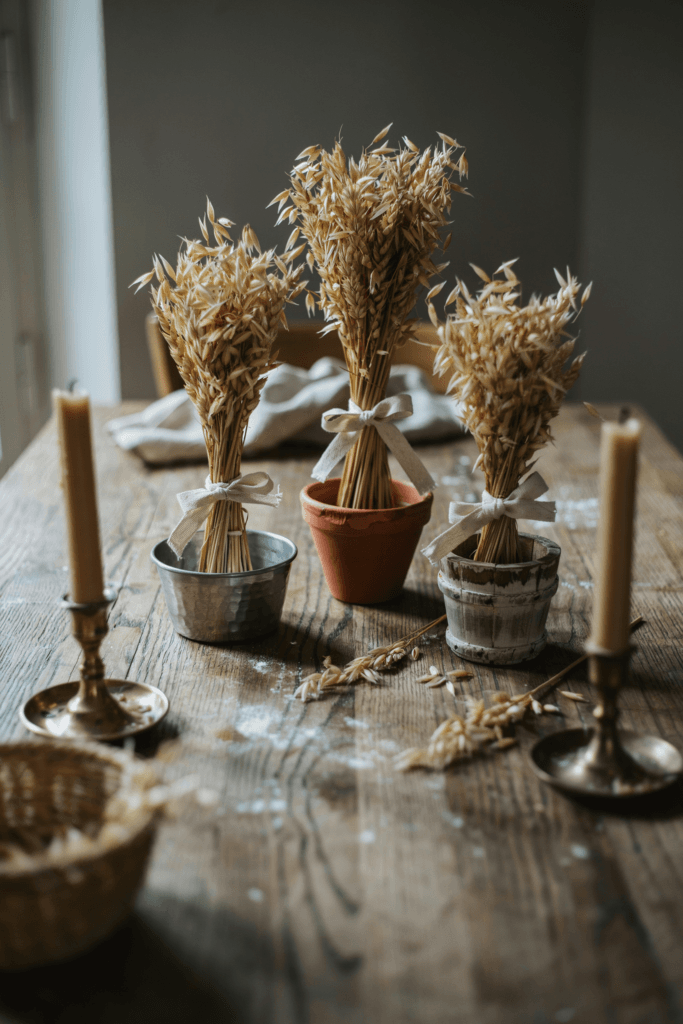
A gathered wheat sheaf is one of the oldest harvest symbols in existence — and at a fall wedding table, it carries that history effortlessly. This version stands the sheaves upright in shallow round vessels so they fan slightly at the top, creating a warm, amber-gold form that catches candlelight and casts gentle shadows across the table. The linen ribbon tie at the base adds a tactile, handcrafted quality that elevates the whole look.
27. Calla Lily and Black Leaf Arrangements
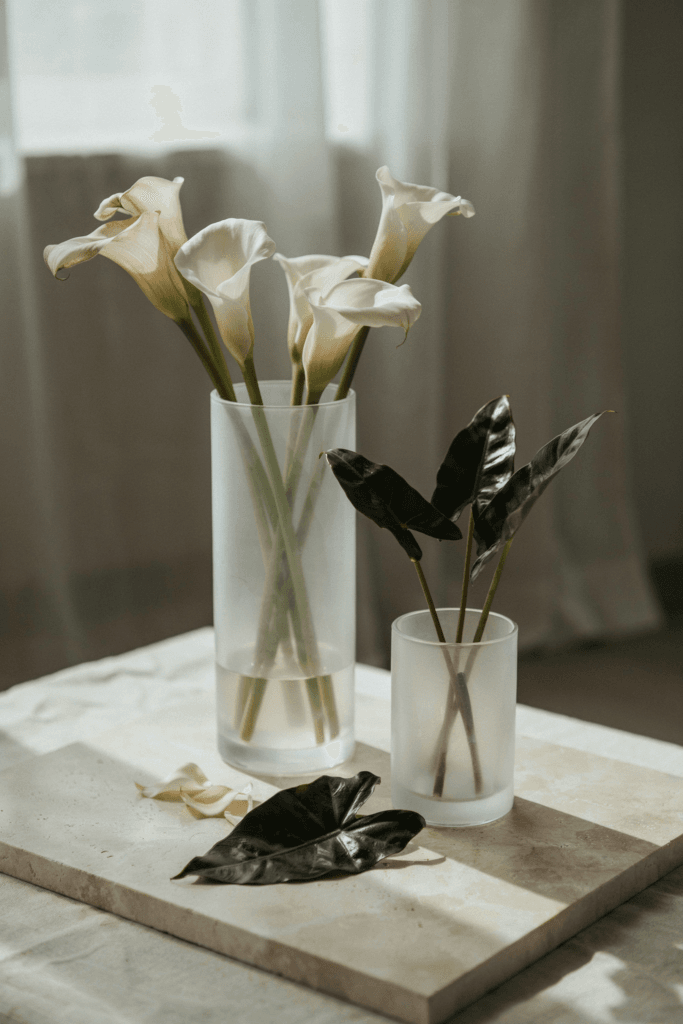
Black botanical leaves — colocasia, alocasia, and black-stemmed taro — create one of the most dramatic contrasts available in fall florals when placed alongside soft ivory calla lilies. The pairing is simultaneously modern and slightly otherworldly, with the large, sculptural leaves making the calla lilies look even more luminous by contrast. Frosted glass vessels diffuse the light softly and prevent the arrangement from reading as too stark.
28. Feather and Berry Arrangements

Feathers in fall centerpieces are a wildcard that works when used with restraint — one or two dark pheasant feathers tucked into an orange berry and ranunculus arrangement add a textural surprise without tipping into costume territory. The feather catches air movement throughout the evening, creating a subtle, organic motion that no other centerpiece element can replicate.
29. Frosted Branch Arrangements with Hanging Ornaments

Branches as centerpiece structures — rather than mere filler — create a genuine architectural moment above the table. Matte gold-painted branches in heavy stone vessels anchor the arrangement while the hanging elements do the visual work: dried rosebuds, amber glass drops, and small crystal pendants hung from fishing wire create motion, light play, and depth that a traditional floral arrangement simply cannot replicate. Guests look up as well as across.
30. Ombre Mum Arrangements in Terracotta

Chrysanthemums deserve a serious comeback in wedding florals. They hold longer than almost any other cut flower, come in every color imaginable, and — when arranged in an ombre gradient from cream through peach to deep rust — create a sweep of autumnal color across the table that looks more expensive and intentional than a random mixed arrangement ever could. This is the unsung hero of budget fall centerpieces.
Common Mistakes to Avoid
- Choosing height without checking sightlines: Tall arrangements look spectacular in photos, but if guests can’t see each other across the table, they’ll remember the conversation they couldn’t have, not the flowers. Test your arrangement height while seated before committing to it.
- Buying fresh flowers too early: Most cut flowers peak 3–5 days after cutting. Order for delivery 1–2 days before your event — not a week out — or you’ll be watching your focal blooms droop during the ceremony.
- Ignoring the table setting context: A centerpiece that looks stunning in isolation can read as competing with busy charger plates, patterned linens, or heavily styled place settings. Finalize your table linen and tableware choices before committing to a centerpiece style.
- Overcrowding the arrangement: Beginners tend to fill every gap. Negative space — actual breathing room between stems — is what makes professional arrangements look expensive. Less is almost always more with fall florals.
- Defaulting to orange without considering your venue’s existing tones: Orange reads beautifully against white and cream, but can clash with warm wood tones or amber-lit brick venues that already carry a lot of orange and red in the space. Test your palette against the venue’s actual colors before finalizing.
Frequently Asked Questions
How far in advance can I make fall wedding centerpieces?
It depends on the materials. Fully dried arrangements (pampas, botanicals, wheat) can be made 4–6 weeks in advance. Mixed dried-and-fresh arrangements should be assembled 24–48 hours before the event. Fully fresh arrangements should ideally be completed the morning of the wedding or the evening before, stored in a cool location overnight.
Can you use real pumpkins in wedding centerpieces?
Yes, but with timing caveats. Carved pumpkins used as vases stay fresh for 5–7 days if kept cool and lined with a water-filled plastic cup. Uncarved decorative pumpkins last 2–3 months, making them safe to place well in advance. Avoid leaving carved pumpkins in warm or sunny spaces, which accelerates softening.
What’s the cheapest way to make fall wedding centerpieces?
Bud vase clusters and candle-forward arrangements consistently deliver the highest visual impact for the lowest cost. Sourcing from wholesale flower markets, Trader Joe’s, or direct-from-farm services rather than retail florists typically saves 40–60% on flower costs. A complete bud vase cluster per table can be assembled for $15–$25 in total materials.
Should I use tall or low centerpieces for round tables?
Low arrangements (under 14″) are generally safer for round tables — they allow guests on opposite sides to make eye contact without leaning around flowers. Tall arrangements work for round tables only when the vessel is narrow and the blooms are clustered at height rather than spread wide.
What fall flowers are actually in season versus imported?
Truly in-season fall flowers include dahlias (August–October), sunflowers, marigolds, zinnias, chrysanthemums, and hypericum berries. Most roses, peonies, and orchids are imported year-round — available but more expensive and with a higher risk of quality variation depending on the shipping source.
How do I keep fresh flower centerpieces from wilting during a long reception?
Keep all arrangements in water-filled vessels (never dry floral foam for same-day events), store them in a cool location until setup, and mist stems lightly before placing. Avoid setting arrangements near heat vents, direct sunlight, or near entrances where warm exterior air circulates. Flowers arranged in cool conditions the morning of the wedding typically stay fresh for 8–12 hours.
More Inspiration You’ll Love
- Fall wedding bouquet ideas to complement your centerpieces
- Rustic wedding ideas for every part of your celebration
- Beautiful fall wedding cake ideas for every style
- Burnt orange wedding inspiration, décor, and color palettes
- Moody fall wedding ideas for a dramatic, romantic celebration
- More rustic wedding centerpiece ideas and styling inspiration
- Forest wedding ideas for a woodland ceremony and reception


One Comment