10 Japanese Wedding Cake Designs That Will Steal Your Heart
Quick Answer: Japanese wedding cakes celebrate minimalism, fresh seasonal fruit, and delicate artistry over ornate frosting. Signature styles include bare sponge cakes with hand-painted details, gold leaf accents, monochromatic elegance, and abundant fresh fruit arrangements that showcase the cake’s natural beauty.
If you’re drawn to the calm, intentional beauty of Japanese design, traditional wedding cakes might feel overwhelming—too much frosting, too much fuss. Japanese cake aesthetics are the antidote: they’re stunning without being over-the-top, elegant without screaming for attention, and surprisingly approachable to source even if you’re not in Japan.
Below are ten real-world Japanese wedding cake designs that prove minimalism is anything but boring. Each one is a lesson in restraint, seasonality, and letting good ingredients speak for themselves.
1. Architectural Minimalism: The Hidemi Sugino Statement Cake
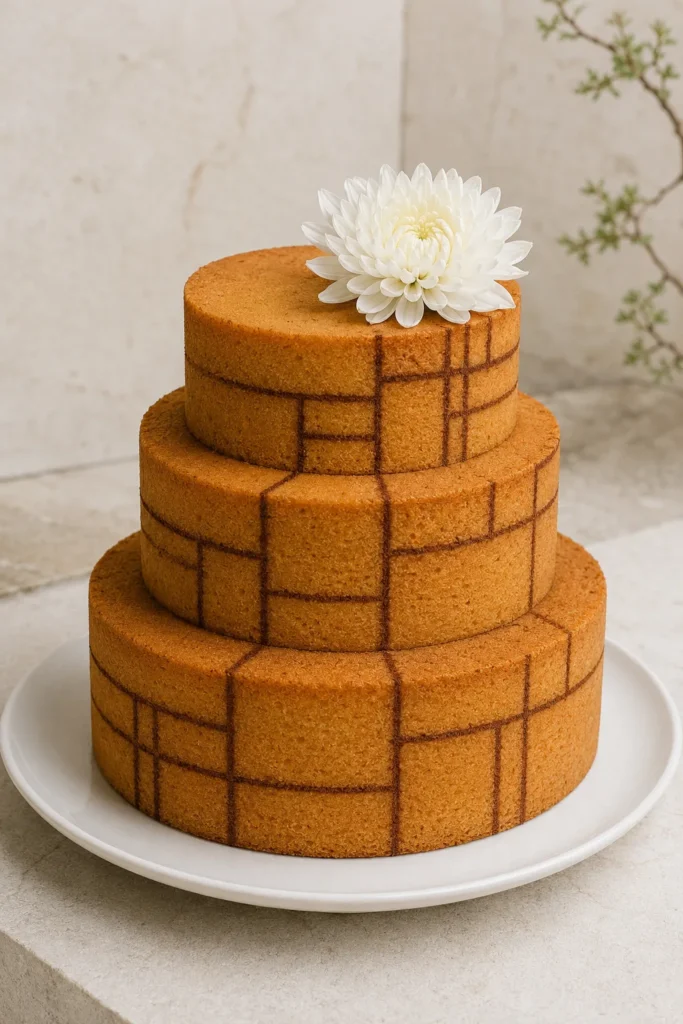
This is the signature Hidemi Sugino aesthetic—stark, measured, almost architectural in its precision. A naked sponge cake stands alone with only delicate cocoa powder lines defining structure. No frosting. No clutter. Pure trust in the sponge itself. A single white bloom sits off-center, proving that one element placed with intention outweighs a dozen scattered carelessly.
This design is not forgiving—every layer must be level, the sponge crumb must be fine and tender, and the execution must be flawless. It’s what sophisticated minimalism actually demands: mastery. But the payoff? Unforgettable.
Why This Works
Geometric lines feel modern and intentional. The absence of frosting lets the sponge texture shine. A single flower becomes a focal point rather than decoration.
Styling Tips
- Serve on a pristine white plate or a natural wood round to emphasize the cake’s stark beauty—background matters here
- Pair with a Japanese tea service or sake to complete the Zen aesthetic
- Photograph from directly above to capture the geometric precision
2. Fruit Abundance: The Strawberry Garden Cake
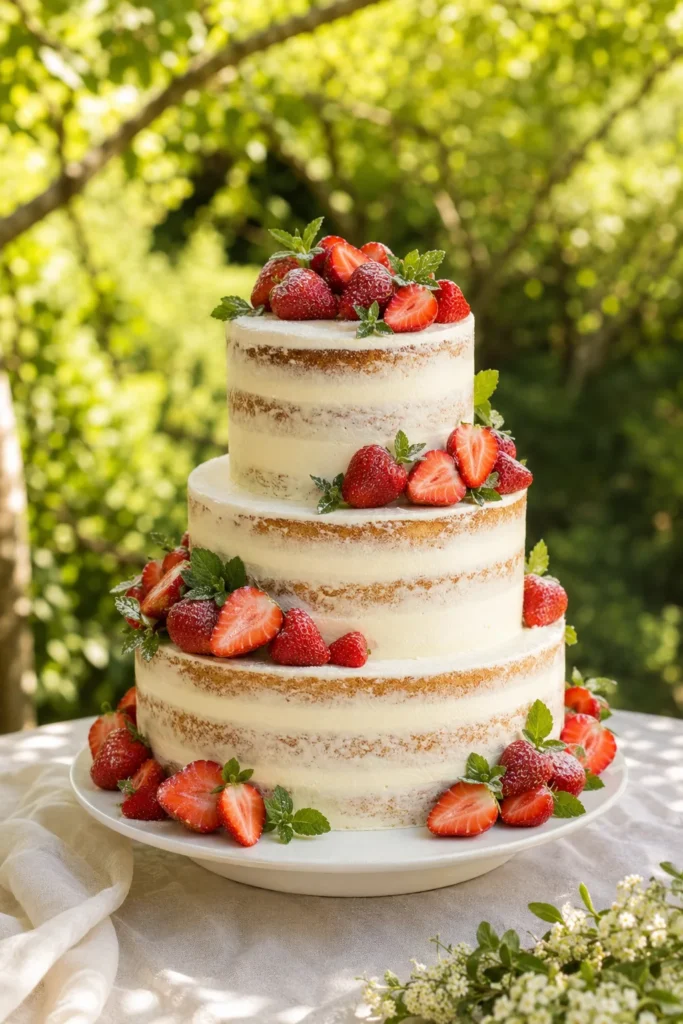
This is Japanese fruit-forward design at its most inviting: a semi-naked sponge cake crowned with an almost casual overflow of fresh strawberries. The berries aren’t piped or fussed—they’re simply arranged with confidence. Soft green mint leaves peek through, grounding the design in garden-fresh sensibility rather than formal pastry technique.
The magic is in the abundance without chaos. Ten strawberries look plentiful; fifty arranged with intention look intentional. This design celebrates seasonality and the simple perfection of ripe fruit at peak season.
Why This Works
Fresh fruit needs no frosting to be beautiful. Abundance communicates abundance of joy. The semi-naked sponge visible on the sides proves authenticity—this is real cake, not a frosting display.
Styling Tips
- Source strawberries from a farmers market 24 hours before service to guarantee peak ripeness and natural shine. Consider pairing with a white ceramic cake stand for elegant presentation.
- Arrange berries in ascending or spiraling pattern—randomness should feel considered, not accidental
- Photograph outdoors in garden setting for authentic visual story
3. Hand-Painted Watercolor: The Brushstroke Cake
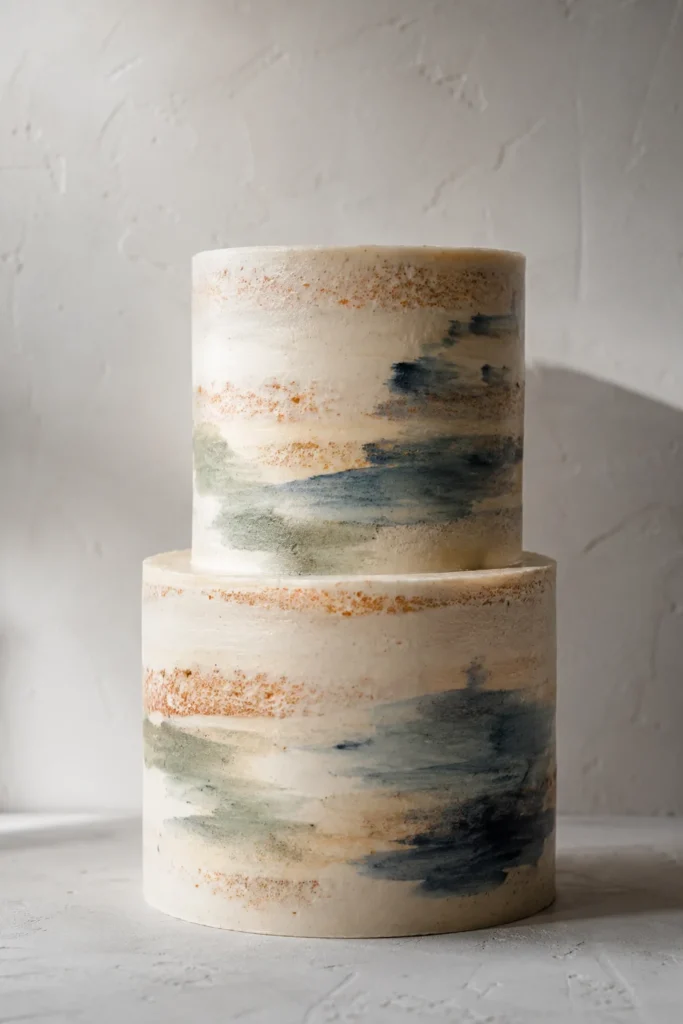
This is where Japanese aesthetics meet fine art. Soft watercolor brush strokes—the kind that look like they took 30 seconds but took a skilled hand and steady years of practice—paint subtle designs directly onto the naked sponge. Blues, greens, and grays drift across the cake like ink in water. No piping. No sculpting. Just brushwork and trust.
The beauty lies in the impermanence—watercolor technique means slight variations in tone, edges that fade, organic lines that can’t be replicated. Each cake becomes genuinely one-of-a-kind.
Why This Works
Hand-painting creates authenticity and exclusivity. Watercolor technique feels artistic and intentional. Soft colors feel sophisticated rather than loud.
Styling Tips
- Commission the hand-painting as the final step—don’t cake ahead and risk the paint drying poorly
- Use food-safe watercolors or artistic food coloring diluted to paint consistency
- Serve in a minimal setting where the painted details are the only visual focal point
4. Gold Leaf Luxury: The Modern Metallic Accent Cake
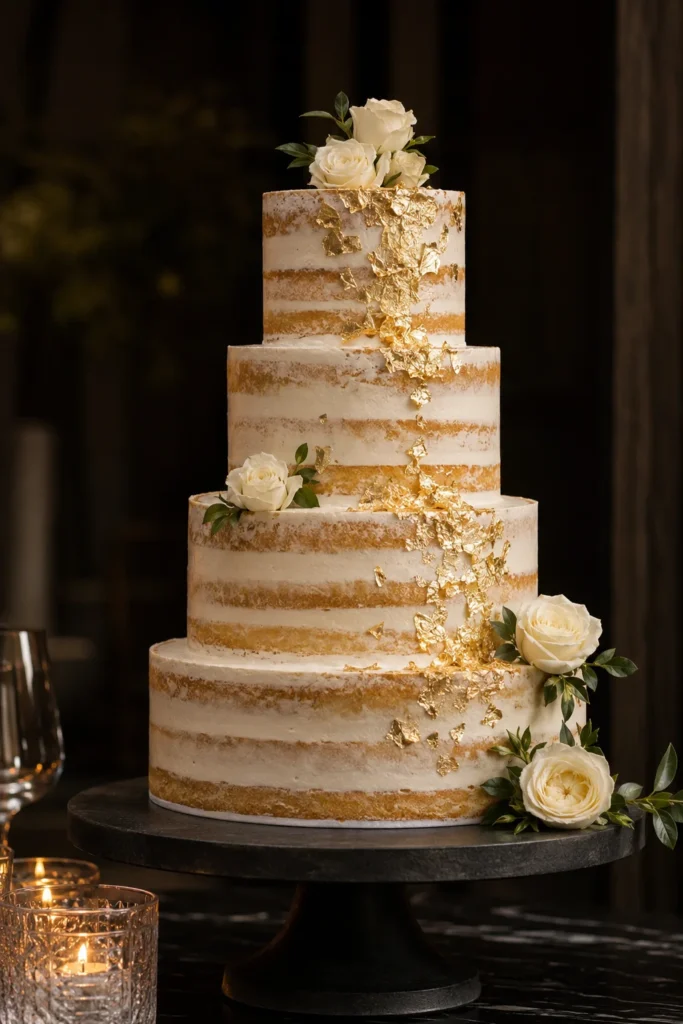
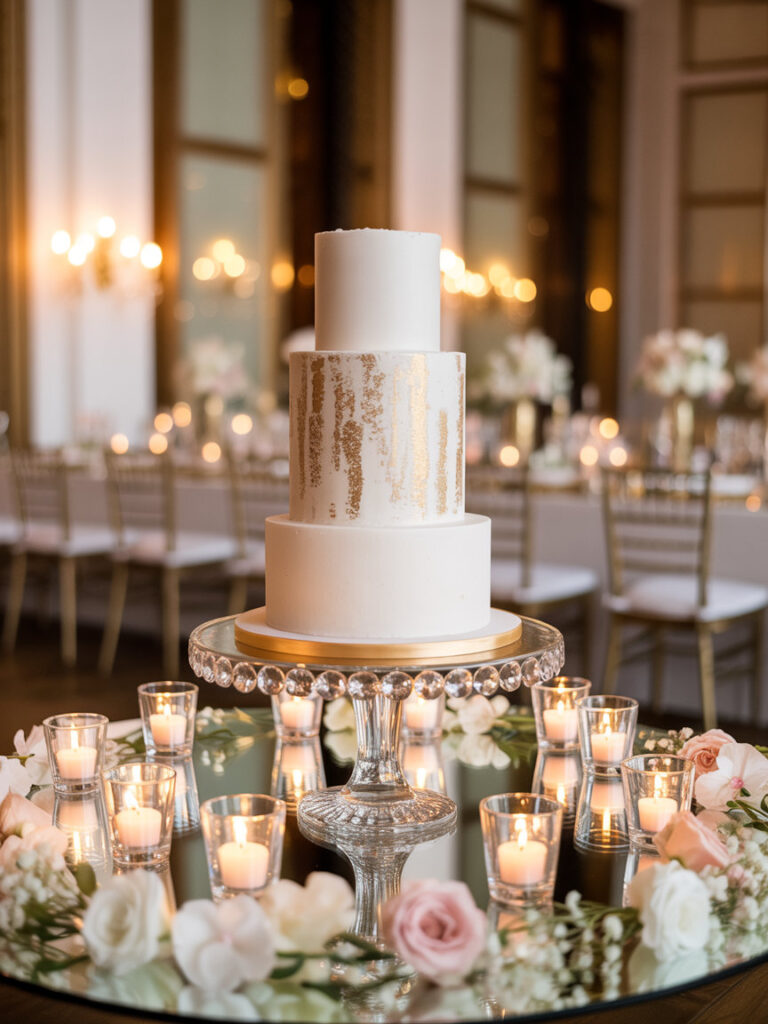
Contemporary Japanese design can be luxe. This cake combines naked sponge minimalism with unexpected gold leaf accents—not covering the entire cake, but applied strategically where light catches it. The metallic effect feels modern and intentional, like a piece of wearable art in edible form.
Gold reads as celebration and luxury without the visual weight of traditional buttercream frosting. It works beautifully for evening receptions and couples drawn to modern elegance with a nod to tradition.
Why This Works
Gold leaf adds luxury and visual intrigue without adding sweetness or heaviness. Strategic placement creates a focal point. Metallic elements feel contemporary and sophisticated.
Styling Tips
- Apply food-safe gold leaf to the sponge once it’s fully cooled to prevent the gold from absorbing moisture and losing shine
- Pair with white or cream flowers for maximum contrast and visual drama
- Serve on a dark plate or slate surface to make the gold shimmer
5. Monochromatic Layers: The Single-Color Study
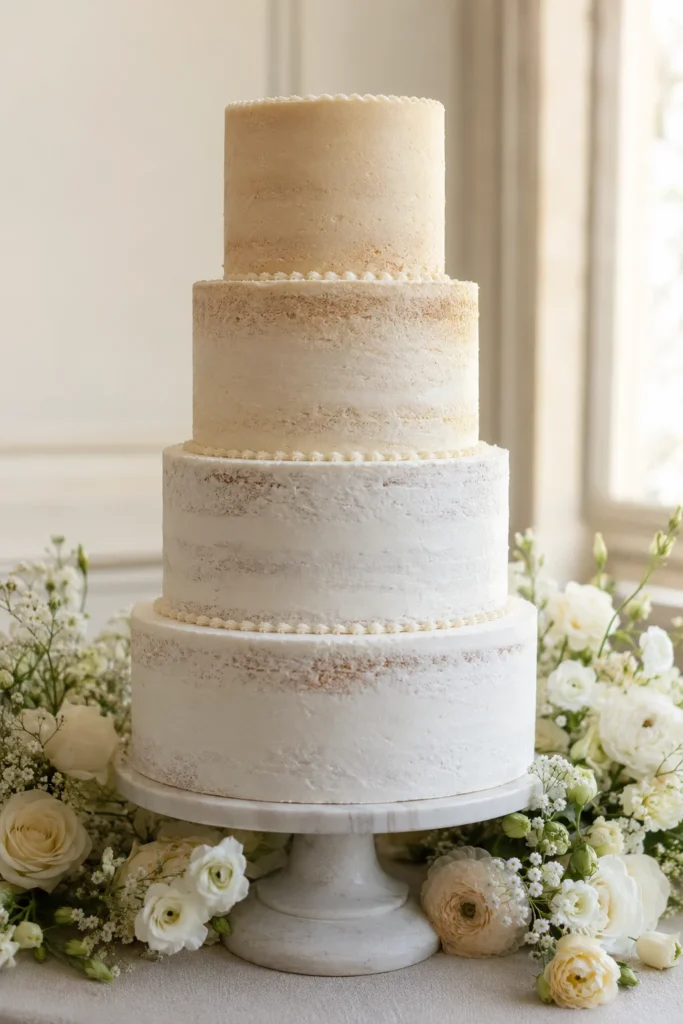
This design proves that “monochromatic” doesn’t mean boring—it means mastery of tone and texture. Imagine four tiers, each a different shade of cream or ivory. Pale white on bottom, warm ivory on top. Delicate piping on edges only, creating subtle texture without frosting dominating the design. Fresh white flowers in soft, muted tones complete the story.
The effect is calm, cohesive, and impossible to pull off without skill. This cake whispers rather than shouts. It’s for couples who know what they love and don’t need anyone else’s approval.
Why This Works
A single color family feels intentional and sophisticated. Tonal variation creates visual interest without introducing new colors. Minimal piping adds texture without frosting-forward aesthetics.
Styling Tips
- Request the baker create tonal variation in the frosting by adding tiny amounts of cocoa or food coloring—this requires precision
- Surround with flowers in matching cream and white tones for visual cohesion
- Serve in a setting with warm, diffuse lighting to show off the tonal subtleties
6. Cherry Blossom Romance: The Sakura Spring Cake
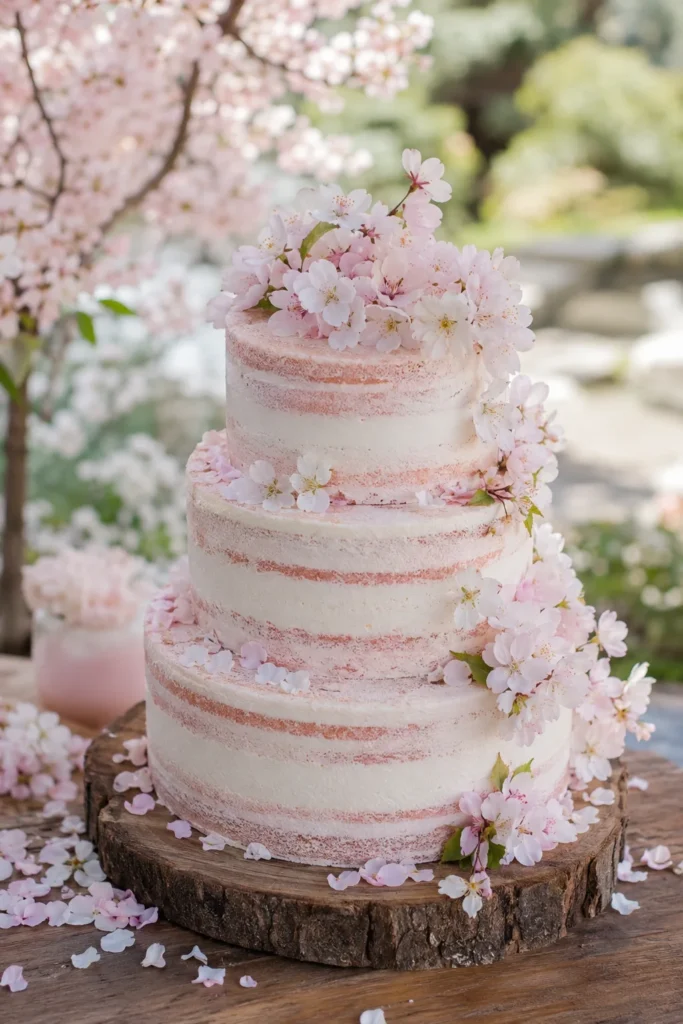
Spring calls for celebration, and this cake answers in soft pinks and fresh sakura. Real cherry blossoms—carefully sourced from food-safe sources—drift across the top of a pale pink or neutral sponge as if they’ve just fallen. The design is pure spring romance: romantic without being fussy, seasonal without feeling temporary.
The challenge here is sourcing genuine edible cherry blossoms and using them within hours of delivery. But the visual payoff—genuine fragrance plus ethereal beauty—is irreplaceable. Pair your cake with a cherry blossom table runner to extend the spring aesthetic throughout your reception.
Why This Works
Cherry blossoms carry symbolic weight in Japanese culture. Real flowers smell beautiful and feel authentic. Soft pink is romantic without being saccharine.
Styling Tips
- Source cherry blossoms from specialty food suppliers 12–24 hours before service; verify they’re food-safe and pesticide-free
- Arrange blossoms loosely—random placement looks more natural than pattern
- Photograph outdoors with dappled spring light to capture the ethereal quality
7. Yuzu Citrus Brightness: The Zesty Japanese Cake
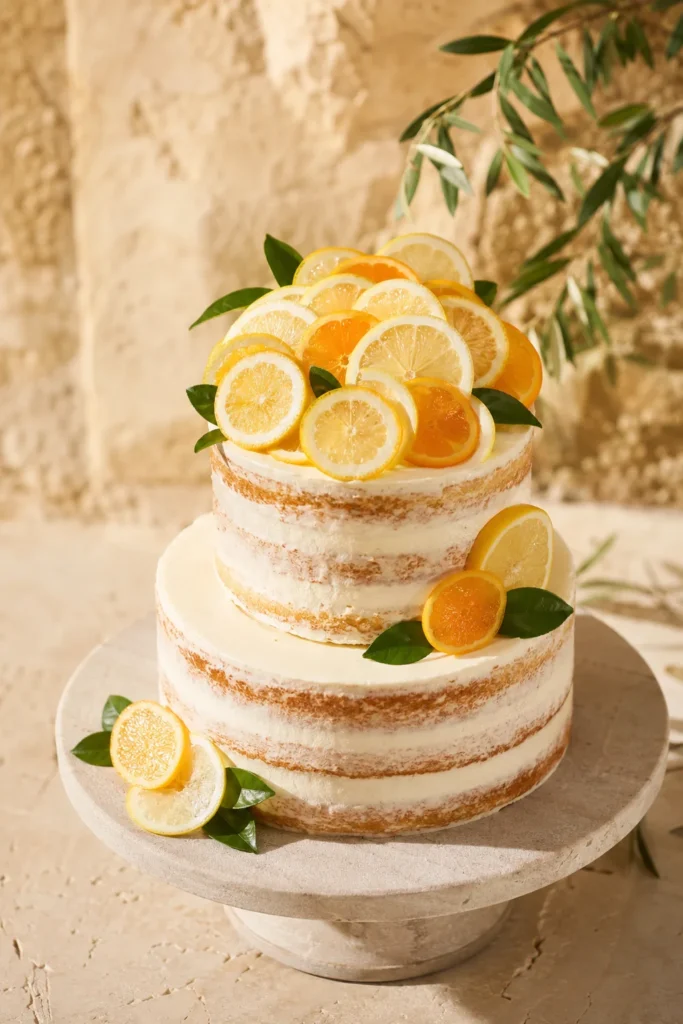
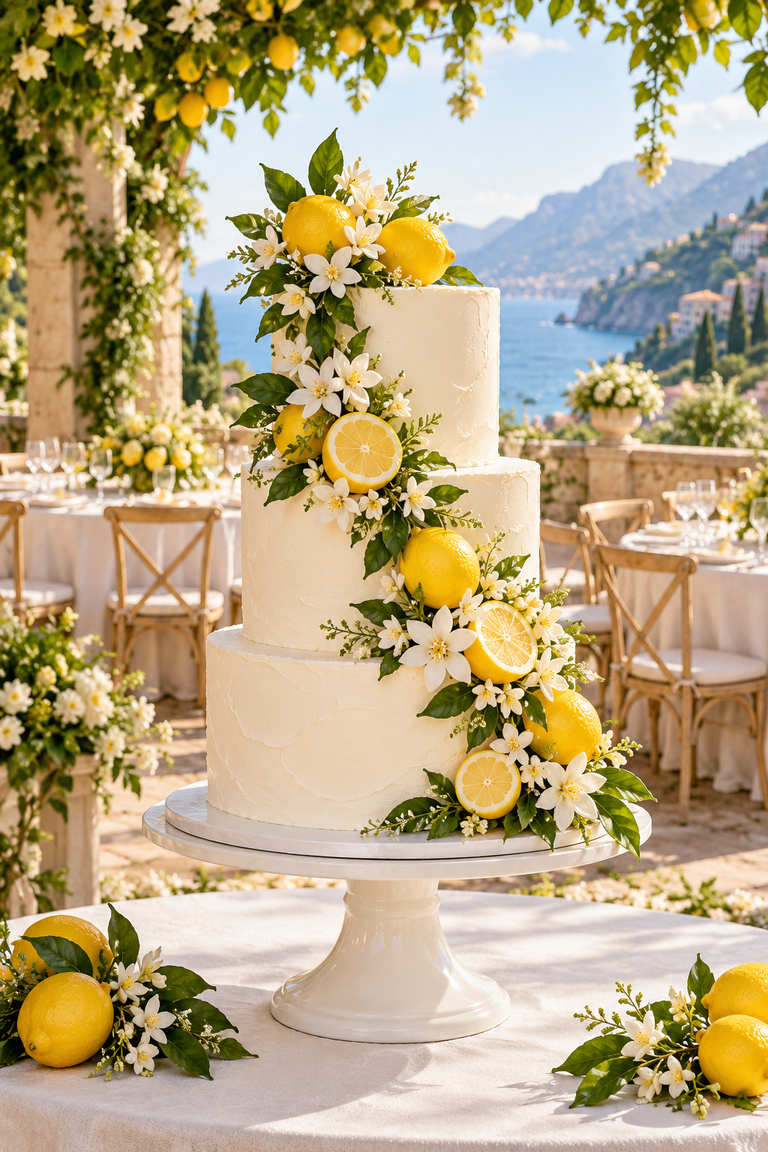
Not every Japanese cake is pale and muted. This design celebrates yuzu and citrus—staples in Japanese desserts—by letting fresh fruit and vibrant color take center stage. Naked or semi-naked sponge, topped with thin citrus wheels (yuzu, lemon, orange) arranged in overlapping pattern. Green leaves add botanical freshness. The effect is bright, clean, and joyful without being loud.
This design works beautifully for daytime receptions, summer weddings, or couples who want brightness and optimism expressed through their cake. Bonus: it smells incredible.
Why This Works
Citrus is visually striking and aromatic. Bright colors feel joyful and fresh. The combination of fruit and greenery creates a farmers-market authenticity.
Styling Tips
- Source organic citrus the morning of service for maximum brightness and natural oils
- Slice citrus paper-thin and arrange immediately before service to prevent oxidation
- Tuck fresh citrus leaves (food-safe sources only) between fruits for botanical detail
8. Autumn Elegance: The Chestnut & Chocolate Cake
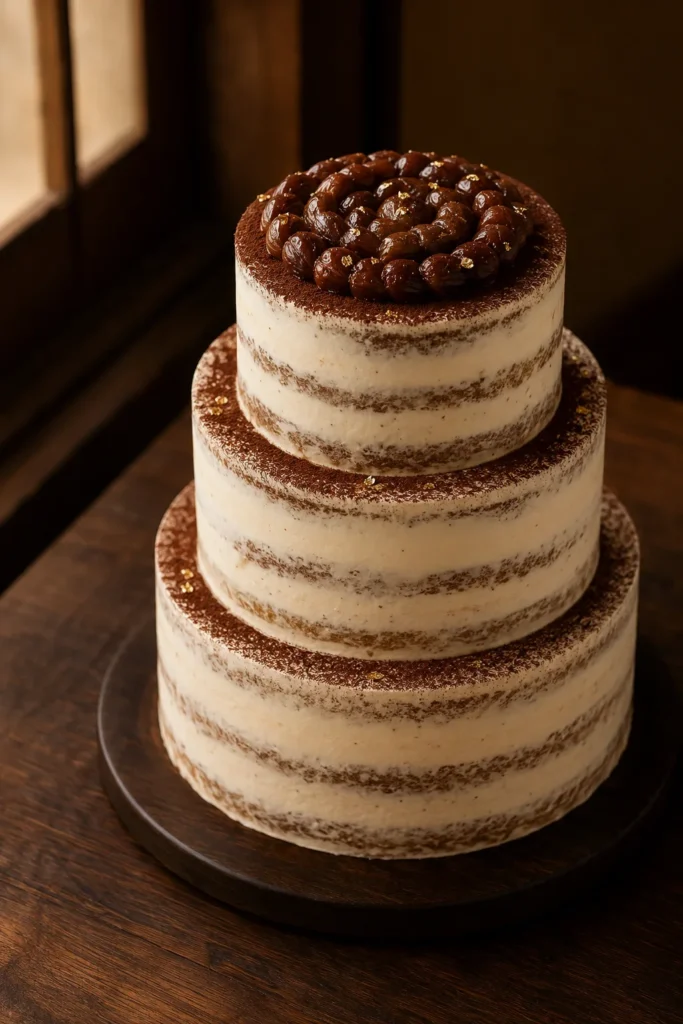
Fall has its own quiet beauty, and this cake captures it perfectly. Deep cream-colored sponge, candied or roasted chestnuts arranged in a precise spiral on top, fine cocoa powder dusting, and delicate gold leaf accents. The color palette is warm, earthy, and deeply seasonal. This is Japanese minimalism meeting autumn harvest.
Chestnuts carry particular significance in Japanese pastry and culture. Using them as the primary decoration isn’t just aesthetic—it’s culturally grounded, giving the cake layers of meaning alongside its visual appeal.
Why This Works
Chestnuts are quintessentially Japanese and seasonal. Warm tones feel sophisticated and mature. The combination of roasted and candied textures adds depth.
Styling Tips
- Source high-quality candied chestnuts from specialty importers—they’re worth it
- Arrange in intentional pattern (spiral, circles, linear) for precision rather than random placement
- Dust with cocoa powder just before service to keep powder fresh and dark
9. Matcha Whisper: The Green Tea Cake
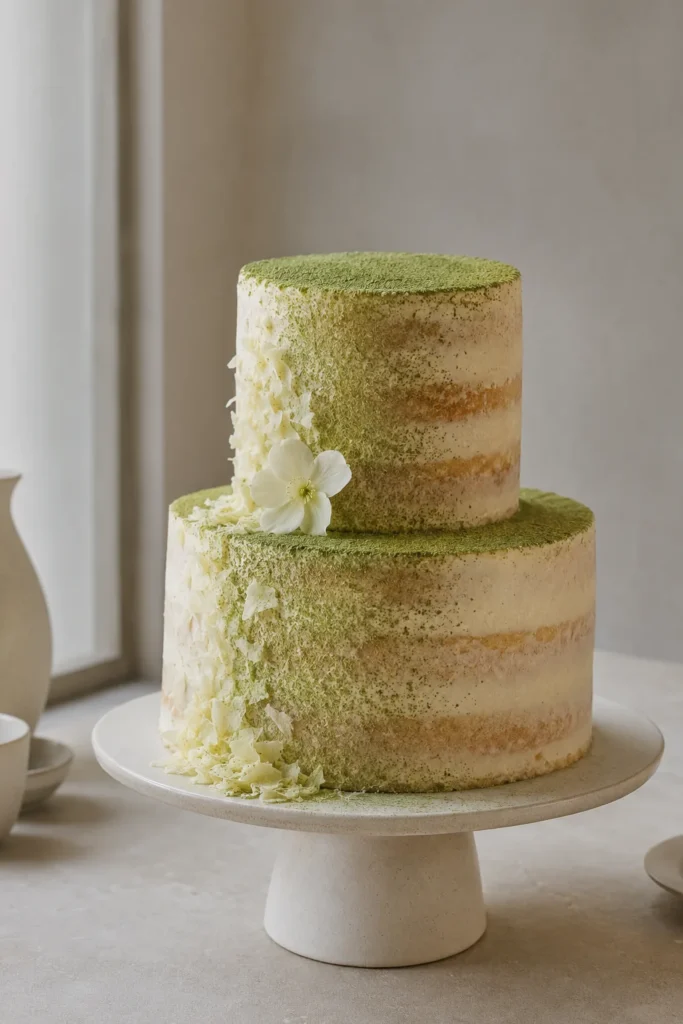
Matcha isn’t just a flavor in Japanese desserts—it’s a philosophy, connected to tea ceremony, mindfulness, and ritual. This cake takes that idea seriously: pale cream-colored sponge dusted with fine matcha powder, white chocolate shavings adding subtle richness, and a single white flower. The effect is calming, sophisticated, and unmistakably Japanese.
The green powder acts as both flavor and visual identity. This cake says “I understand Japanese aesthetics” without needing to shout about it.
Why This Works
Matcha powder creates an instant cultural connection. Green on cream is visually restful. The simplicity invites introspection—perfect for weddings emphasizing mindfulness and intention.
Styling Tips
- Dust with matcha powder as the final step to ensure color stays vibrant and powder doesn’t absorb moisture
- Use high-quality ceremonial-grade matcha, not culinary—the color and flavor will shine
- Serve with matcha tea or sake for a cohesive sensory experience
10. Zen Stone Garden: The Textured Meditation Cake
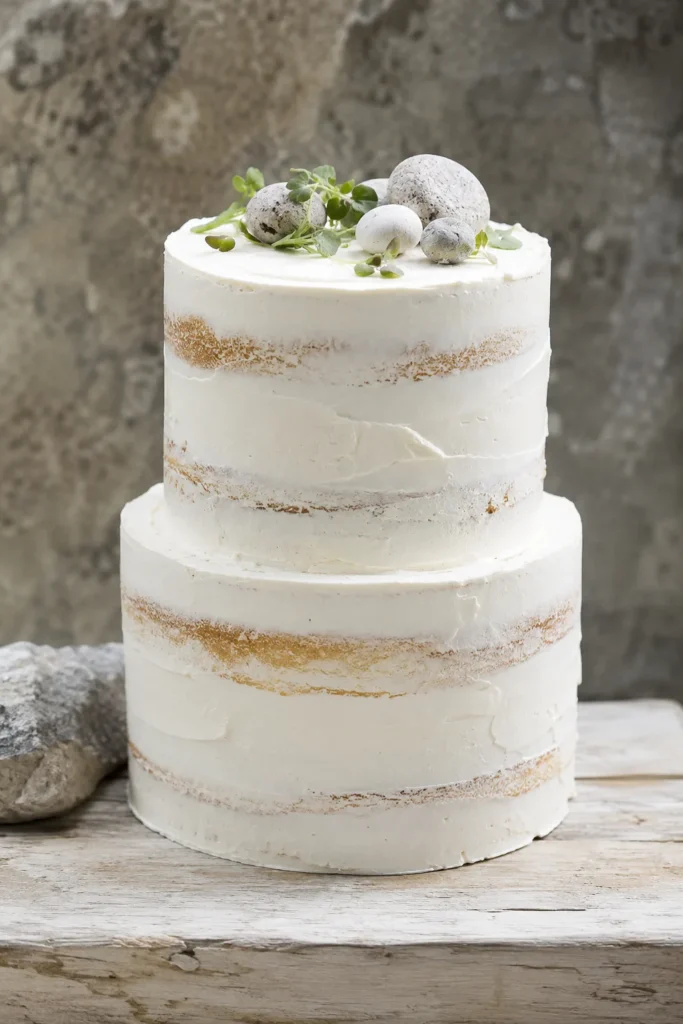
This is Japanese minimalism at its most meditative. A naked sponge cake with intentionally textured, uneven surface—not smooth perfection, but lived-in character. Pale neutral tones (cream, white, soft gray). Scattered across the top are small edible candy “stones” and delicate microgreens, evoking a Zen garden. The aesthetic is calm, grounded, and deeply intentional about imperfection.
This cake celebrates the Japanese concept of wabi-sabi—beauty in impermanence and imperfection. It’s for couples who find more meaning in restraint than excess, more beauty in what’s *not* decorated than what is. Top your cake with edible flower decorations in soft tones for subtle botanical detail.
Why This Works
Imperfect texture feels authentic and intentional. Neutral palette is calming and grounded. Zen garden reference carries philosophical weight. This cake is visually simple but deeply meaningful.
Styling Tips
- Request the baker intentionally texture the sponge surface rather than smoothing it—this requires specific technique
- Use edible flowers and microgreens for “garden” elements—only food-safe botanicals
- Photograph against natural wood or stone surfaces to echo the garden aesthetic
Bringing It All Together: How to Choose Your Japanese Wedding Cake
Looking at all ten designs, you likely notice patterns. Some are fruit-forward. Some emphasize hand-craft like painting or hand-placement. Some are architectural and precise. Some celebrate seasonality, others focus on timeless elegance.
Your cake should match your wedding’s visual story and your personal aesthetic. Ask yourself:
- What season is your wedding? Cherry blossoms for spring, citrus brightness for summer, chestnuts for autumn, matcha’s quiet depth for winter—or timeless options like the architectural cake that works year-round.
- What’s your color palette? Japanese cakes tend toward neutrals, but they’re not all cream and white. Some introduce soft pinks, golds, greens. Which feels true to your wedding’s overall design?
- How formal is your reception? The Zen garden cake whispers. The gold leaf cake announces. The strawberry cake is joyfully casual. Match your cake’s personality to your event’s tone.
- Do you want visual restraint or visual abundance? Architectural minimalism requires you to trust in emptiness. Fruit abundance celebrates fullness. Both are beautiful; one might feel more like you.
Working with Your Baker: A Quick Briefing Guide
Most bakers, even excellent ones, haven’t studied Japanese cake aesthetics. Bring reference images and be specific about what you love.
Don’t say: “I want a minimalist cake.”
Say: “I want something like the architectural minimalism design with visible sponge structure, geometric lines, and a single statement flower. I love the restraint.”
Share real examples. Discuss timeline—hand-painted details and fruit arrangements need lead time. Talk budget honestly: some of these designs require exceptional skill and therefore premium pricing. And always ask whether your baker has experience with Japanese aesthetics specifically. If they haven’t, that’s fine, but make sure they’re willing to learn and take direction seriously.
Frequently Asked Questions About Japanese Wedding Cakes
Can I order a Japanese wedding cake if I don’t live in Japan?
Absolutely. Some Japanese bakers do ship internationally, but high costs apply. Better option: find an excellent local patisserie and provide detailed visual references. The design matters more than the baker’s geography. Explore our guide on modern wedding cakes for additional inspiration on working with local bakers.
How far in advance should I order?
8–10 weeks is ideal. Hand-painting, custom details, and fresh fruit arrangement all require lead time. Some bakers have seasonal fruit dependencies—yuzu season, cherry blossom season—which affect availability.
Are Japanese wedding cakes more affordable than traditional wedding cakes?
Not necessarily. Minimal frosting seems like it should be cheaper, but expert-level sponge work, precise technique, and premium fresh fruit often cost the same or more than heavily frosted designs. Don’t assume simplicity equals lower cost.
What’s the difference between “naked” and “semi-naked”?
Naked cake has zero frosting visible—only bare sponge. Semi-naked has a thin frosting layer or ganache with sponge still very visible on the sides. Japanese cakes use both styles; the choice depends on the design and structural needs.
Can I make a Japanese wedding cake myself?
Yes, if you’re a confident baker. The naked sponge must be level and tender. Fruit must be ripe and beautiful. For hand-painted or highly detailed designs, professional skill helps. Many DIYers successfully execute fruit abundance or simple architectural cakes.
What edible flowers are safe for wedding cakes?
Pansies, violas, roses (pesticide-free), mint, microgreens, and pea shoots—only when sourced from food-safe suppliers. Ask your florist specifically for food-safe blooms. Never use standard florist flowers; they’re treated with pesticides. Our edible cake decoration options include pre-screened botanicals perfect for wedding cakes.
Related Cake Inspiration & Planning
- Beautiful Wedding Dessert Table Ideas — Extend Japanese minimalism beyond the cake to your entire wedding aesthetic
- Wedding Cake Alternatives — Explore complementary dessert options for your reception
- Modern Wedding Cakes — Discover contemporary cake designs that pair beautifully with Japanese minimalism
- Wedding Cake Pops — Creative ways to serve cake portions with artistic flair
- Barn Wedding Dessert Table Ideas — Styling Japanese cakes in rustic wedding settings