How to Book Wedding Vendors in the Right Order
Set your budget and guest count first, then hire a planner if you want one. Book your venue and date, then reserve vendors with the tightest calendars.
This order protects your date and budget while keeping your choices open. Couples with short engagements can follow the same order and decide faster.
A booking dependency is a choice another booking relies on, such as your confirmed date. For example, a caterer needs your date before checking availability.
Your venue may shape guest capacity, food options, and room for dancing. Those details can affect later plans, from invitations to attire.
Wedding planning takes many small choices, but you do not need every service on a long checklist. Choose the team that fits your day.
A clear order helps you compare offers before your favorite choices are gone. It also gives each booking the facts it needs.
Start by agreeing on the total amount you can spend before making any booking.
Start With Your Budget, Guest Count, and Date Options
A couple weighing two guest counts should set a budget before touring either space. Then draft a guest list and choose two or three possible dates.
Agree on who will pay what before browsing venues or booking vendors. This gives you a real spending limit for each choice.
A preliminary guest list helps venues suggest spaces with enough room. It is a planning tool, not a promise to invite everyone listed.
A smaller guest count may open more venue choices. A larger count can narrow the list to spaces with enough seats.
Keep at least two dates open while you check availability. Popular dates may not work at your first-choice venue.
If you are also planning a bridal shower, settle its guest list before buying supplies or booking a space. These rustic bridal shower ideas can help with that separate event.
Write down the guest-count range and date options before you contact venues. Keep at least two viable dates in play until you have checked venue availability.
What Order to Book Wedding Vendors
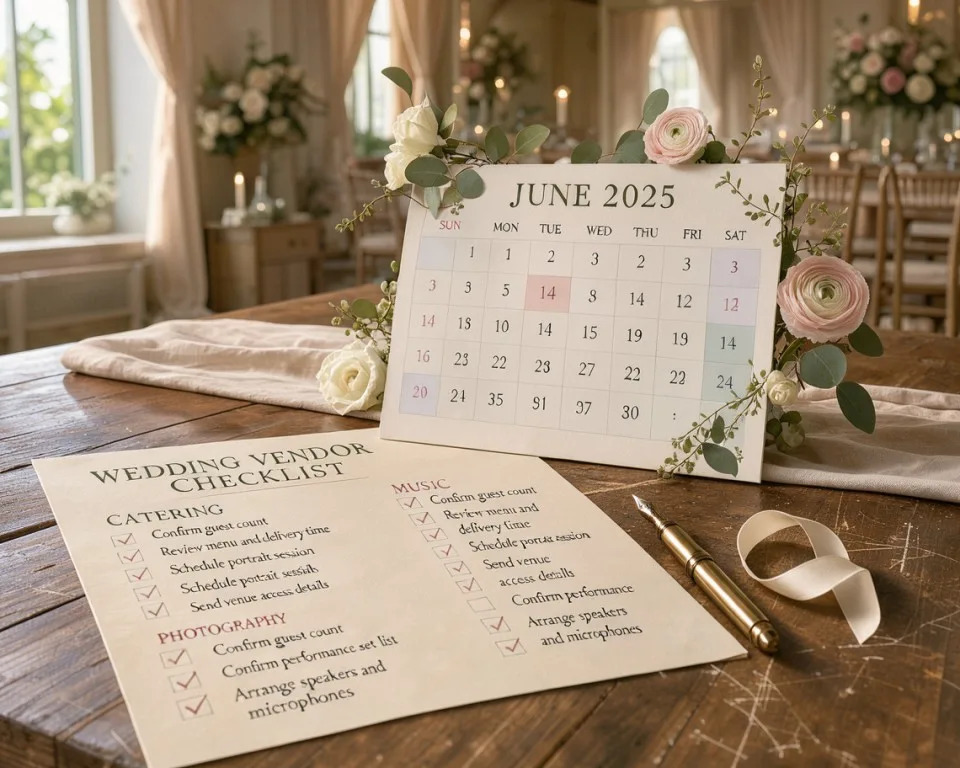
A practical wedding vendor checklist starts with the venue and date, then the professionals hardest to replace. Most weddings need a core team of 8-10 vendors.
When to book wedding vendors depends partly on each provider’s availability. The order to book things for a wedding should follow demand and booking dependencies.
Set the booking priority around availability
First, book the venue and confirm the date. Then focus on high-demand professionals whose work shapes the day.
Your wedding vendor checklist should cover only the services you need. It can track each provider’s availability, contract, deposit, and due dates.
A band, photographer, or planner may have fewer open dates than a rental firm. Ask about availability before comparing extra options.
Most couples do not need every service on a large checklist. Some teams combine roles, and some couples skip optional services.
A month-by-month wedding planning timeline can help you track decisions around your date.
Keep dependent bookings in sequence
Set the venue and date before booking most other vendors. Guest lists, invitations, catering counts, and attire plans rely on those choices.
After the date-setting venue, reserve the professionals with the hardest calendars. Then book services that need your venue, headcount, or style choices.
For example, a caterer needs a likely guest count before giving you a useful plan. A florist needs the venue and color direction.
Some venues include tables, chairs, food, or staff. Check those details before paying another provider for the same service.
Your final team should fit your plans, not the length of a checklist. Confirm what the venue includes before committing to a separate provider for the same service.
How Far Ahead Should You Book a Wedding Venue?
For most U.S. couples, booking a wedding venue 9-14 months ahead is a workable start. Spring and fall Saturdays often need 12-14 months.
Weekdays and quieter months can often work with 6-9 months of lead time. A large guest count or sought-after space can still limit choices.
Reserve peak-season Saturdays early
Spring and fall Saturdays draw many couples, so those dates can fill early. The 12-14-month window for peak Saturdays gives you more time to compare spaces.
A venue sets your wedding date and guest capacity. It may also shape your food, rental, and layout choices.
If you want a specific room or outdoor setting, ask about open dates early. A large guest list can make the search harder, even outside peak season.
Use quieter dates for more flexibility
A weekday date or a quieter month may give you more choices with less lead time. Friday or Sunday can also widen the date options.
Fall dates can be popular, so consider the season when setting your plans. These fall wedding planning tips cover common seasonal problems.
Compare each space’s capacity with your working guest count. Ask each venue whether its date is available and what services or vendor restrictions come with the booking.
Book Your Planner, Photographer, Videographer, and Officiant
If you plan to hire a wedding planner or day-of coordinator, reserve that support 10-12 months before the wedding. A photographer often needs booking 12-18 months ahead.

Choose these providers after the venue confirms your date. They can then check the actual day and location.
Bring in planning support early
A wedding planner can help with choices throughout the planning process. A wedding-day coordinator manages the event on the wedding day.
Ask what each service covers before you sign. This wedding planner cost guide compares common service types.
A wedding-day coordinator may take over close to the event. You still need to ask who will manage vendor arrivals and the day’s schedule.
Some venues have their own coordinator. That person may focus on venue needs, so confirm who handles your full vendor team.
Reserve your ceremony and image team
Book a wedding photographer 12-18 months ahead. A videographer usually needs 10-14 months, and can plan with your photographer.
Book an officiant 10-12 months ahead. Start early if you want a specific person or a custom ceremony.
Before signing, discuss how you want the ceremony and images to feel. Share any key moments or family needs that matter to you.
A short list of priorities can help each provider understand your plans. Confirm that your officiant can perform the ceremony at your chosen location and on your date.
Time the Music, Catering, Flowers, Attire, and Beauty Bookings
Book a live band 10-14 months ahead, while a wedding DJ usually has an 8-12-month booking window. A 12-piece band may need the longest lead time.
Set these bookings after the venue and date are clear. Your room, guest count, and style help guide the choices.
Reserve music and reception services
Book a wedding caterer 8-10 months ahead. The venue may already provide food or bar service, so check what your contract includes.
Book a florist 8-10 months ahead. Share your venue, color direction, and a realistic plan for flowers.
Ask the band or DJ about sound needs and space. A large band may need more room than a DJ setup.
Make sure the music plan fits the event space and your guests. A clear schedule also helps providers plan setup and breaks.
Leave production and trial time for personal details
Order wedding attire 6-8 months ahead. That gives you time to choose the look and handle needed changes.
Book hair and makeup services 6-8 months ahead. Plan a trial so you can assess the look before the wedding morning.
Bring photos or clear notes to the trial. Test the style with your outfit and allow time to change your mind.
Share timing and location details with each beauty provider. Confirm who is providing bar service, alcohol, glassware, and staffing if catering and bar service are booked separately.
A wedding-day detail checklist can help you track small needs for the event team.
Plan Invitations and the Final Guest Details
Order invitations 4-6 months before the wedding, then mail them 8-10 weeks before the day. Destination weddings or overseas guests call for earlier notice.
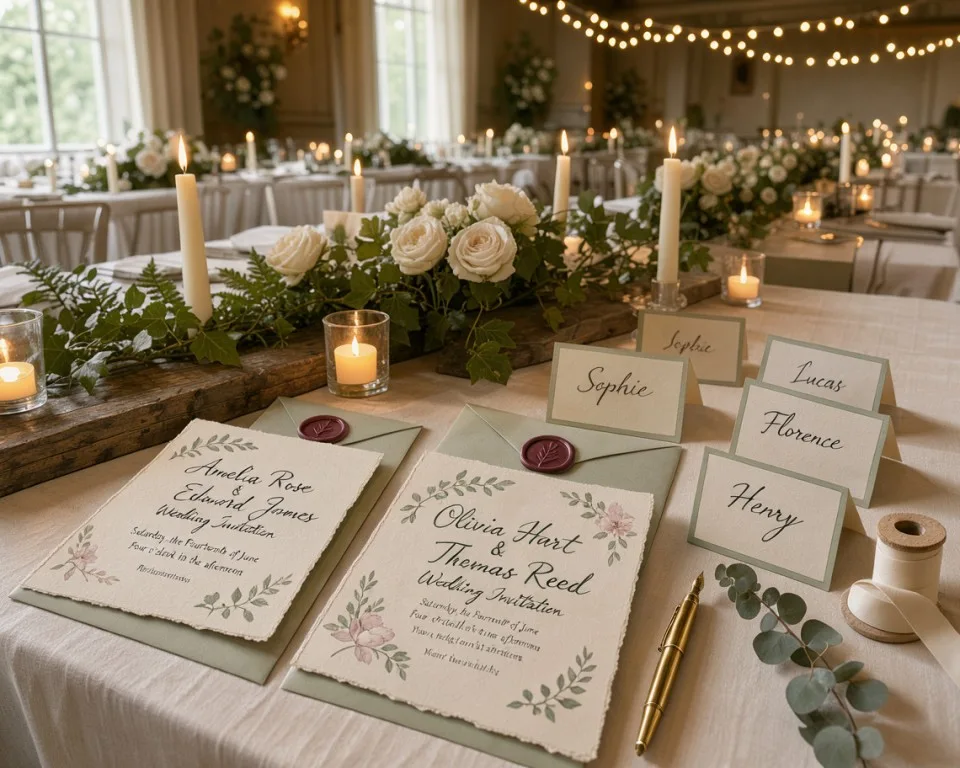
Send save-the-dates 8-10 months ahead. For destination weddings or international travel, send them 12 months ahead.
Mail invitations 12 weeks ahead for destination weddings or guests traveling from overseas. Your mailing date gives guests time to plan travel.
Stationery can take 2-3% of the wedding budget. For 100 guests, a complete invitation suite typically costs $400-$900 with digital offset or premium digital print and colored envelopes.
Letterpress or foil printing can raise the suite cost to $900-$2,500 or more for 100 guests. The print method changes the price.
Use your confirmed headcount and seating plan for menu cards and place cards. Finish those details 2-4 weeks before the wedding.
A wedding guest list guide can help you track replies and final numbers.
Proof every name, date, and mailing address before approving a printed run.
Keep the Budget and Timeline Under Control
The 50/30/20 rule for weddings gives you a starting split, not a fixed law. A $10,000 venue may fit; a $70,000 wedding budget can suit your guest count.
For many traditional weddings with 75-150 guests, use 50% for venue, food, and drinks. Put 30% toward attire, photos, music, and décor, then 20% toward other costs.
On a $30,000 budget, those shares mean $15,000, $9,000, and $6,000. Treat them as checks, not fixed limits.
A $10,000 venue depends on your total budget, guest count, location, and included services. In 2026, a venue takes nearly a quarter of couples’ wedding budgets.
The average U.S. wedding cost $36,000 in 2025, up $3,000 from 2024. Nearly three-quarters of couples married in 2024 spent more than planned.
Couples spend about 19% on catering and 4.5% on a DJ or band. Photography or videography can take up to 12% of the budget.
A 5-8% contingency buffer can help cover surprise costs. Keep it separate from planned vendor spending.
Most couples need 12-18 months to plan. Six months is possible, but major booking choices must happen fast.
Use actual quotes to check whether your budget fits your plans. These wedding planning mistakes to avoid can help you catch common trouble early.
Set a contingency buffer before the final vendor commitments, then track actual quotes against the remaining category amounts.
Conclusion
A clear budget, a confirmed date, and a focused vendor team make wedding planning easier to manage. You can adapt the order to your needs and each provider’s availability.
Keep the choices that matter most to you at the front of the plan. If a preferred vendor is booked, your date options or service choices may need to shift.
Use your venue details to guide choices about the rest of the wedding day. A clear guest-count range also helps providers give useful plans.
Write down your target budget, guest-count range, and two or three possible dates before contacting your first venue.