Maid of Honor Duties: The Complete Timeline, Costs, and Boundaries Guide
Quick Answer: A maid of honor supports the bride emotionally and logistically before and during the wedding. Core duties include attending the shower and bachelorette party, standing in the ceremony, giving a toast, and being the bride’s point person on the wedding day. The exact scope depends on the bride’s expectations, so clarify early.
Getting asked to be maid of honor usually comes with a rush of “of course!” before you’ve thought through what you just agreed to.
The role covers the emotional support the bride needs during planning, plus a set of concrete tasks: helping with the shower and bachelorette party, standing beside her at the ceremony, and giving a toast at the reception. Some duties are non-negotiable. Others are traditions you can shape to fit your life.
This matters because maid of honor season can quietly eat your time, your money, and your energy if nobody spells out what’s actually expected. Most of the guilt and financial stress women feel in this role comes from never having a clear conversation about scope.
By the end of this guide, you’ll know exactly what’s required, what’s optional, roughly what it will cost, and how to have the conversations that protect your sanity along the way.
This post may contain affiliate links, please refer to privacy policy for more information.
What Is a Maid of Honor, Really?
Before you can plan anything, it helps to know exactly what this title means and where the edges of the job actually are.
A maid of honor is the bride’s primary attendant and closest friend or family member in the wedding party, responsible for emotional support, key planning tasks, and standing beside the bride through the ceremony and reception.
Maid of Honor vs. Bridesmaid vs. Matron of Honor
People use these titles loosely, which is part of why expectations get muddy. Here’s the actual difference.
| Role | Marital Status | Typical Scope |
|---|---|---|
| Maid of Honor | Unmarried | Lead attendant; coordinates other bridesmaids, plans events, gives toast |
| Matron of Honor | Married | Same duties as maid of honor; title reflects marital status only |
| Bridesmaid | Either | Supports the wedding party; usually lower cost and time commitment |
Some brides choose both a maid and a matron of honor and split the duties between them. If that’s your situation, it’s worth naming who handles what early, so nobody assumes the other person has it covered.
Core Duties at a Glance
Here’s the short version before the full breakdown below.
- Required: Attend the ceremony and stand with the bride, help coordinate other bridesmaids, give a toast
- Usually expected: Help plan or co-host the shower, attend and help plan the bachelorette party, attend the rehearsal dinner
- Optional: Help with invitations, run errands during the planning process, host a separate get-together for the bride
If you’re curious how this compares to the groom’s side of the wedding party, best man duties for weddings covers the equivalent role, and the responsibilities line up more closely than most people expect.
The Maid of Honor Timeline: What to Expect When
Nobody hands you a syllabus when you’re asked to be maid of honor, so here’s the timeline that actually maps to how weddings get planned.
Months 6+ Before: The Planning Phase
This is when you find out what the bride actually needs from you. Ask directly instead of guessing — a lot of stress in this role comes from assuming you know what’s expected.
- Confirm your role and have an honest conversation about time and budget
- Start a group chat or shared planning doc with the other bridesmaids
- Begin loosely planning the bridal shower date and format
- Ask about the wedding dress code and your bridesmaid dress timeline
Months 3–4: Shower and Bachelorette Planning Begins
This stretch is usually the busiest for you. Most of the event planning workload lands here.
- Finalize the bridal shower guest list, date, and venue
- Send shower invitations (digital or paper)
- Start bachelorette party planning: destination, dates, budget per person
- Coordinate bridesmaid dress orders and fittings
Month 1: Final Confirmations and Logistics
Details tighten up here. This is when loose ends get finalized instead of just discussed.
- Confirm final shower and bachelorette headcounts and payments
- Finalize your toast draft
- Coordinate any group gifts from the bridal party
- Confirm hair and makeup appointments for the wedding day
The Week Before: Rehearsal and Last-Minute Prep
This week is about showing up, not adding new tasks. Save your energy for the bride, not new projects.
- Attend the rehearsal and rehearsal dinner
- Confirm what you’re carrying or holding during the ceremony (bouquet, rings if applicable)
- Pack an emergency kit for the wedding day
- Do a final toast run-through so you’re not memorizing it the morning of
Day-Of: Your Hour-by-Hour Role
Here’s roughly how the day itself breaks down.
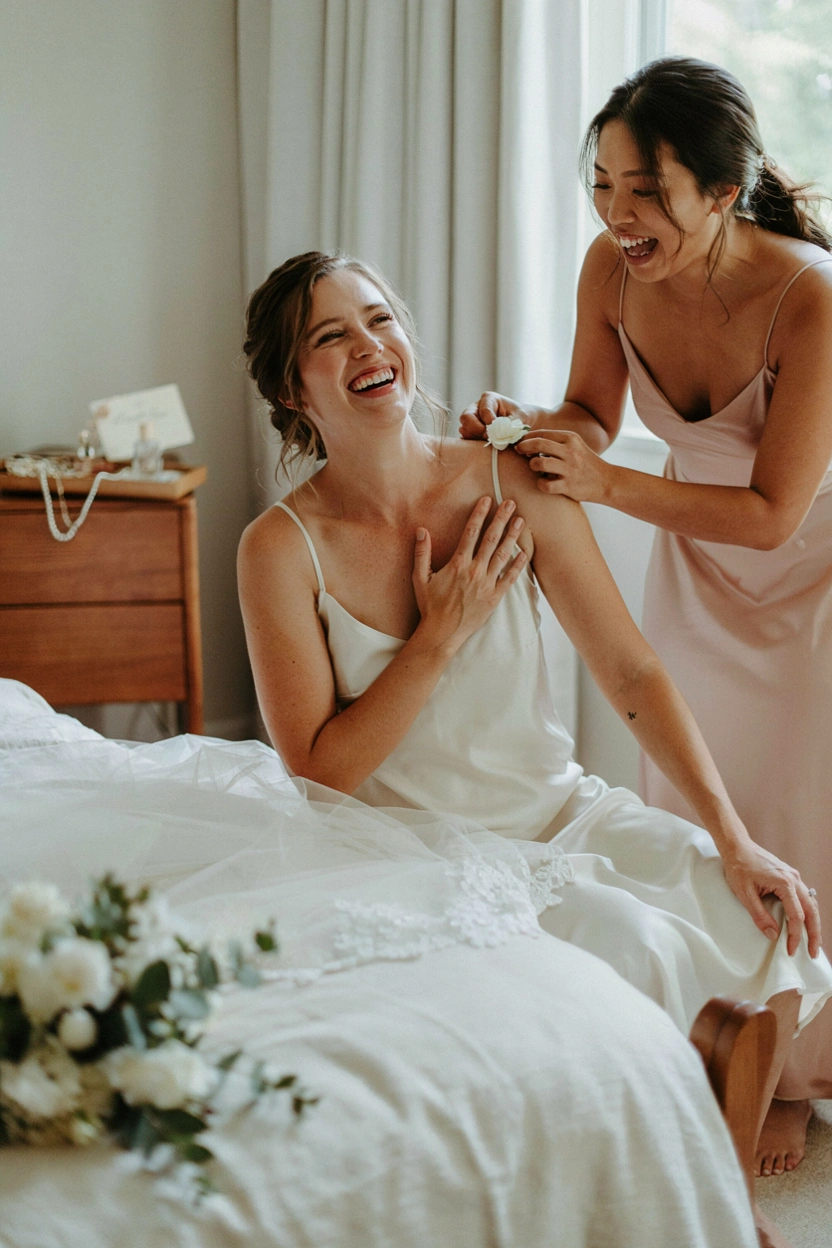
- Morning: Arrive early for hair and makeup; help the bride get dressed and manage any last-minute panic.
- Pre-ceremony: Hold the bouquet during vows, help with the dress, and keep the timeline moving.
- Ceremony: Stand beside the bride, sign as a witness if asked, and stay close in case she needs anything.
- Reception: Deliver your toast, help greet guests if the bride needs backup, and keep an eye on her energy level.
- Wind-down: Help gather gifts and personal items, and confirm she has a ride or transition plan for the night.
How Much Will This Cost? An Honest Budget Breakdown
Nobody loves talking about money attached to a friend’s wedding, but skipping this conversation is how maid of honors end up quietly resentful or quietly broke. Here’s what the role typically runs.
Average Costs (Dress, Hair, Events)
| Expense | Typical Range | Notes |
|---|---|---|
| Bridesmaid dress | $100–$400 | Varies widely by designer and fabric |
| Hair and makeup | $75–$200 | Often required to match the bridal party’s professional look |
| Bridal shower contribution | $50–$300 | Depends on whether costs are split among all bridesmaids |
| Bachelorette party | $200–$800+ | Travel destinations push this much higher |
| Travel and lodging | $100–$1,000+ | Depends heavily on distance and number of events |
Total costs commonly land between $500 and $2,000, though destination weddings and elaborate bachelorette trips can push that number considerably higher.
Hidden Costs Nobody Talks About
The line-item budget above rarely tells the whole story. A few costs sneak up on almost everyone in this role.
- Dress alterations, which can add $50–$150 on top of the dress itself
- Shoes that match the dress code but that you’ll likely never wear again
- Shipping or tailoring rush fees if the dress arrives late
- Group gift contributions on top of your own personal gift
- Time off work for the shower, bachelorette, rehearsal, and wedding itself
How to Have the Budget Conversation with the Bride
This conversation feels awkward to start, but it almost always goes better than people expect. Try something like: “I want to be fully present for your wedding, and I want to plan for it honestly — can we talk through what the shower and bachelorette budgets look like?”
If the wedding itself is a smaller, lower-cost event — for instance, an intimate courthouse ceremony — your duties and costs will likely look completely different than a full ballroom wedding. Our guide on planning a courthouse wedding is worth a look if you’re not sure what to expect from a smaller-scale celebration.
Ways to Save Money Without Cutting Corners
- Suggest a local bachelorette weekend instead of a flight-required destination
- Split shower hosting costs evenly among all bridesmaids, not just you
- Rent or resell the bridesmaid dress after the wedding instead of buying new
- Do your own hair or makeup if the bride is open to it
If the couple has hired professional help for the wedding itself, it’s worth understanding what that actually costs so you can calibrate your own contributions. What a wedding planner actually costs breaks down real numbers that might surprise you.
Pre-Wedding Events: Shower, Bachelorette, and Beyond
These events make up most of the actual planning workload, so it helps to know what each one involves before you’re knee-deep in it.
Bridal Shower: Planning Timeline and Your Role
Traditionally, the maid of honor hosts or co-hosts the shower, but this isn’t a strict rule — plenty of showers are thrown by a mix of bridesmaids, family members, or coworkers. Your job is usually to coordinate, even if you’re not covering the whole bill yourself.
If you need inspiration for a theme, a golden-hour gathering like a sunset soiree bridal shower or an elegant palette like Tiffany blue bridal shower can give you a starting point that feels put-together without requiring a huge budget.
Bachelorette Party: What’s Expected
Bachelorette planning tends to cause the most friction, mostly because guests have wildly different budgets and availability. Send a short survey early asking about dates, destination preferences, and rough budget comfort before locking anything in.
Rehearsal Dinner: Showing Up and Supporting the Bride
Your job here is smaller than it sounds. Show up, help keep the bride relaxed, and be ready to step in if she needs a buffer from overwhelming family dynamics.
When You Live Far Away: Managing Events Remotely
Long-distance maid of honors can absolutely still do this job well. Lean on shared planning docs, video calls for shower planning sessions, and a local co-host who can handle in-person logistics you can’t manage from afar.
Your Role on Wedding Day (Hour by Hour)
The wedding day itself moves fast, and knowing your role ahead of time keeps you useful instead of just anxious.
Before the Ceremony: Hair, Makeup, and Final Checks
Arrive when the bride arrives, not later. Bring a small emergency kit: safety pins, stain remover, blotting papers, and snacks the bride will actually eat.
During the Ceremony: Your Position and Actions
You’ll typically stand closest to the bride, hold her bouquet during the vows, and may be asked to sign as a witness. Confirm this specific choreography at the rehearsal so nothing feels new on the actual day.
Reception Duties: Table Greeting, Toasts, and Support
Beyond your toast, your reception job is mostly about presence. If the couple is doing a buffet-style meal, service can move a little differently than a plated dinner, so it helps to understand the flow. Our guide to buffet-style wedding reception ideas is a good reference if you want to anticipate how the evening’s timing will work. Couples going for a specific aesthetic, like a black and white wedding, may also have styling requests for the wedding party worth confirming ahead of time.
The Hours After: Cleanup and Goodbye
Help gather gifts, cards, and any personal items the couple won’t remember in the moment. A calm goodbye and a genuine hug go further than people expect after a long day.
How to Give a Maid of Honor Toast Without Panicking
The toast is the part most maid of honors dread most, but a simple structure makes it far less intimidating.
The 3-Part Toast Formula
- How you know the couple: One or two sentences on your history with the bride.
- A meaningful story or observation: A specific, warm moment that shows why this relationship matters.
- Well wishes and a toast: A closing line and a raised glass for the couple.
What NOT to Say (Common Mistakes)
- Inside jokes only a few guests will understand
- Any mention of ex-partners or past relationships
- Stories that embarrass the bride, even affectionately
- Anything that shifts attention onto you instead of the couple
Practice Tips That Actually Work
Read the toast out loud at least three times before the wedding, ideally in front of one trusted person. Print it in large font as backup, even if you plan to speak mostly from memory — nerves make small text hard to read.
Setting Boundaries: The Hard Conversations (and How to Have Them)
This is the part most articles skip, and it’s often the part that matters most for your own wellbeing during the process.
How to Ask “What Exactly Do You Need from Me?”
Ask this early and directly. Brides often assume you already know the scope, and you’re often assuming the same thing about her. A short, honest conversation clears up more confusion than months of guessing.
When to Say No (and How)
You’re allowed to say no to a specific event, cost, or task without stepping back from the role entirely. Try: “I love you and I want to be there for your big moments. I can’t make the destination bachelorette work with my schedule and budget, but I’d love to plan a local celebration with you before the wedding.”
Managing Time Conflicts: Wedding Duties vs. Parenting and Work
If you’re a mom juggling this role, name the constraint out loud instead of quietly overextending yourself. Most brides would rather hear “I can’t do an overnight trip right now, but I can host a daytime shower” than watch you burn out trying to do everything.
The Awkward Money Talk
If costs are becoming unmanageable, say so before you’re in too deep. “I want to contribute to the bachelorette, but the destination option is outside what I can spend right now — can we look at a version closer to home?” is a reasonable ask, not a betrayal of the friendship.
Common Maid of Honor Mistakes to Avoid
- Saying yes without understanding the scope: Ask clarifying questions before you agree to specific tasks, not after you’re already overcommitted.
- Underestimating the cost: Budget for alterations, shoes, and travel — not just the dress and events themselves.
- Overcommitting out of guilt: Guilt-driven yeses tend to create resentment later. A clear no now protects the friendship long-term.
- Writing a toast that centers you instead of the couple: Keep the focus on the bride and her partner throughout.
- Ignoring your own needs during wedding season: Sleep, family time, and mental health matter just as much during this stretch as they do any other time.
Frequently Asked Questions
What are the main duties of a maid of honor?
Your core duties include hosting or co-hosting the bridal shower, planning or co-planning the bachelorette party, attending the rehearsal dinner, standing in the ceremony, giving a toast at the reception, and being the bride’s main support person throughout planning and the wedding day.
How much does it cost to be a maid of honor?
Costs vary, but expect somewhere between $500 and $2,000 total, covering the dress, hair and makeup, shower and bachelorette contributions, and travel. Destination events push this higher, so an early conversation about budget helps everyone plan accordingly.
Can I be maid of honor if I have a newborn?
Yes. Talk with the bride about which duties fit your current capacity — you might skip an overnight bachelorette but still fully show up for the shower and wedding day. Most brides are more flexible than you’d expect once you’re honest about your situation.
What’s the difference between maid of honor and matron of honor?
A maid of honor is unmarried; a matron of honor is married or has been previously married. The duties are essentially identical — the title simply reflects marital status.
How far in advance should I know about these duties?
Ideally, the bride discusses expectations when she asks you to be in the wedding party. If she doesn’t, ask for a direct conversation about timeline, events, and budget within the first month of being asked.
What if I can’t afford the dress or events?
Talk to the bride as soon as you know it’s a problem. She may be able to adjust expectations, help cover part of the cost, or suggest more affordable alternatives. An honest money conversation protects the friendship far better than silent overspending.
Do I have to throw a bridal shower if the bride doesn’t ask me to?
No. Shower hosting is a common tradition, not a strict requirement. If the bride wants one, she should communicate that clearly and help identify co-hosts so the workload and cost aren’t entirely on you.
What should I absolutely not say in my toast?
Avoid ex-partner jokes, unflattering stories, anything controversial, or content that shifts attention onto you. Keep the focus warm, genuine, and centered on the couple.
Can I skip the bachelorette party?
You can, but check with the bride first. If you can attend even part of it, that often matters to her. If you genuinely can’t due to budget, distance, or family obligations, explain honestly and send a heartfelt message instead.
What if the bride and I have different ideas about what I should do?
Ask for a direct conversation. Try: “I want to show up for you — can we talk about what you actually need from me?” Then listen without getting defensive, and be honest about what you can realistically offer.
Key Takeaways
- Clarify the exact scope of your duties directly with the bride early — don’t guess based on tradition alone.
- Budget $500–$2,000 for the full role, and account for hidden costs like alterations and travel.
- Required duties are narrower than most people assume: ceremony presence, a toast, and general support.
- Saying no to a specific event or cost doesn’t mean stepping back from the role — it means protecting your ability to show up well for what matters most.
- Boundaries set early, with kindness, almost always strengthen the friendship rather than damage it.
You’ve Got This, and So Does She
Being asked to stand beside your friend on her wedding day is a real honor, even on the days it feels like a second job. The duties are manageable once you know what’s actually required versus what’s just tradition.
You don’t have to do this perfectly to do it well. A little honesty about your time, money, and energy will serve your friendship better than quietly stretching yourself thin ever could.
Save this guide for reference as each phase of the wedding approaches, and don’t hesitate to revisit the boundary scripts whenever a new ask comes up.
You might also love: