Wedding Seating Chart Ideas That Actually Prevent Family Drama
Quick Answer: The best wedding seating charts balance three things: guest comfort, table flow, and avoiding social landmines. Mix family with friends, separate known conflicts, seat singles with chattier guests, and always have a backup plan for last-minute changes. Test it once before the wedding.
Planning a wedding is already stressful — don’t let your seating chart become the moment you regret inviting your in-laws or your ex’s new partner shows up unexpectedly.
The truth is, seating feels impossible because it is complicated. You’re balancing a dozen competing dynamics at once: your best friend next to people she’s never met, Aunt Susan who talks over everyone next to Uncle Mark who barely speaks, your newly single college roommate, your divorced parents who refuse to be at the same table, and your groom’s family members you’ve only met twice. One wrong arrangement and the whole reception vibe tanks before dessert.
But here’s what most brides don’t realize: seating doesn’t have to be guess-and-check. There’s a system for this. This article walks you through a proven framework for solving any seating conflict, ten specific table arrangement ideas you can copy, and the one decision-making tool that makes the entire process feel manageable instead of impossible.
By the end, you’ll have a seating chart that actually works — one that lets your guests relax, creates natural conversation, and steers clear of the family drama landmines.
This post may contain affiliate links, please refer to privacy policy for more information.
Why Seating Matters More Than You Think
Most brides treat seating like logistics: get everyone a seat, call it done. But here’s what actually happens: your guests will spend more time sitting at their assigned table than anywhere else at your reception. The people next to them will shape whether they have a great time or a forgettable one.
Good seating creates flow, prevents conflict, and lets your guests actually relax. Bad seating creates tension, awkward silences, and stories that get told at the next family dinner — and not in a good way. A thoughtful seating chart is the difference between a wedding where everyone feels comfortable and one where people can’t wait to leave.
The Three Pillars of Good Seating: Comfort, Flow, and Conflict Avoidance
Comfort means guests aren’t sitting in dread. They’re not trapped next to someone they don’t know and have nothing in common with. They’re not worried about family drama erupting during the salad course.
Flow means the tables work together. A table full of talkers next to a table of quiet people is awkward. Tables of mixed energy levels feel natural and balanced. When you walk through the reception, the room should feel cohesive — some tables buzzing with conversation, some calm and deep in discussion, none of them feeling isolated or uncomfortable.
Conflict avoidance means you’ve thought through the landmines and positioned tables to minimize damage if those landmines exist. Divorced parents aren’t sightlines. Your feuding family members are far enough apart that they won’t spend the whole night glaring at each other.
The Seating Chart Conflict Decision Tree: Solving Common Problems Fast
Before you arrange a single guest, you need a system for deciding where people go. This decision tree solves six of the most common “where do they sit?” conflicts in seconds. Print this out, reference it while you plan, and suddenly seating feels way less overwhelming.
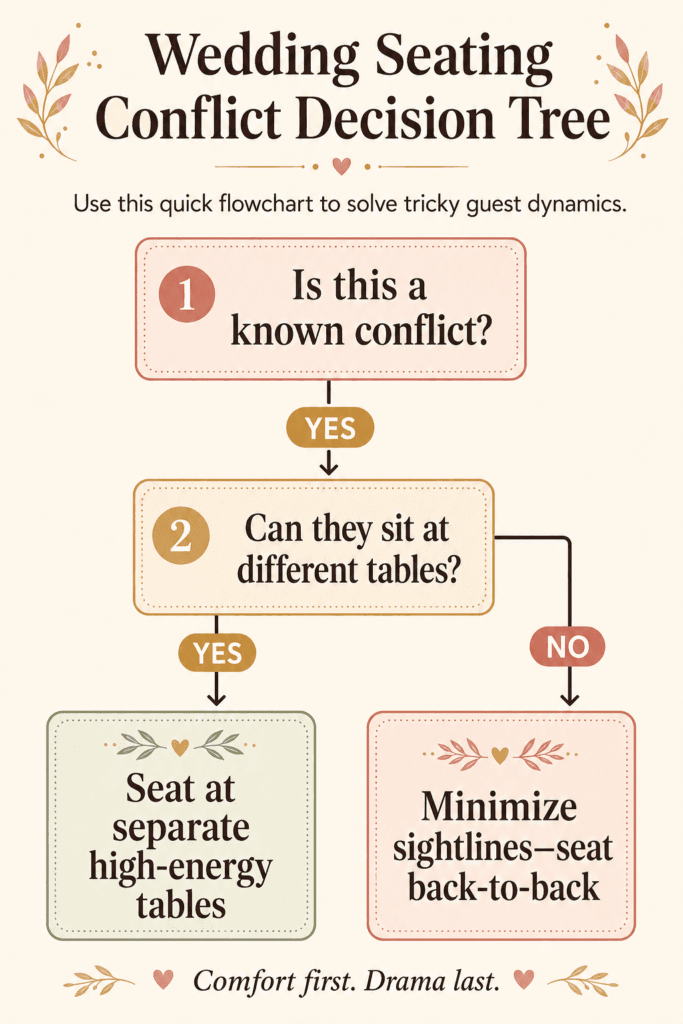
This tree does the thinking for you. Reference it whenever you’re stuck on a specific guest or group.
Handling Divorced Parents
Divorced parents are the #1 seating challenge, and it’s solvable with one rule: they don’t sit at the same table, and they shouldn’t have direct sightlines.
The cleanest solution is to give each parent their own table with their partner (if they have one) and their side of the family. Seat them on opposite sides of the room or at angles where they can’t stare at each other across the reception. This way, each parent has their own space, their own people around them, and zero awkwardness.
If you have new step-siblings or blended family members, put them with the parent they feel most connected to. Don’t force the blended family to sit together if they’re not close yet — that’s what post-wedding family dinners are for.
Seating Single Guests (Without the “Awkward Table” Vibe)
The biggest mistake brides make is creating a “singles table.” It feels isolating, especially for introverts, and it signals to your single guests that they’re somehow separate from the rest of the reception.
Instead, distribute single guests across tables where they’ll actually connect with people. The trick: put each single guest with at least two chattier people (ideally a couple who’s genuinely good with new people). Pair them with people who ask questions, tell stories, and make space for new voices at the table.
An introvert single guest should sit with warm, inclusive people and maybe one other person she might naturally know or like. An extrovert single guest can handle a table full of strangers — actually, she’ll probably love it.
Managing Friend Groups vs. Family Mix
You want your closest friends at the wedding, and you want your family there too. But you don’t want a table full of only your college friends talking inside jokes while your parents’ friends sit in silence.
The solution: intentionally mix best friends with family members, but choose family members who can hang with that group. Your best friend might sit with your parents or aunts, but pair them with the aunt who’s funny and asks people about their lives — not the aunt who sits quietly and judges everyone.
The same logic works in reverse. If you have a big family section, don’t seat all your cousins together. Spread them out. Put one cousin at the family table, one at a friends table, one at a mixed table. This keeps energy from getting too insular.
Navigating Blended Family Dynamics
Blended families are increasingly common at weddings, and they need their own seating strategy. The rule: blood relatives sit together if they feel close. Step-siblings, new in-laws, and ex-partners’ kids don’t need to be forced into family tables if the relationships aren’t solid yet.
Instead, seat people with whichever parent or stepparent they feel most connected to. Let relationships develop naturally over time. A formal seating chart isn’t where to force “blended family bonding.”
What to Do When Two Guests Absolutely Can’t Sit Together
Maybe they’re exes. Maybe they had a nasty falling out. Maybe there’s a grudge that goes back twenty years. Whatever the reason, some guests just can’t sit at the same table.
The fix is simple: seat them on opposite sides of the room, at different table shapes or angles so they’re not in direct sightlines. A round table can rotate so guests face different directions. If one guest is a talker and the other is quiet, seat the talker where they’re distracted by conversation, and the quiet guest where they’re less likely to think about the other person.
If the conflict is serious enough, mention it privately to both guests before the wedding: “I’ve seated you at different tables so everyone can relax and enjoy the day.” Most people appreciate the thoughtfulness.
10 Proven Wedding Seating Arrangements That Actually Work
Now that you understand the framework, here are ten specific table setups you can copy directly. Mix and match to fit your guest list.
The “Mix & Mingle” Table (Friends + Family + Strangers Who Talk)
This is your all-star table. Seat your best friend, a chatty aunt, a college roommate, your spouse’s fun cousin, and one person nobody knows well. The chattier people carry the conversation, the newcomer feels included, and nobody has an awkward moment.
The “Conversation Starters” Table (Ages 25–50, Diverse Interests)
A table with people in different careers, different life stages, and genuinely curious personalities. A lawyer, a teacher, a small business owner, and someone traveling next year. These people ask questions and listen to answers. They’re low-drama and high-engagement.
The “Quieter Guests” Table (Introverts, Older Relatives Who Don’t Need Entertainment)
Not every table needs to be high-energy. Some guests want a calm, comfortable meal with people they can hear. Seat your quieter aunts, your grandfather’s friends, and your introverted cousin at a table where conversation happens naturally but nobody’s performing. These tables often become unexpectedly special because the conversation is deeper.
The “Singles’ Table Done Right” (Not Awkward, Actually Fun)
If you have multiple single guests, they don’t have to feel isolated. Seat them with one or two warm, inclusive couples. People who are comfortable bringing other people into their energy. Skip the awkward “singles table” completely — this is way better.
The “Broken Family Puzzle Solved” Table (Divorced Parents + Their New Partners)
If one of your parents is divorced and remarried, each parent gets their own table with their partner and their people. The key is separating them geographically so they’re comfortable. Give each table its own warm mix of family and close friends.
The Separated Family Tables (When Sitting Together Isn’t Realistic)
Not every family sits together, and that’s okay. Maybe your siblings prefer different energy levels. Maybe a family member is coming with a new partner and that’s still awkward. Spread the family across multiple tables. Let people choose their energy.
The “Parents & In-Laws” Table (Strategic Placement Away from Drama)
If your parents and in-laws get along, seat them together — but seat them on their own table, away from the flow of younger guests. They often have a great time together, uninterrupted by anyone’s drama. If they don’t get along, use the conflict tree: different tables, no sightlines, both comfortable.
The Young Kids + Younger Adults Table (Energy and Engagement)
If you’re having teenagers and twenty-somethings at your wedding, they can sit together if they genuinely know each other. But mixed with a few warm adults who are good with younger people, this table often becomes unexpectedly fun. Someone’s college roommate, a younger sibling, a friend’s twenty-something cousin — they bring energy and help younger guests feel included.
The “VIP” Close Family Table (If You’re Doing a Head Table)
If you want a head table with your closest people, stack it thoughtfully. Include the people who’ve been there for you, not just blood relatives. A best friend can sit at the head table instead of a distant cousin. Choose based on closeness, not obligation.
The “No One Left Behind” Table (For Late Arrivals and Plus-Ones)
Plan for the guests who show up at the last minute, the plus-ones nobody expected, and the person whose RSVP got lost. Have one “flex table” that’s slightly oversized, seated with your warmest, most adaptable people. This table absorbs last-minute additions without anybody feeling thrown together.
How to Actually Build Your Seating Chart: Step-by-Step
Now you know the framework and the table ideas. Here’s the process to actually build your seating chart.
Step 1: Start with Non-Negotiable Separations (The Conflict List)
Before you seat anyone, write down every conflict you know about. Who can’t sit together? Which divorced family members need distance? Do you have guests who are feuding, or relatives who don’t get along?
This is your “don’t do this” list. Refer back to it as you build. You’re not seating these people at the same table, and you’re not putting them where they’re in sightlines.
Step 2: Identify Your “Glue” Guests (The Chattiest People in the Room)
Every table needs at least one person who naturally talks, asks questions, and makes other people feel welcome. Identify the five to eight guests who do this naturally. These are your glue people.
Now place one glue person at each table. They’re the anchor. Everyone else at that table will feel more comfortable because of that one person’s presence.
Step 3: Create Table Cores by Interest or Energy Level
Around each glue person, build a table core. Maybe it’s the glue person plus three people who like the outdoors. Maybe it’s the glue person plus your quieter relatives. Maybe it’s the glue person plus a mix of people from different parts of your life.
You’re creating the foundation of each table. Don’t overthink this. Just make sure the base group feels coherent.
Step 4: Test Your Arrangement (Do the “Dinner Table Conversation” Test)
Before you lock anything in, mentally sit down at each table and imagine the dinner conversation. What would these eight people talk about? Would anyone feel left out? Would anyone be bored?
If a table feels flat in your head, adjust it. Move one person out, bring a different person in. The test might take five minutes, but it catches a lot of problems before they happen.
Step 5: Build in Flexibility for Last-Minute Changes
People cancel. Plus-ones show up. The guest list shifts right up until the wedding day. Your seating chart needs buffer room.
Make one table slightly larger than the others (nine to ten people instead of eight). If you have last-minute additions, they go there. You’re not scrambling to reshuffle six tables — you’ve got a flex table ready.
Common Seating Mistakes to Avoid
Here are the five biggest mistakes that tank wedding seating — and how to sidestep them:
- Seating all the “problem” guests at one table. When you do this, you create a powder keg. Spread conflicts across tables. Let quiet guests breathe at a calm table. Let talkative guests have fun with other talkers.
- Creating a singles table. It signals isolation and often backfires. Distribute single guests across tables where they’ll find connection instead.
- Finalizing seating too early. RSVPs come in waves, people’s situations change, and your first draft will need revisions. Lock it in three weeks before the wedding, not eight weeks out.
- Not testing the arrangement. Imagining how eight people will interact takes five minutes and catches most disasters before they happen. Tables that look good on paper sometimes bomb in real life — the test catches this.
- Not having a backup plan. Last-minute cancellations and additions happen. A flex table and a willingness to shuffle on the day itself keeps you from panicking.
Your Seating Chart Timeline & Tools
When to Finalize (Answer: Earlier Than You Think)
Aim to finalize your seating chart two to three weeks before the wedding. This is late enough that most RSVPs are in and you know your headcount, but early enough that you can handle last-minute changes without chaos.
Don’t finalize more than four weeks out. Too much shifts between month-out and wedding day. Don’t wait until the week before. You need time to handle additions, changes, and dietary updates.
Seating Chart Tools & Templates Worth Using
You can build a seating chart on paper, in a spreadsheet, or with online tools. Here’s what actually works:
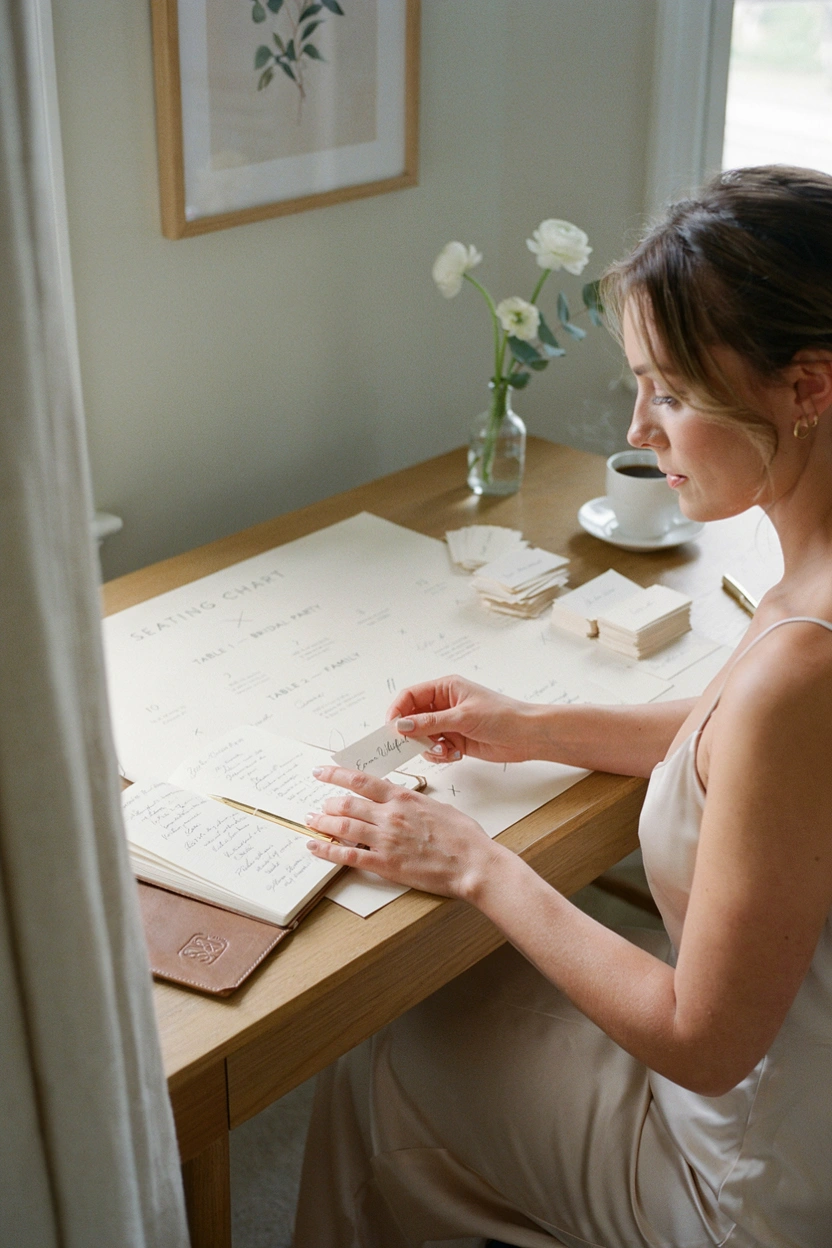
- Paper and index cards: Write each guest’s name on a card, arrange them on a table diagram printed from online. You can move cards around, see sightlines, and visualize the room. Surprisingly effective and very physical.
- Spreadsheet: Column for guest names, column for table number, column for dietary needs. Sort and filter easily. Share with your caterer in minutes. Low-tech but functional.
- Online seating chart software: Some wedding planning sites have built-in seating chart tools. Useful if your venue has a template, but often overkill for smaller weddings.
- Printable seating chart template: Find a blank table diagram online, print copies, and write names by hand. Cheap, simple, and you can make as many copies as you need.
Choose whatever tool lets you see the room, move people around easily, and communicate the final seating to your caterer. That’s it. And if you’re still weighing whether you need extra hands on deck for the big day, this breakdown of when a wedding planner is actually worth it can help you decide.
How to Communicate Seating to Guests (Without Seeming Controlling)
Some guests don’t want to know their table in advance. Others prefer the surprise. Most just want to know where to sit when they arrive.
The kindest approach: put the table number on the invitation or include it in a simple email two weeks before. Let guests know you’re placing them with people you think they’ll enjoy. Most people appreciate the thought. A few will request changes — that’s fine. Have a backup answer ready.
At the reception, use clear acrylic table numbers or a marked seating card at the entrance so guests can find their table quickly. Simple and elegant.
FAQs About Wedding Seating Charts
Q: What if two wedding guests hate each other?
Separate them across different tables, ideally on opposite sides of the room or at angles where they can’t make eye contact easily. If the conflict is serious, mention it privately to both guests: “I’ve seated you at different tables so everyone can relax.” Most people appreciate the thoughtfulness.
Q: Should you seat single guests together or mixed with couples?
Mix them with couples whenever possible. Pair each single guest with at least one warm couple and other inclusive people. Single guests feel more comfortable and engaged when they’re not isolated at a “singles table” where they might feel like an odd one out.
Q: How early should you finalize your seating chart?
Aim for two to three weeks before the wedding. This is late enough that most RSVPs are in and you know your headcount, but early enough to handle last-minute changes without stress. Don’t finalize more than four weeks out — too much shifts after that.
Q: What if a guest requests a specific seating change right before the wedding?
Handle it if it’s simple. If someone asks to sit with a specific friend or away from someone, that’s usually doable. Write down the change, communicate it to your caterer, and don’t overthink it. Reasonable requests are easier to grant than you think.
Q: How many people should sit at each table?
Eight is ideal. You get good conversation without feeling cramped. Six or seven works if you want smaller, cozier groups. Ten can work if your tables are large enough, but conversation gets harder to include everyone. Avoid tables of more than ten — they splinter into smaller conversations.
Q: Do close family have to sit together?
No. Sit family members where they’ll be happiest and most comfortable. If your siblings prefer different energy levels, let them choose. If one family member gets along better with your friends than your parents, that’s fine. Happiness over obligation.
Q: How do you handle a blended family where step-siblings are attending?
Seat people with the parent or stepparent they feel closest to. Don’t force step-siblings to sit together if the relationship is new or distant. Let relationships develop naturally. A seating chart isn’t where to force family bonding.
Q: What if a guest brings an unexpected plus-one?
This is why you have a flex table. A slightly larger table with adaptable, warm people absorbs last-minute additions. If you don’t have a flex table and this happens, do a quick shuffle on the day-of. It’s not ideal, but it’s solvable.
Q: Should you tell guests where they’re sitting ahead of time?
Most guests appreciate knowing. Include it on the invitation or send an email two weeks before. Some people prefer the surprise of finding their table at the reception — ask in the RSVP if they want to know in advance.
Q: How do you handle introverted guests who might feel uncomfortable?
Seat them with warm, inclusive people and not too many strangers. One quiet table with established friends or warm family members is better than a high-energy table full of people they don’t know. Read your guests — some introverts love meeting new people, others need comfort and familiarity.
Key Takeaways
- Seating shapes your guests’ entire experience. It’s worth thinking through carefully.
- Use the Conflict Decision Tree to solve tricky situations in seconds instead of overthinking.
- Identify your “glue guests” — the people who make tables work — and place one at each table.
- Mix family, friends, and new people intentionally. Boring tables kill the vibe.
- Test your arrangement in your head before locking it in. It catches most disasters.
- Build in flexibility. Have a slightly larger flex table for last-minute additions.
- Finalize two to three weeks before the wedding — late enough to have RSVPs, early enough to handle changes.
- Separate conflicts geographically. No sightlines. No drama.
Final Thoughts
Your wedding seating chart doesn’t have to be stressful. It’s just a series of simple decisions: Who needs to be separated? Who brings energy? Who will make this table feel comfortable?
Follow the framework, use the table ideas you connect with, and trust your instincts. You know your guests. You know who works together and who doesn’t. Your job is to put that knowledge into a simple, readable seating chart.
The best seating chart is the one where your guests are relaxed, the conversation flows, and nobody’s worried about family drama. You’ve got this.
Related reading: Do You Really Need a Wedding Planner? | How Much Does a Wedding Planner Actually Cost?
Suggested Sources
For deeper reading on wedding etiquette and family dynamics, consider a wedding planning book as a reference guide for navigating tricky situations.