What Is a Micro Wedding? Everything You Need to Know to Plan One You’ll Love
Quick Answer: A micro wedding is an intimate celebration with 20 to 50 guests that includes the meaningful elements of a traditional wedding — a ceremony, catered dinner, and professional photography — just on a smaller, more personal scale. It typically costs less, opens up unique venue options, and lets you spend real time with every single person there.
Wedding planning is supposed to be exciting. But somewhere between the 200-person guest list your future mother-in-law keeps growing and the venue quotes that made your eyes water, the joy starts to feel a lot like stress.
More and more couples are stepping back and asking a simple question: what if we just kept it small? A micro wedding isn’t a compromise. It’s a choice — a deliberate decision to prioritize people and moments over guest counts and grand productions. And for many couples, it’s the best decision they make.
The average American wedding now costs over $30,000. (Source: The Knot) That number climbs fast with every extra table you add. A micro wedding changes the math entirely, giving you the freedom to spend where it actually matters — on the food, the photos, the venue, the moments — without spending on people you barely know.
By the end of this article, you’ll know exactly what a micro wedding is, how it compares to other intimate options, whether it’s right for you, and how to plan one that feels complete and intentional — not bare-bones.
This post may contain affiliate links, please refer to privacy policy for more information.
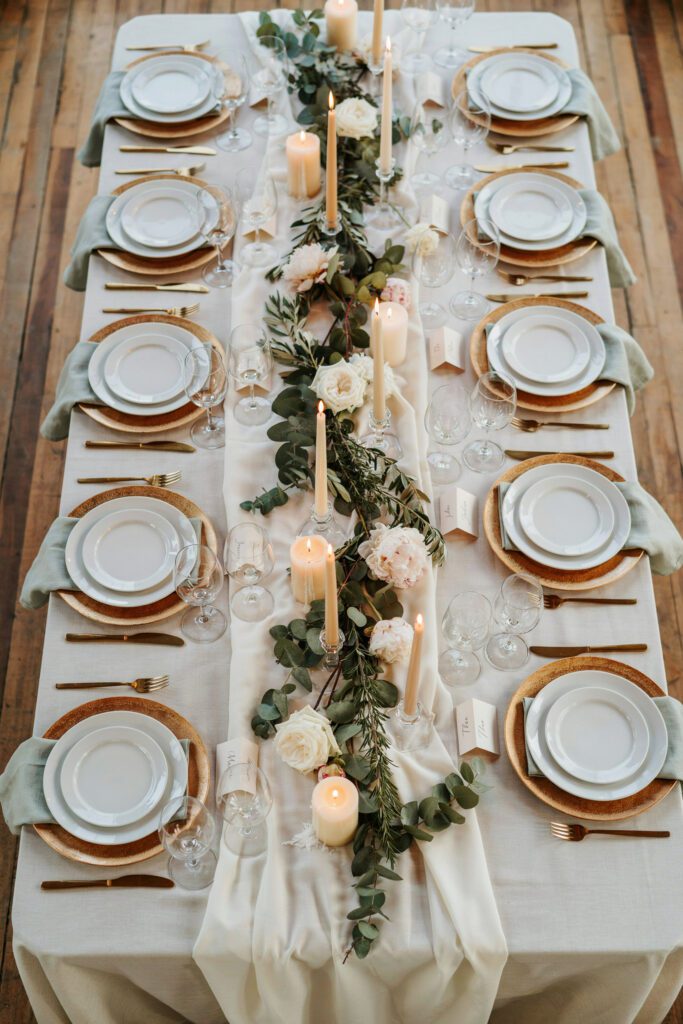
What Is a Micro Wedding, Exactly?
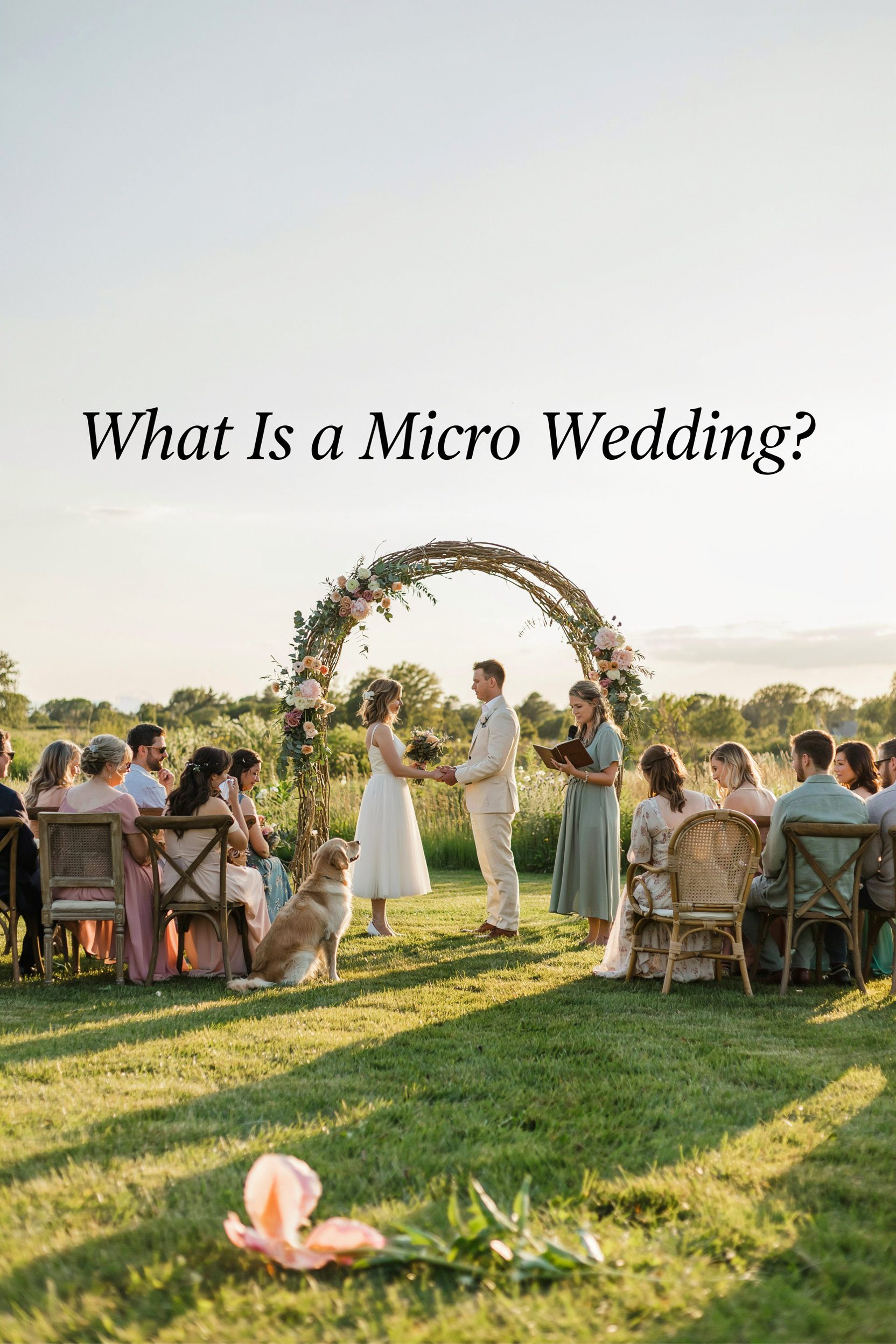
A micro wedding is a small, intentional celebration with a guest list of 20 to 50 people that still includes all the traditional elements most couples care about — the ceremony, the reception, the photographer, and the food. It’s not a courthouse signing or a backyard barbecue that happens to have vows. It’s a real wedding, just sized down to match what actually matters to you.
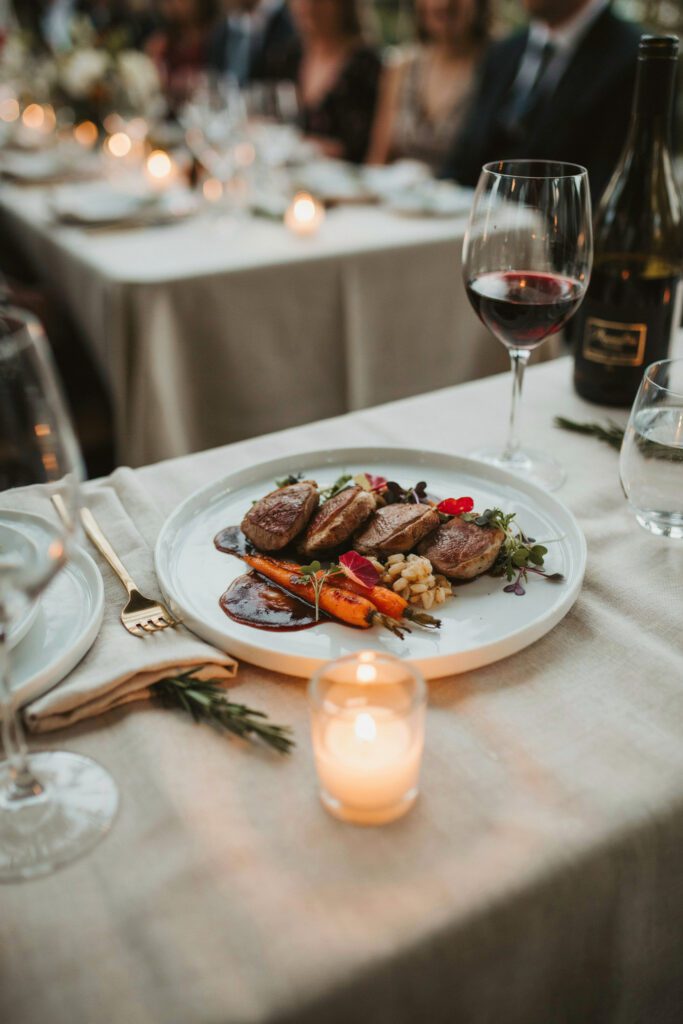
The smaller guest count is what makes everything else possible. With fewer seats to fill, you’re no longer locked into a ballroom that holds 250. You’re not choosing a generic plated dinner because it’s the only thing that scales. You can take that budget and put it toward something genuinely wonderful — a chef-driven family-style dinner, a photographer who specializes in intimate events, a venue that would never work for a large crowd.
How Many Guests Does a Micro Wedding Have?
Most micro weddings land between 20 and 50 guests. That range is small enough to feel genuinely intimate — you’ll actually talk to every person there — but large enough to include close family and your inner circle of friends. Some couples go as low as 15; others push to 60. The number itself matters less than the intention behind it: only the people you truly want present.
What’s Typically Included in a Micro Wedding?
A micro wedding isn’t a stripped-down version of a big wedding. It includes the same meaningful elements, just scaled to a size that feels personal. Most micro weddings include:
- A formal or semi-formal ceremony with an officiant
- Professional photography (and often videography)
- A catered meal or high-quality dining experience
- A reception with toasts, music, and time to celebrate
- Flowers, décor, and styling that reflect the couple’s taste
You still get the wedding. You just get it with people who actually belong there.
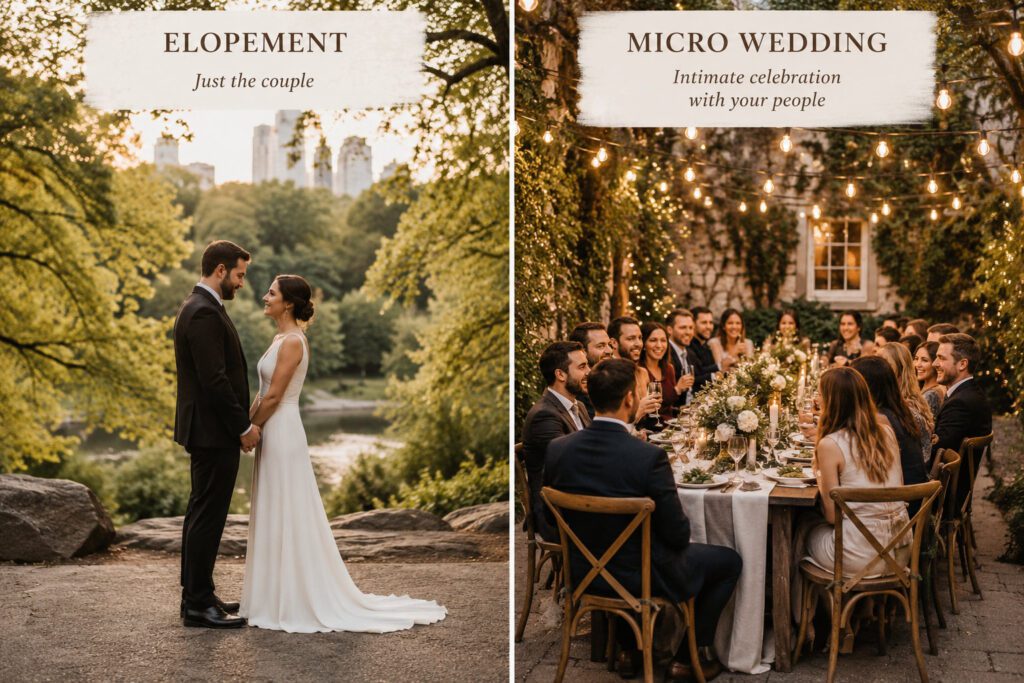
Micro Wedding vs. Elopement vs. Minimony: What’s the Difference?
These three options sound similar, but they’re meaningfully different. Understanding what each one actually involves helps you figure out which style fits your vision — and which one fits your family situation, too.
| Format | Guest Count | Includes Reception? | Best For |
|---|---|---|---|
| Elopement | Just the couple (+ 1–2 witnesses) | Rarely | Couples who want complete privacy and simplicity |
| Minimony | Under 10–25 guests | Usually not | A ceremony-only celebration; may be followed by a larger party later |
| Micro Wedding | 20–50 guests | Yes | Couples who want intimacy but still want to celebrate with their people |
The biggest difference between a minimony and a micro wedding is the reception. A minimony is almost entirely ceremony-focused — you say your vows, and that’s largely it. A micro wedding adds the dinner, the dancing, the toasts, and the time together afterward. It’s the full experience, just smaller.
You can also combine these options. Some couples elope or have a minimony first, then host a micro wedding celebration weeks or months later when they’re ready to celebrate with family. There’s no rule that says it has to happen all at once.
Is a Micro Wedding Right for You?
Here’s where most wedding planning articles fall short: they’ll tell you all about micro weddings, but they never actually help you decide if one is right for you. So let’s do that.
Read through both lists below. Be honest with yourself.
Signs a Micro Wedding Is a Great Fit
- You want to actually talk to every guest at your wedding — not just wave across a crowded room
- A long guest list feels stressful, not exciting
- You’d rather spend your budget on quality experiences than volume
- The idea of an intimate dinner with your closest people sounds better than a 200-person reception
- You want a venue that actually reflects your personality — not a hotel ballroom
- You feel anxious about being “on” for a large crowd all day
- You want to write your own vows and have a ceremony that actually means something
- You’d be happy at your wedding even if only 25 people were there
When a Larger Wedding Might Serve You Better
- You genuinely love big parties and get energy from large gatherings
- You have a large extended family and the thought of leaving people out would genuinely bother you for years
- Your partner feels strongly about having a larger celebration and it matters to them deeply
- You have cultural or family traditions where a large wedding is meaningful and expected — not just pressured
If you found yourself nodding through most of the first list, a micro wedding was probably built for you. And if you’re somewhere in the middle? That’s what the planning process is for — you can design something that honors both of you.
The Real Benefits of Choosing a Micro Wedding
The benefits of a micro wedding aren’t just about saving money — though that’s real. They’re about what you actually get to experience on the day itself. And for a lot of couples, those things matter far more than the headcount.
You’ll Actually Connect With Every Guest
At a traditional wedding with 150+ guests, it’s almost impossible to spend meaningful time with more than a handful of people. You spend the whole reception working the room, rushing from table to table, and the evening disappears before you know it. With 20 to 50 guests, that pressure lifts. You get to sit down for dinner, have real conversations, and actually be present with the people you love.
Most couples who choose micro weddings say this is the part they didn’t expect — how present they felt. No rushing. No crowd management. Just time with their people.
Your Budget Goes So Much Further
Fewer guests means dramatically lower costs for catering, venue space, and rentals. That math is simple and it adds up fast. But the real benefit is what you can do with the money you’re not spending on 100 extra meals.
Some couples put that savings toward a gourmet menu that genuinely impresses. Others invest in a top-tier photographer, a stunning venue, or an incredible honeymoon. Instead of spreading your budget thin across a large event, you get to make intentional choices about what actually matters to you.
Planning on some beautiful fresh flowers? A luxury bouquet hits differently when you’re not also budgeting for 20 centerpieces.
Less Logistics, More Presence
Planning a 200-person wedding is genuinely a part-time job. The coordination, the vendor wrangling, the seating chart politics — it’s a lot. Micro weddings are simply easier to manage. Fewer guests means fewer meals to coordinate, fewer tables to arrange, and fewer logistics to stress over in the weeks before your wedding.
That’s not a small thing. Arriving at your wedding day calm and excited — instead of exhausted and anxious — changes everything about how you experience it.

How to Handle Family Expectations (The Conversation Nobody Warns You About)
Here’s what most micro wedding articles skip entirely: the emotional part. Choosing a small wedding is sometimes the easy decision. Telling your family about it? That’s where it gets complicated.
Guilt is real. Hurt feelings are real. A cousin who finds out she’s not invited and stops texting you — that’s real too. But there are ways to handle these conversations that minimize hurt and protect your relationships without caving to pressure that would make you miserable.
Scripts for Telling Family You’re Keeping It Small
The most important thing is to have this conversation early — before anyone assumes they’re invited — and to be warm, clear, and direct. Vague hints lead to confusion. Here are a few ways to frame it:
- For parents who expected a big wedding: “We’ve been doing a lot of thinking about what kind of wedding actually feels right to us, and we’ve decided to keep it really intimate — just our closest people. It’s not about what we don’t want. It’s about what we do want, which is to really be present with you and a handful of people who mean the world to us.”
- For extended family: “We’re having a very small ceremony — just immediate family and a few close friends. We’re so sorry we can’t include everyone, and we’re hoping to celebrate with a bigger group at [a dinner / party / gathering] sometime after.”
- For friends who expected to be invited: “We’re keeping our wedding incredibly small — we’re talking under 30 people total. It’s nothing to do with how much we care about you. We’d love to celebrate with you separately.”
What to Say When Someone Feels Left Out
Someone will feel left out. It’s almost unavoidable when you’re cutting from 150 potential guests to 30. What matters is how you respond. Acknowledge the feeling without reversing your decision. “I completely understand that this is disappointing, and I’m really sorry” goes a long way — but only if you mean it and don’t follow it with “so we’ll add you to the list.”
Planning a small post-wedding gathering — even just dinner out with a larger group — gives people something to look forward to and helps ease the sting. For more on navigating these tricky conversations, check out our wedding planning guides for additional support as you get organized.
Micro Wedding Ideas That Feel Anything But Small
One of the biggest fears couples have about going small is that the wedding will feel… small. Bare. Like something was missing. But honestly, the opposite is usually true — a micro wedding gives you the freedom to do things you simply couldn’t pull off with a larger group.
Outdoor and Nature Ceremonies
Outdoor ceremonies are a natural fit for micro weddings. With fewer guests, you have access to locations that couldn’t handle a crowd — a private stretch of beach, a clearing in the woods, a rooftop garden, a mountaintop with a view that takes your breath away. The setting itself becomes part of the experience.
- Redwood or forest settings for a dramatic, natural backdrop
- Wildflower meadows or botanical gardens for something soft and romantic
- Lakeside or oceanfront locations for a ceremony with water views
- Private farms or vineyards where the whole property becomes your venue
For aisle inspiration, these wedding aisle decoration ideas translate beautifully to outdoor settings with a small group.
Backyard and Home Celebrations
A backyard micro wedding is one of the most personal options available — and it tends to cost significantly less than a traditional venue. String lights, long harvest tables, handmade centerpieces, and a relaxed dinner-party vibe can turn a familiar space into something genuinely beautiful.
The key is treating it as intentionally as you would any other venue. Rent chairs, linens, and lighting. Hire a caterer. Bring in a florist for a few key arrangements — even small touches like small chalkboards make the setup look polished and personal. Don’t just throw a party and call it a wedding — style it with the same care.
Destination and Unique Venues
Destination weddings become genuinely accessible with a micro guest list. Coordinating 30 people’s travel is manageable. Coordinating 150 people’s is a logistical nightmare. With a smaller group, you can take everyone to a mountain lodge, a coastal villa, or a city you’ve always loved — and it actually works.
Unique venues open up too. Art galleries, historic libraries, private dining rooms at restaurants, the café where you had your first date — these spaces can hold 30 people but couldn’t begin to accommodate a traditional wedding. A micro wedding gives you access to all of it.
Personal Touches That Elevate Any Micro Wedding
With fewer guests, every detail lands differently. Personal touches that would be lost in a crowd become the moments people remember. A few ideas worth considering:
- Write your own vows — and actually read them slowly, without rushing
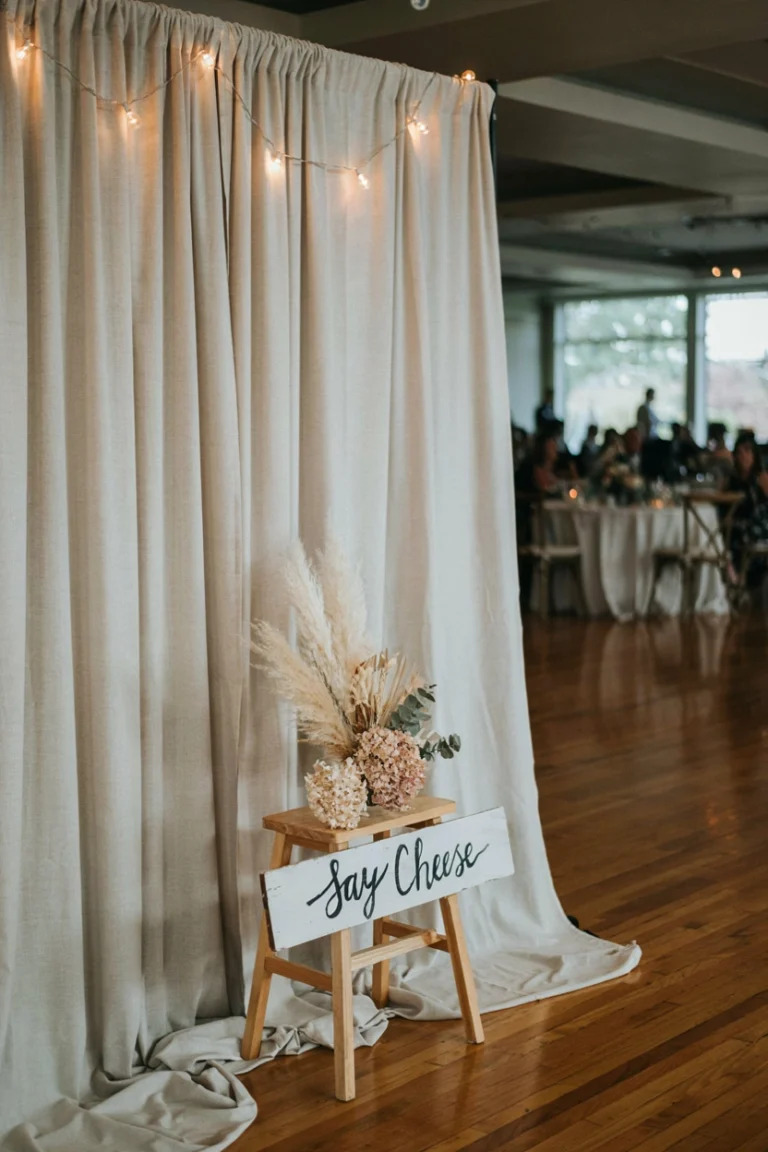
- Set up a Polaroid or instant camera for guests to use at the reception so guests can create their own mementos throughout the night
- Use Faux floral arrangements as table centerpieces or ceremony décor for lasting, budget-friendly arrangements that still look stunning
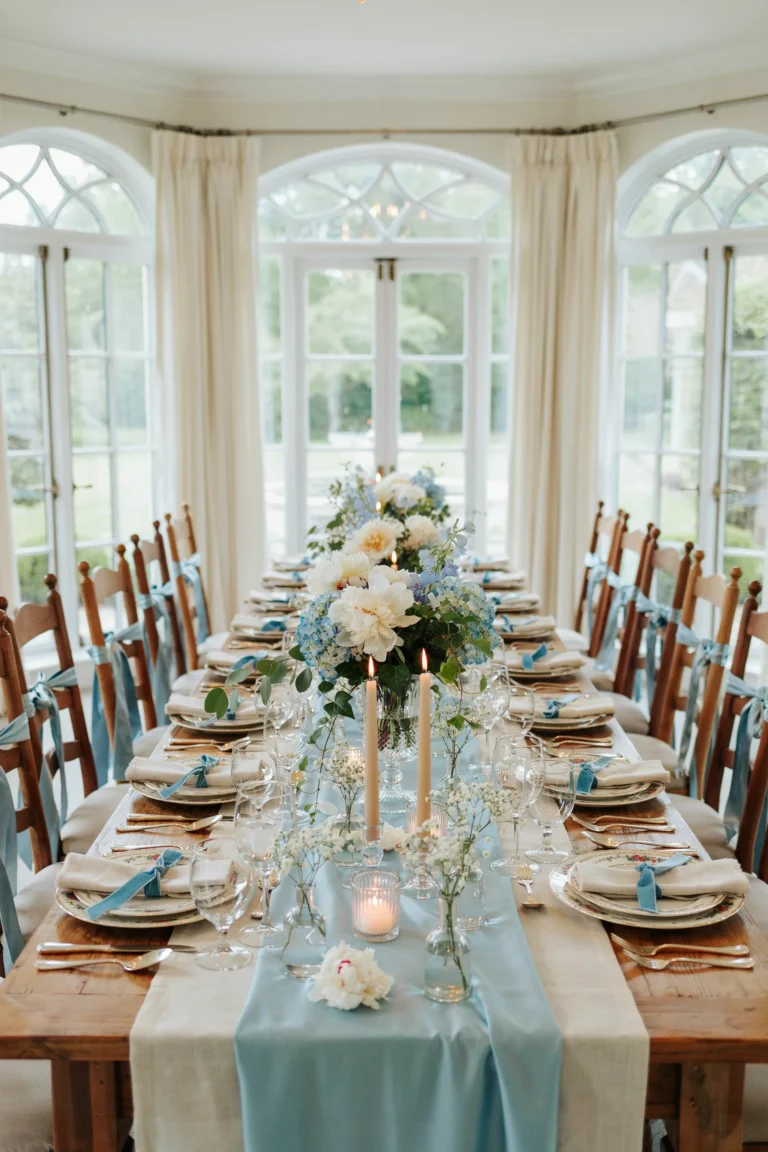
- Arrange seating at one long family-style table so the whole reception feels like a dinner party
- Invite a close friend to give a reading during the ceremony rather than keeping it just to the vows
- Create a custom cocktail inspired by your relationship — and tell guests the story behind it
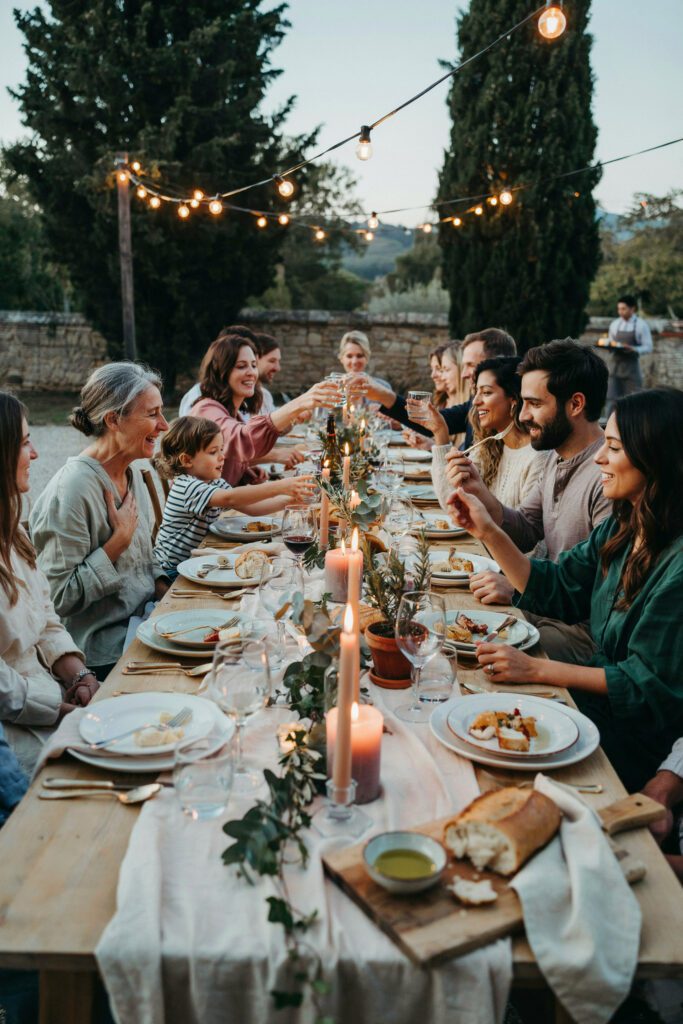
How to Plan a Micro Wedding Step by Step
The planning process for a micro wedding is similar to a traditional one — just simpler. Here’s how to work through it without getting overwhelmed.
- Set your guest count first. Everything else — venue, catering, budget — follows from this number. Start with your absolute must-haves (immediate family, closest friends) and build from there. If you hit 30 and feel good, stop at 30. Give yourself permission to stop.
- Choose your venue early. Unique, small-capacity venues book out just like traditional ones. Once you have an approximate guest count, start looking at venues that fit the vibe you want. Don’t limit yourself to spaces marketed as “wedding venues” — think restaurants with private dining rooms, short-term rental properties, parks with permit options, and friend’s properties.
- Lock in your key vendors. For a micro wedding, the non-negotiables are usually a photographer, an officiant, and catering. Look for vendors who specialize in intimate weddings — they understand the rhythm of a smaller event and won’t try to upsell you on things you don’t need. For a realistic sense of how long wedding planning takes, give yourself at least six to eight months even for a micro wedding.
- Design your ceremony and reception intentionally. With a smaller group, you have the flexibility to do things differently. Consider a circular seating arrangement for the ceremony so no one is stuck in the back. Plan a dinner format that encourages conversation. Think about what you actually want the day to feel like — not what you’ve seen other weddings do.
One thing couples often overlook: even small weddings benefit from a day-of coordinator. You don’t want to be managing logistics on your wedding day, even if the event is intimate. Here are the wedding details couples most often forget — worth a read before you finalize your planning checklist.

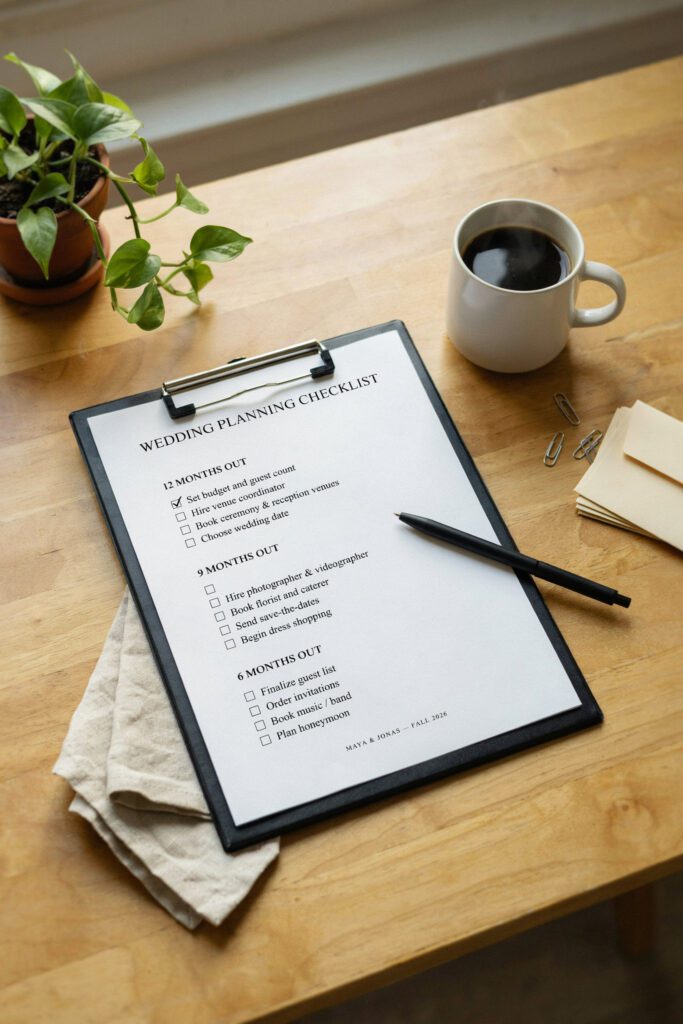
Micro Wedding Planning Checklist
Use this as your planning roadmap. Save it, print it, or bookmark it — whatever helps you actually use it.
6–8 Months Out:
- Finalize guest count
- Set your overall budget and identify your top priorities
- Research and book your venue
- Book your photographer
- Book your officiant
- Start researching caterers or catering options
3–5 Months Out:
- Send save-the-dates
- Book remaining vendors (florist, hair and makeup, coordinator)
- Choose and order attire
- Plan ceremony details — readings, vows, music
- Finalize catering menu
1–2 Months Out:
- Confirm all vendors
- Send formal invitations and collect RSVPs
- Finalize seating and day-of timeline
- Obtain your marriage license
- Plan rehearsal (optional for micro weddings, but recommended)
Week Of:
- Reconfirm all vendors one final time
- Pack anything you’re bringing to the venue
- Give your coordinator or point-person the day-of timeline
- Rest, hydrate, and let yourself be excited
Micro Wedding Budget: Where to Save and Where to Spend
Micro weddings are more budget-friendly than traditional weddings — but that doesn’t mean they’re automatically cheap. Per-person costs often go up when you’re investing in quality. The goal is to spend intentionally, not to spend less on everything across the board.
Realistic Micro Wedding Cost Ranges
Most micro weddings cost somewhere between $5,000 and $20,000, depending on your location, vendor choices, and guest count. (Source: WeddingWire) That’s a wide range because the variables are significant — a backyard micro wedding with a local caterer looks very different from a venue-hosted intimate wedding in a major city. Use these figures as a starting benchmark, then build your own budget from actual quotes.
Where to Cut Without Cutting Corners
- Skip fresh centerpieces at every table. With a small guest count, you might only have three or four tables. Use potted plants, candles, or Faux floral arrangements as table centerpieces or ceremony décor.
- Choose a non-traditional venue. A friend’s property, a public park with a permit, or an Airbnb rental often costs significantly less than a dedicated event venue.
- Host a weekday or Sunday wedding. Most vendors charge less for non-Saturday events, and venues often have better availability.
- Go with brunch or lunch instead of a dinner reception. Per-person catering costs drop considerably earlier in the day.
- Create a curated playlist instead of hiring a DJ. With 30 guests in an intimate setting, a well-planned playlist and a good speaker can absolutely hold the room.
- Use Mini chalkboard signs for place cards and menu boards for signage instead of printed stationery — they look charming and cost a fraction of the price.
The Three Things Worth Splurging On
| Splurge On | Why It’s Worth It |
|---|---|
| Photography | Your photos are what you keep forever. Intimate weddings require a photographer who knows how to work in small, unscripted moments — worth paying for that specialization. |
| Food and drink | With fewer guests, you can genuinely upgrade the dining experience. A gourmet meal or premium bar is memorable in a way that mediocre food never is. |
| Your attire | This is your wedding day. Wear something that makes you feel genuinely wonderful — whether that’s a custom gown, a made-to-measure suit, or something entirely unexpected. |
If you’re leaning toward an even more minimal celebration, this guide to planning a courthouse wedding is full of practical ideas for keeping it meaningful on the smallest possible budget.
Frequently Asked Questions
How much does a micro wedding cost?
Most micro weddings cost between $5,000 and $20,000, depending on location, venue type, vendor choices, and guest count. (Source: WeddingWire) Your per-person costs may actually be higher than a traditional wedding if you’re investing in quality food and photography — but your total spend will almost always be significantly lower.
How do you tell family you’re having a small wedding?
Have the conversation early — before anyone assumes they’re invited — and be warm, clear, and direct. Acknowledge that it may be disappointing while staying firm in your decision. Offering a separate post-wedding celebration for a wider circle helps ease the transition. For more guidance, we have a full section on family conversations earlier in this article.
Can you livestream a micro wedding for guests who aren’t invited?
Yes, and many couples do. A simple livestream through Zoom, YouTube Live, or even an Instagram Live lets family and friends feel included without adding to your guest count. Assign someone you trust — ideally not a vendor who’s already working — to handle the camera and tech so it runs smoothly.
Is a micro wedding legally the same as a traditional wedding?
Yes. The legal requirements — a licensed officiant, a valid marriage license, and witnesses — are the same regardless of how many guests attend. Check your local county clerk’s requirements for the marriage license, and confirm your officiant is legally ordained to perform marriages in your state.
How far in advance do you need to plan a micro wedding?
Give yourself at least six to eight months, even for a small wedding. Unique venues and quality photographers book up regardless of event size, and you’ll want time to handle the details without rushing. Some couples plan a micro wedding in three to four months when necessary, but more time always helps.
Can a micro wedding have a dance floor or DJ?
Absolutely. There are no rules about what a micro wedding can or can’t include. If dancing is important to you, make it happen. A smaller dance floor actually tends to fill up faster and feel more energetic with fewer guests. A curated playlist often works just as well as a DJ for an intimate group.
What’s the difference between a micro wedding and a small wedding?
The terms overlap, but “micro wedding” generally refers to a guest count under 50 with intentional, curated elements — not just a traditional wedding with fewer people. A small wedding might have 75 to 100 guests and still feel like a scaled-down big wedding. A micro wedding is more about the overall philosophy: fewer people, more intention, more presence.
Do I need a wedding planner for a micro wedding?
You don’t need a full-service planner, but a day-of coordinator is worth every penny. Even with 30 guests, you don’t want to be managing vendor arrivals and timeline logistics on your wedding day. Many coordinators offer day-of packages at a fraction of a full planner’s cost.
What if I want a micro wedding but my partner wants a big one?
This is a real conversation worth having carefully and honestly. Start by understanding what your partner actually values about a larger wedding — is it the celebration, the family tradition, certain people being there? Sometimes a micro wedding with a larger post-wedding party satisfies both people. Sometimes it doesn’t, and you need to find a genuine middle ground together.
Can you do a micro wedding outdoors in any season?
You can — with the right backup plan. Outdoor micro weddings work beautifully in spring, summer, and early fall in most climates. For colder seasons or unpredictable weather, rent a tent, choose a venue with indoor/outdoor flexibility, or have a clear indoor backup ready. With a smaller guest count, pivoting to an indoor space if weather turns is much simpler than it would be with 150 people.
Key Takeaways
- A micro wedding is an intimate celebration with 20 to 50 guests that includes all the meaningful elements of a traditional wedding — just scaled to a size that feels personal.
- Micro weddings are not elopements or minimonies — they include a full reception, catering, and professional vendors.
- The benefits go beyond cost: more presence, more connection, more creative freedom with venues and experiences.
- The hardest part of choosing a micro wedding is often the family conversation — plan for it, have it early, and stand kindly but firmly in your decision.
- Spend less per table, but invest in the things that will matter most: photography, food, and attire.
- Give yourself at least six to eight months to plan, even for a smaller event.
Your Wedding Day Should Feel Like You
A micro wedding isn’t about doing less. It’s about doing what actually matters to you, with the people who actually matter to you, in a way that feels genuine and worth remembering. That’s not a compromise — that’s the whole point.
Whether you’re drawn to a forest ceremony with 25 guests or an intimate rooftop dinner for 45, you get to design a day that reflects who you are as a couple. No filler, no obligation guests, no exhausting sprint from table to table. Just a day that’s entirely, unmistakably yours.
Save this article for when you need it, share it with your partner, or pass it along to a friend who’s deep in wedding planning and starting to feel overwhelmed. And if you have questions, drop them in the comments — we’re happy to help.
You might also love: