55 Church Wedding Decor Ideas for a Beautiful Ceremony
A church already gives your wedding a sense of occasion. Wooden pews, stained glass, soaring ceilings, and a long center aisle can make even the simplest ceremony feel special. The right decorations bring your colors and personality into that setting without competing with its character.
You can keep things understated with ribbon bows and a few flowers, or create a fuller look with entrance arrangements and floral aisle markers. Start by choosing the areas guests will notice most: the doorway, the aisle, and the place where you will exchange your vows.
Before ordering supplies, ask your church coordinator which decorations and attachment methods are allowed, where arrangements can stand, and how much setup time you have. Then use these church wedding decor ideas to build a look that suits both your celebration and the space.
1. White Rose Pew Bouquets

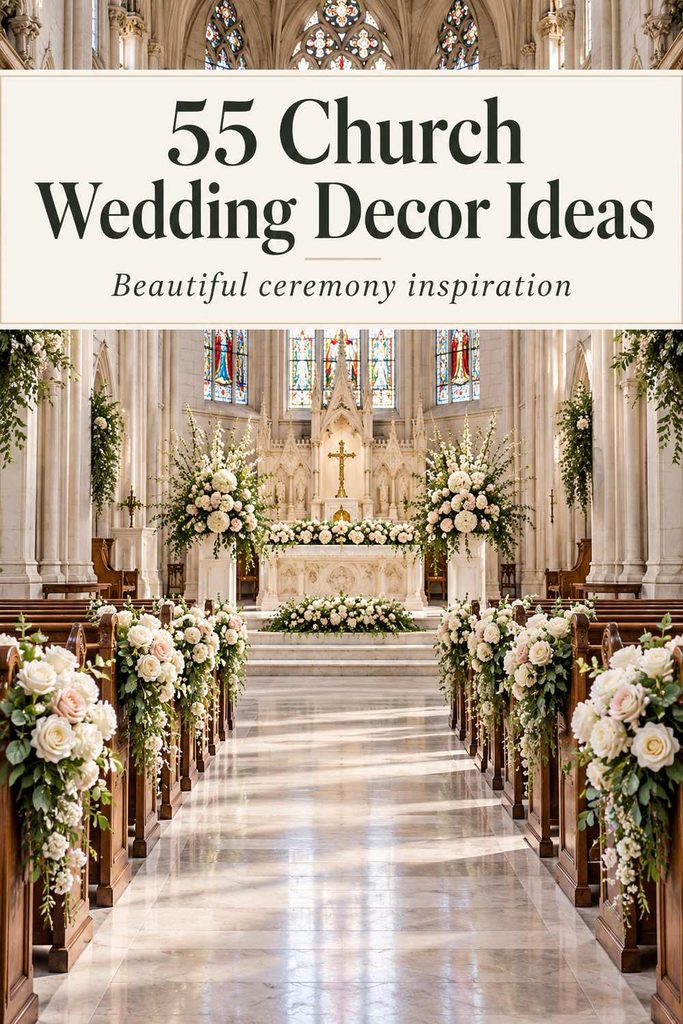
Small bouquets of white roses give wooden pews a soft, classic finish. Add a little greenery and an ivory ribbon, keeping the flowers close to the pew end so they stay clear of the aisle. Decorating every other row creates a lovely repeating pattern without needing a bouquet for every seat.
2. Flowing Chiffon Pew Bows
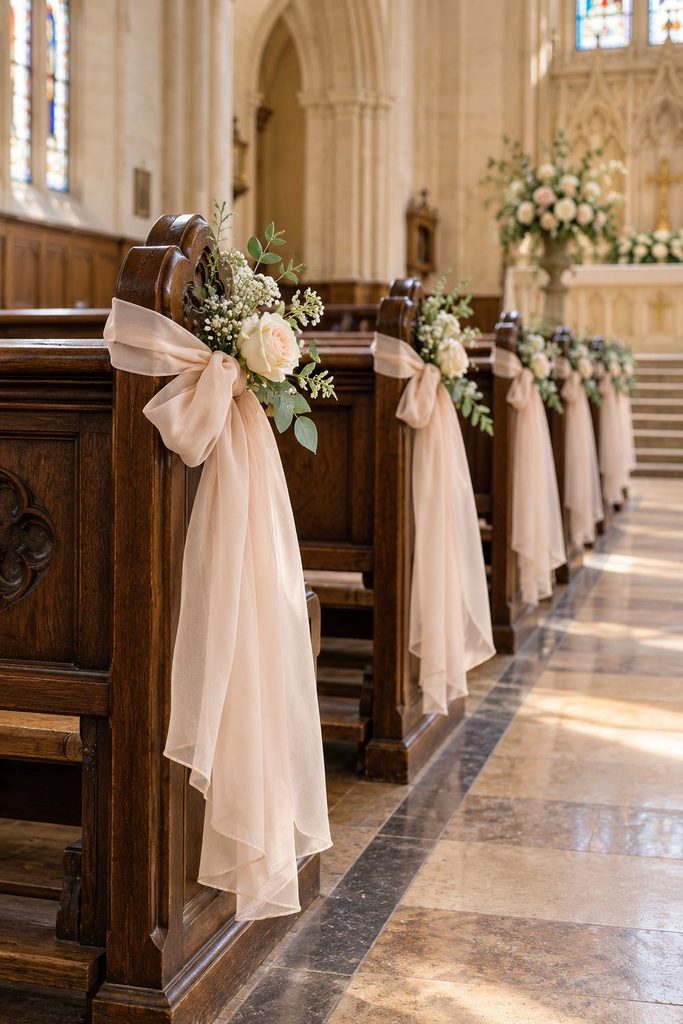
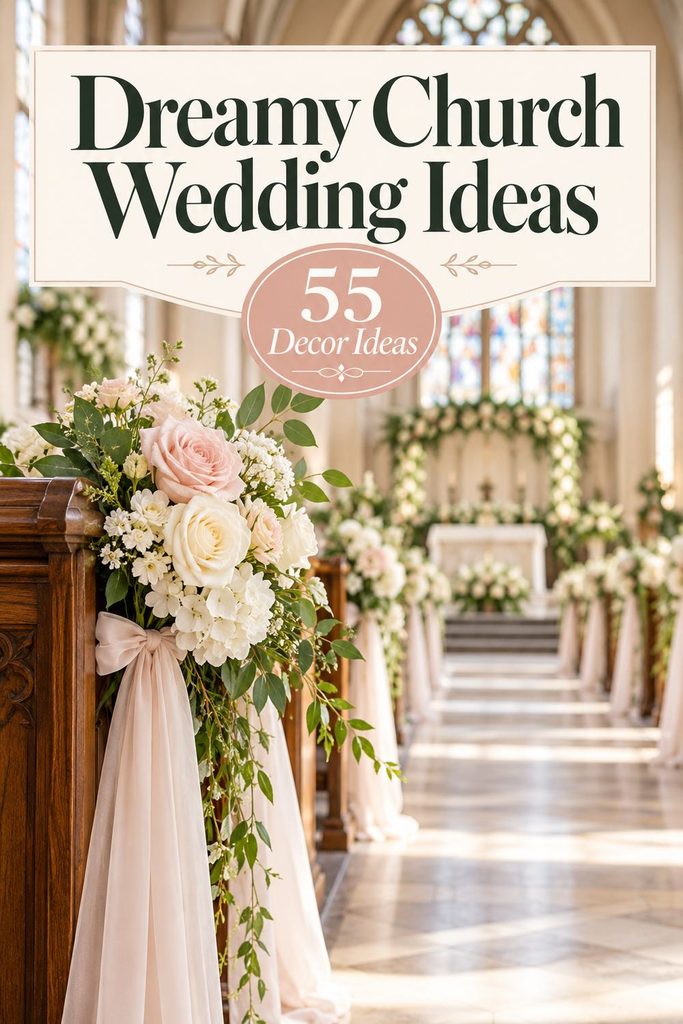
Loose chiffon bows bring movement to a church aisle without adding much visual weight. Choose ivory for a subtle look or use a muted wedding color such as dusty blue or blush. Long tails look beautiful against dark wood, but trim them above the floor.
3. Greenery Wreaths on the Church Doors

Welcome guests with a matching wreath on each entrance door. Olive branches, ruscus, or mixed foliage can create a relaxed look, while a ribbon ties the wreaths into your ceremony palette. Use a church-approved hanging method that protects the door finish.
4. Large Floral Urns at the Entrance
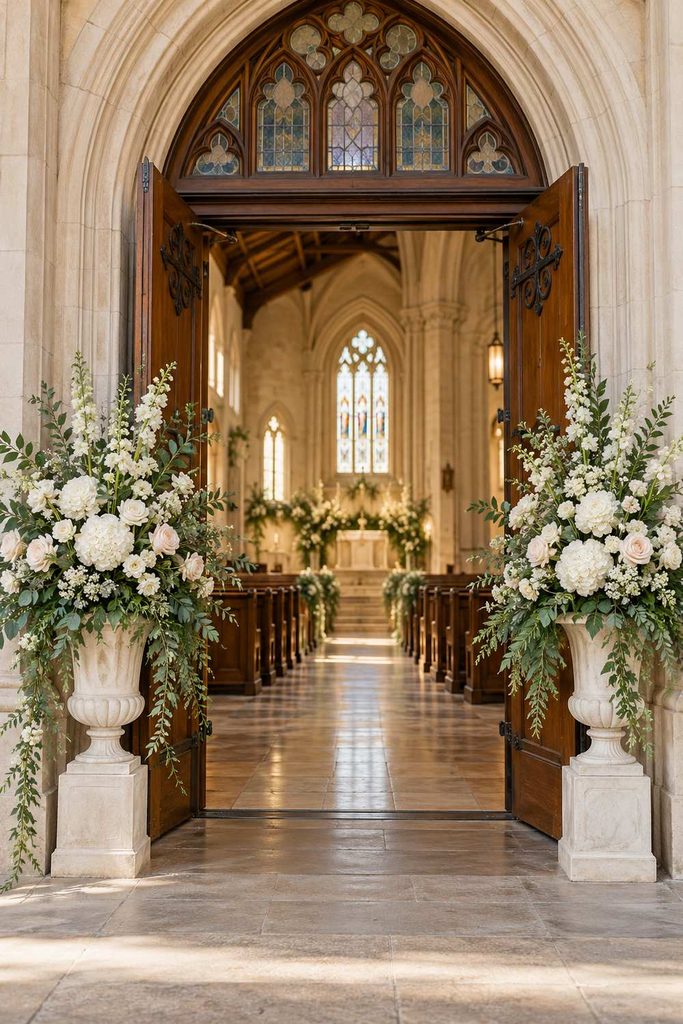
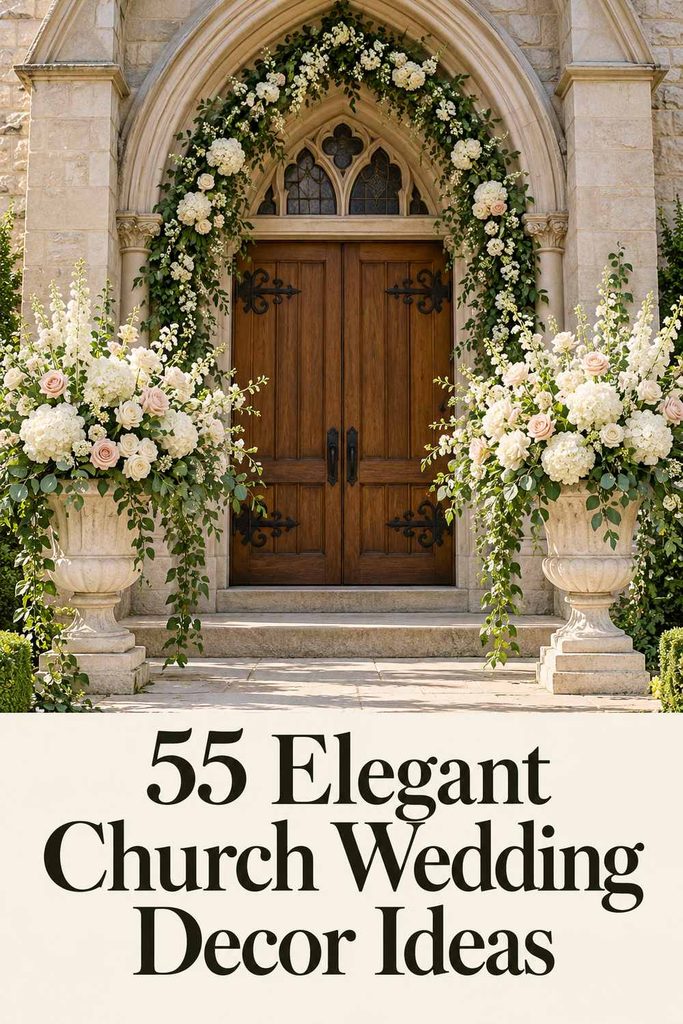
A pair of substantial urn arrangements makes the church entrance feel dressed for the occasion. Fill them with a mix of focal flowers, smaller blooms, and foliage for depth. Place them beside the doorway with enough room for doors to open fully and guests to pass comfortably.
5. A Framed Welcome Sign
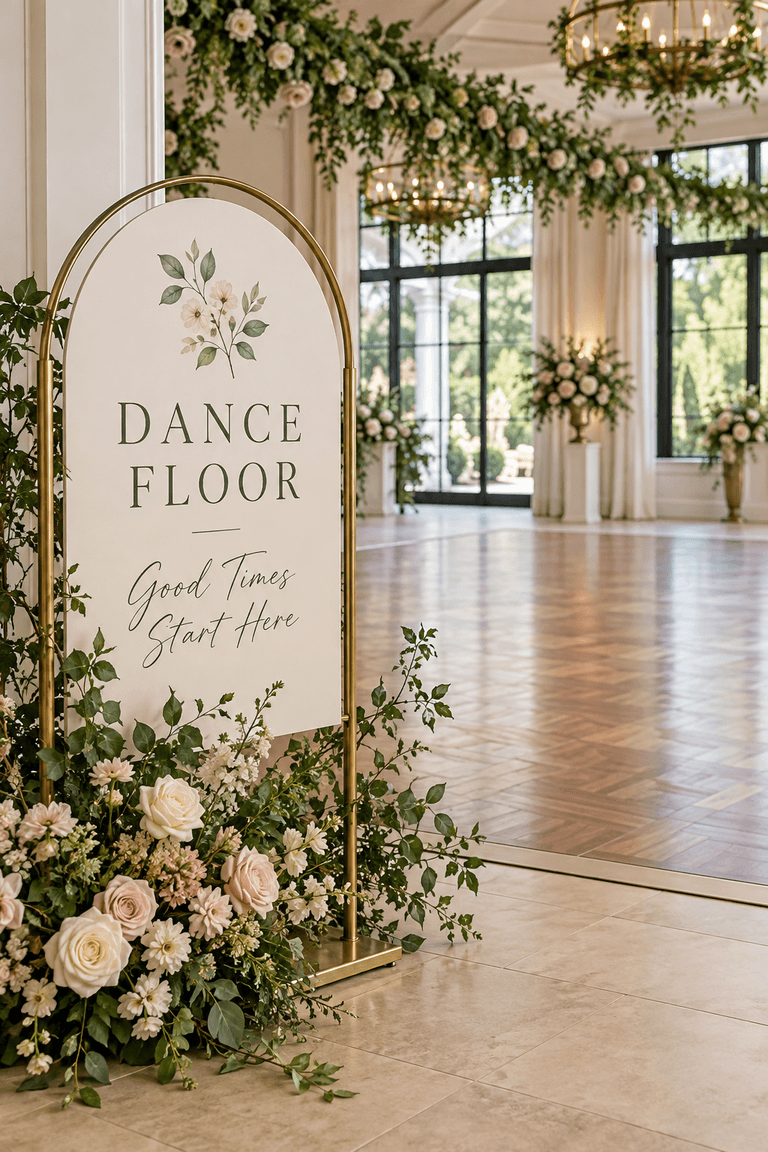
Set a welcome sign in a frame that suits the building: gold for an ornate interior, painted white for a country chapel, or dark wood for a traditional church. Add your names and wedding date, then finish the display with a small floral cluster. Position it where arriving guests can read it without gathering in the doorway.
6. Baby’s Breath Pew Clouds

Rounded bunches of baby’s breath create an airy border along the aisle. Keep each bunch similar in size for a tidy look, and wrap the stems so the attachment feels finished. This works especially well when the rest of the ceremony decorations are simple.
7. Olive Branch Pew Sprigs

Tie a few olive branches together with narrow ribbon for an understated pew decoration. Their silvery green leaves look lovely beside cream flowers and natural fabrics. Use them on selected rows to add detail while leaving plenty of the church’s woodwork visible.
8. Satin Ribbon Pew Loops
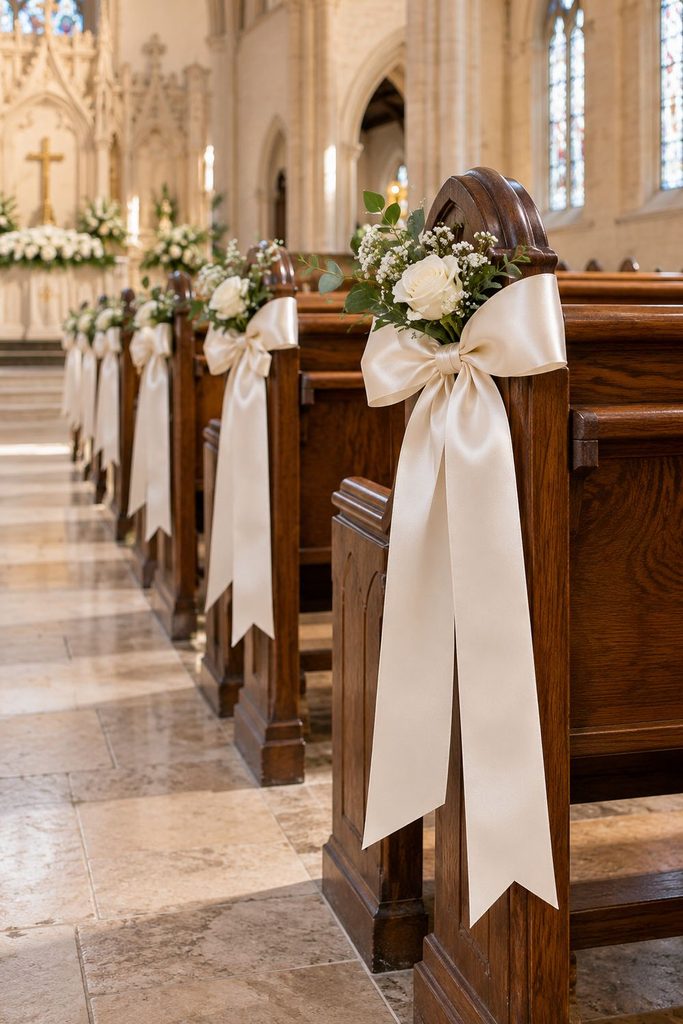
Wide satin ribbon can create a polished aisle decoration with very little material. Form generous loops at each selected pew end and allow two neat tails to hang below. Repeating one ribbon color throughout the church helps the overall design feel intentional.
9. Small Floral Hoops on Pew Ends
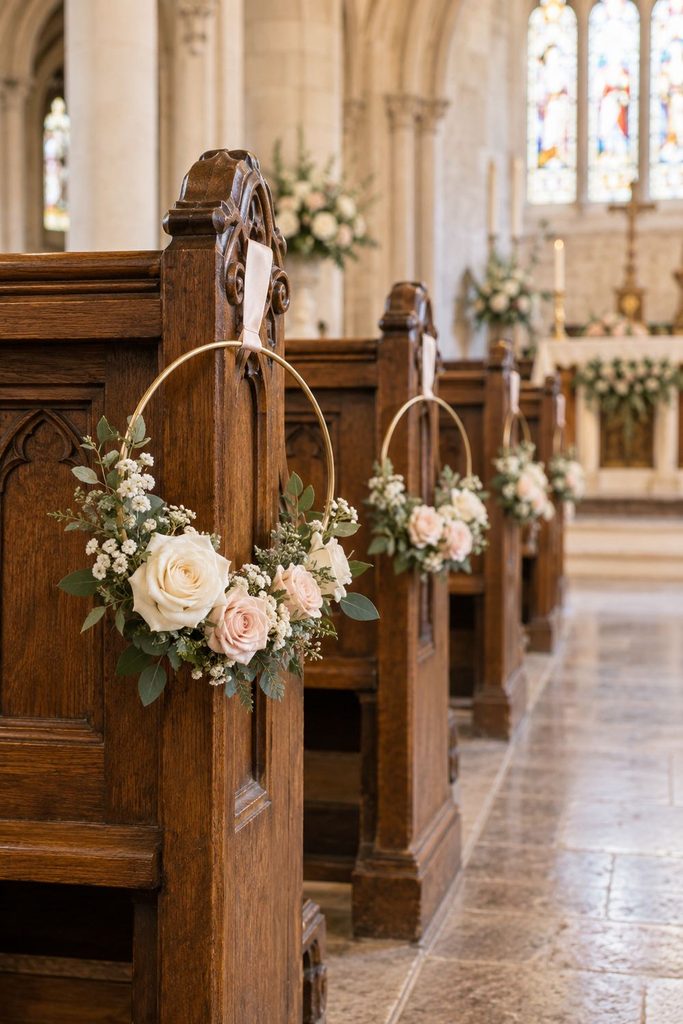
Decorate lightweight hoops with flowers along the lower edge, leaving the upper section open. Hang one from each selected pew end with an approved attachment. Gold hoops suit a formal wedding, while white or wooden hoops feel softer and more relaxed.
10. Hydrangea Pew Arrangements
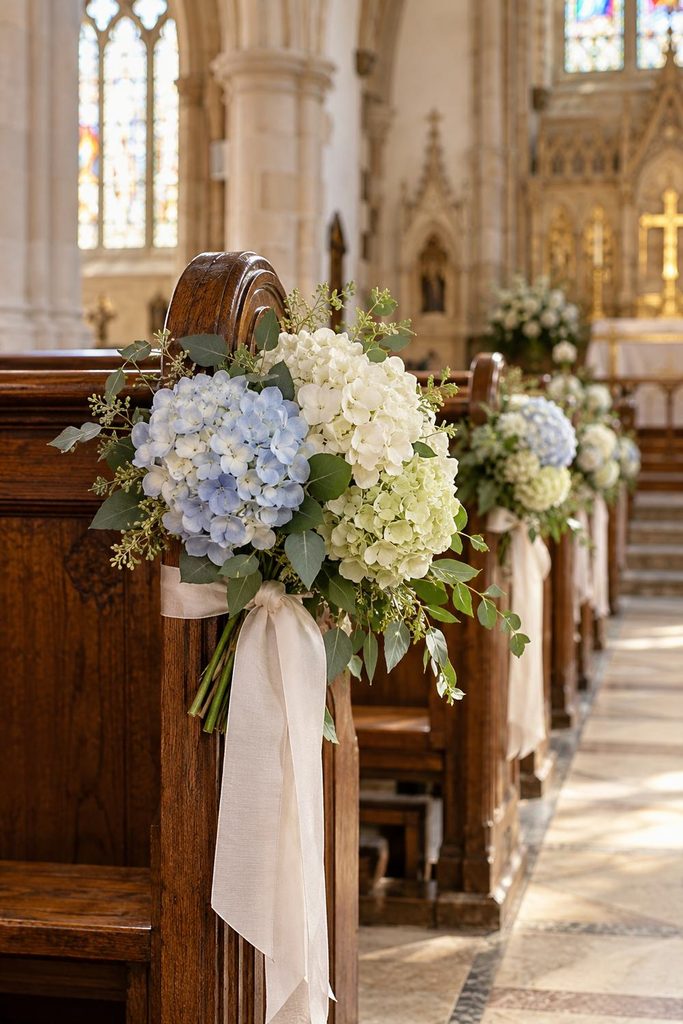
A few hydrangea heads can make a pew bouquet look full and rounded. White, pale blue, or soft green hydrangeas work beautifully with a traditional ceremony setting. Ask your florist to provide a suitable water source so fresh flowers stay looking their best through the service.
11. Greenery Garlands Along Selected Pews

Short sections of greenery can soften the aisle-facing side of a few pews. Use them near the front or at the aisle entrance, keeping each garland contained to its own pew. Leave row openings free so guests can enter and exit easily.
12. Bud Vases on Stable Aisle Stands

Single stems in bud vases create a delicate, garden-inspired aisle. Group two or three small vases on sturdy stands positioned outside the walking route. Repeating the same flower gives the display a clean look, while mixed stems feel more informal.
13. A White and Green Ceremony Palette

Carry white flowers and green foliage through the entrance, pew ends, and front arrangements. The limited palette helps different types of decorations look connected. Vary the flower shapes and leaf textures to keep the design from feeling flat.
14. Blush and Ivory Flower Clusters
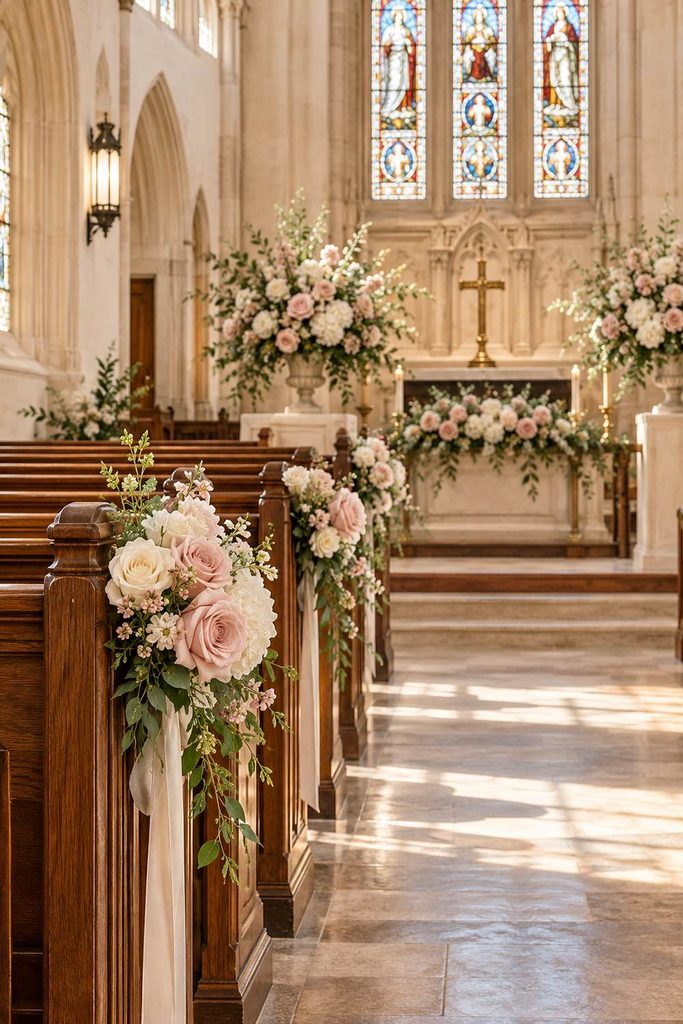
Blush roses, ivory blooms, and restrained greenery bring gentle color into a church interior. Use compact clusters on pews and repeat the combination in larger arrangements near the front. This palette is especially pretty against warm wood and cream walls.
15. Blue and White Floral Accents

Pair pale blue delphiniums or hydrangeas with white flowers for a fresh ceremony palette. Use the blue in a few noticeable places, such as entrance urns and the first pew bouquets. Ivory ribbons help connect the cool flowers with the rest of the room.
16. A White Flower Aisle Entrance
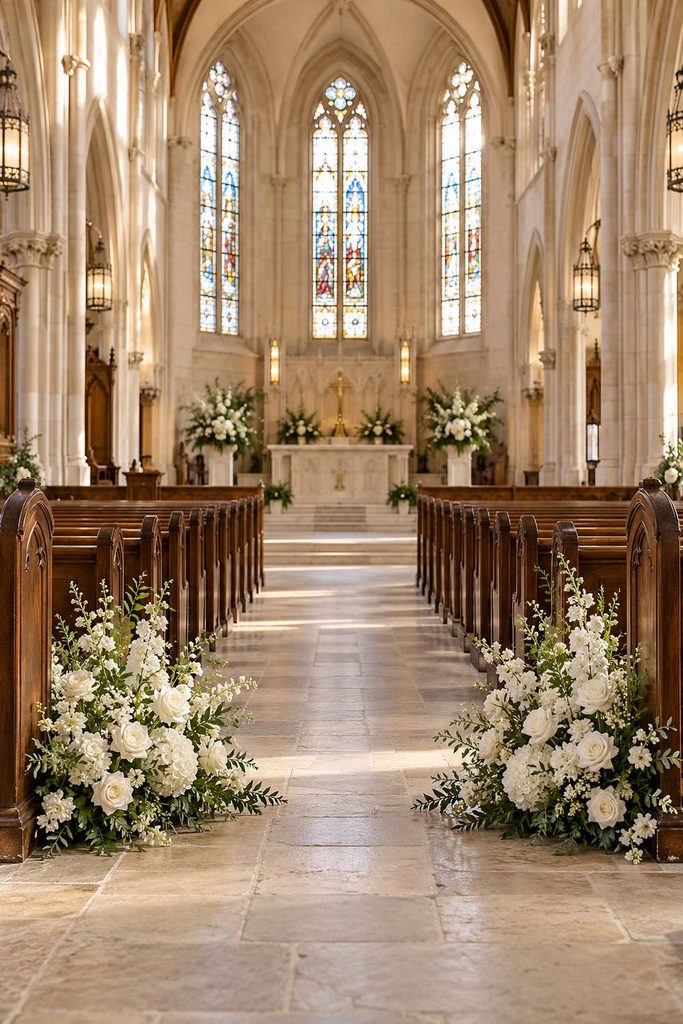
Mark the beginning of the aisle with two generous white flower arrangements. Low, broad shapes create a soft frame without towering over seated guests. This is a useful focal point when you want a memorable entrance but prefer minimal decoration farther down the aisle.
17. Low Floral Meadows Beside the Aisle
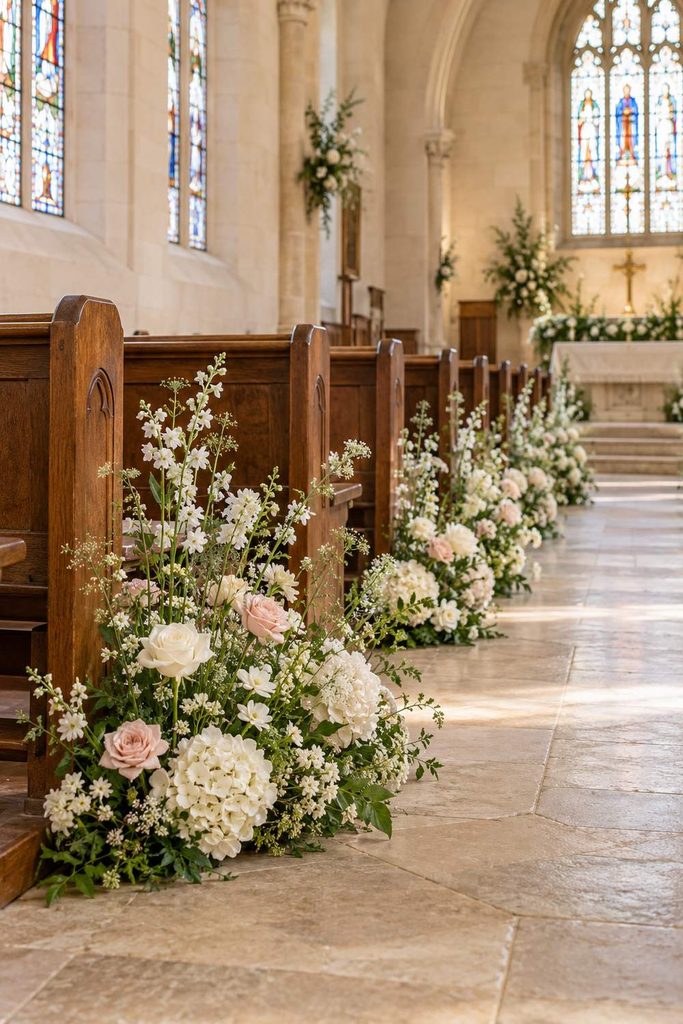
Arrange flowers in low clusters that look as though they are growing beside the pews. Mix different stem heights rather than making every bloom sit at the same level. Keep the arrangements contained and outside the aisle so the effect stays graceful and practical.
18. Basket Arrangements at the Aisle Entrance
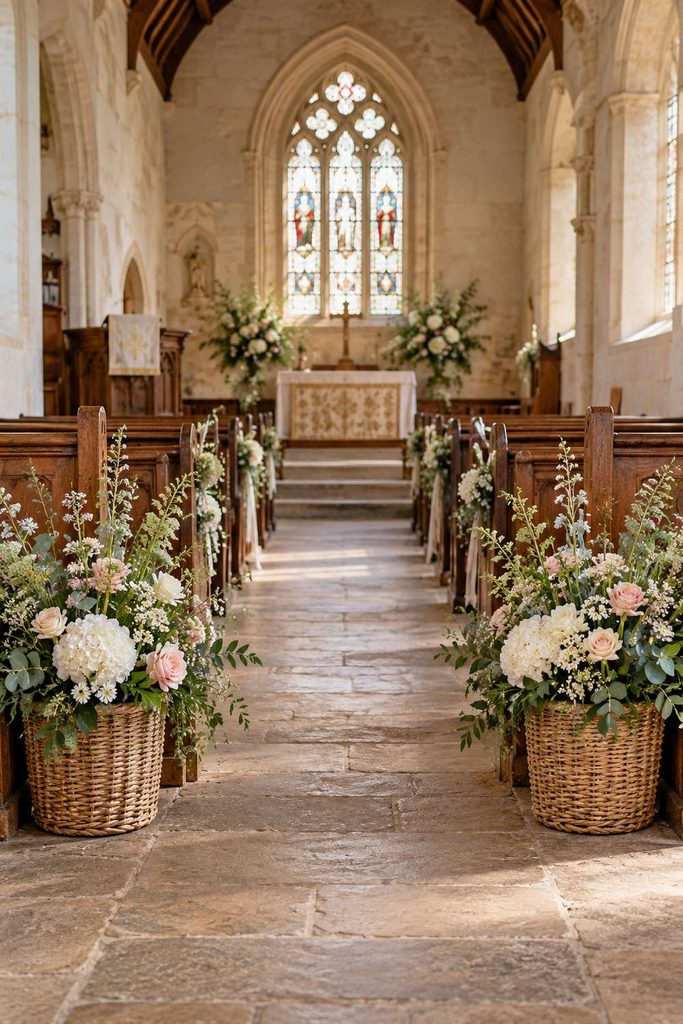
Woven baskets filled with flowers suit a country church or small rural chapel. Choose matching baskets for symmetry or two complementary sizes for a relaxed look. A concealed waterproof liner keeps the display neat and protects the floor.
19. Freestanding Greenery Topiaries

A pair of potted topiaries adds structure at the entrance or near the front of the church. Place the pots inside simple decorative containers, then add ribbon if you want more wedding detail. The upright shapes work well when you prefer greenery to large flower arrangements.
20. A Simple Ivory Aisle Runner
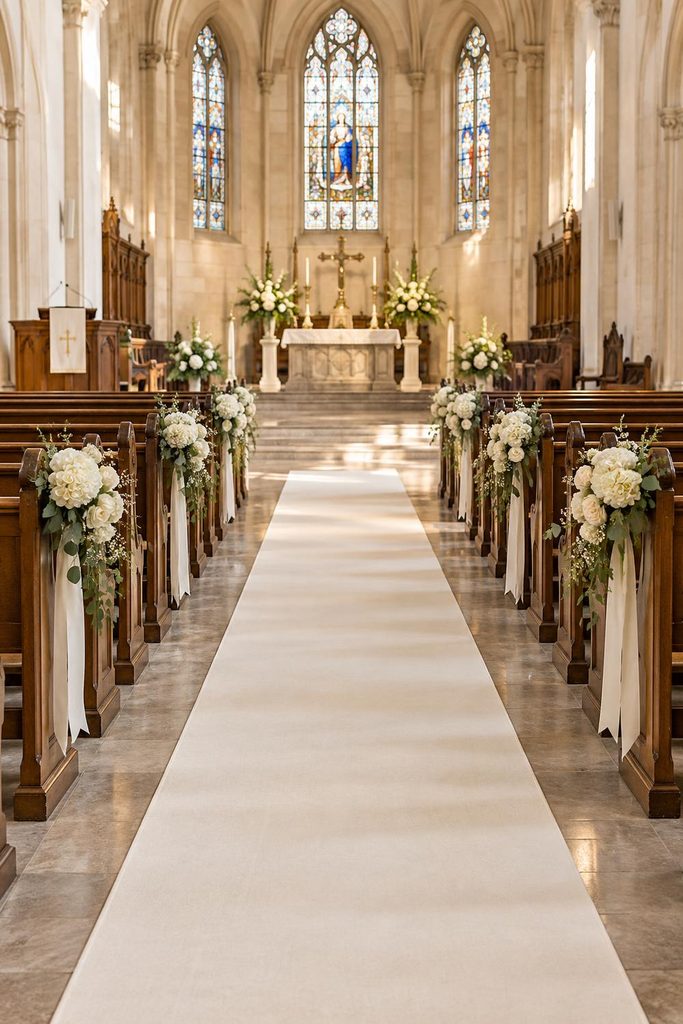
An ivory runner can define the aisle and brighten the center of the ceremony space. Choose one appropriate for the church’s flooring and have the coordinator approve how it will be secured. A smooth, properly fitted runner matters more than extra embellishment.
21. A Personalized Aisle Runner
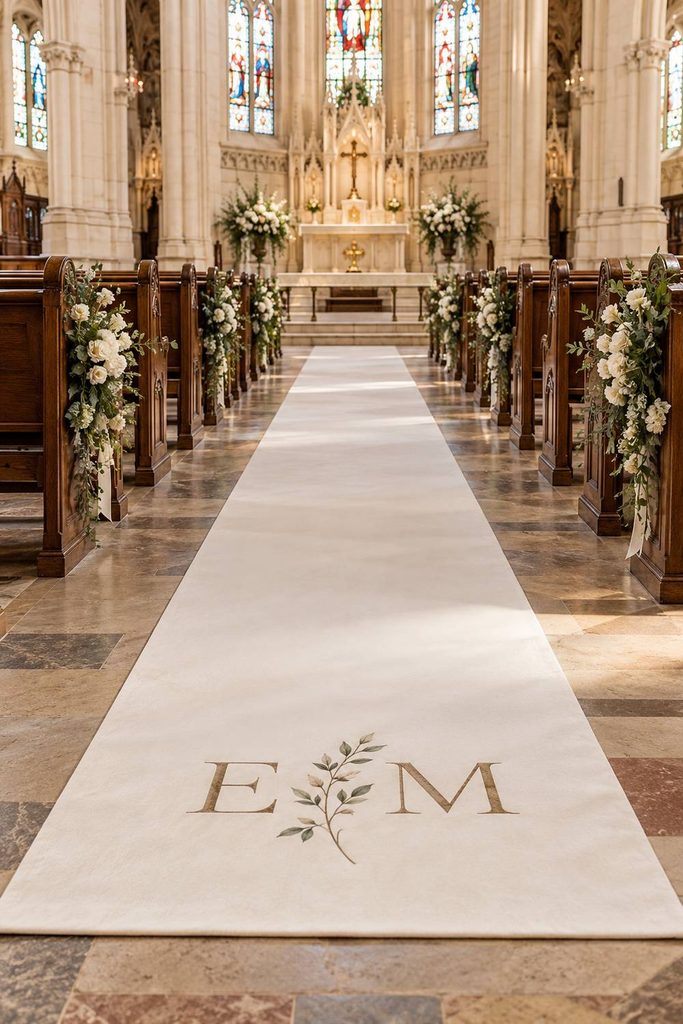
Add your initials or wedding date near the entrance end of a custom runner. Keeping the design to one area gives it a focal point without overwhelming the aisle. Select lettering that is large enough to photograph clearly and a material the venue permits.
22. A Petal Border Along the Aisle
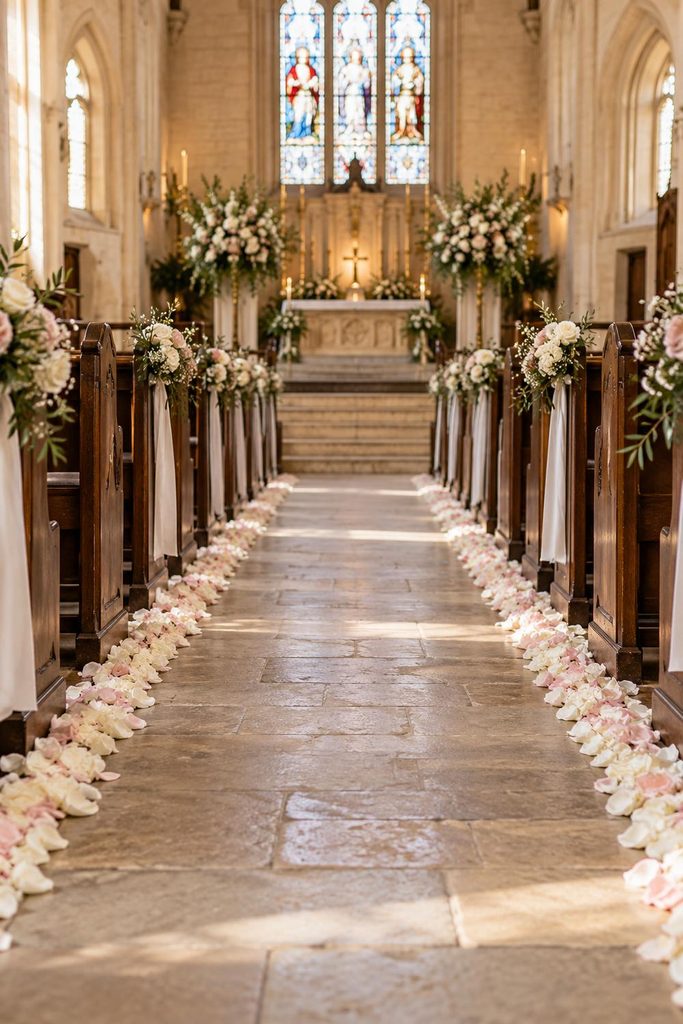
Where petals are allowed, arrange them in narrow borders beside the seating rather than covering the walking surface. White petals create a soft outline, while blush adds a hint of color. Confirm the permitted petal type and cleanup arrangements before choosing this look.
23. A Floral Collar Around a Welcome Sign

Frame the lower corner of your welcome sign with flowers that match the ceremony arrangements. Let a few stems extend beyond the frame for a natural shape. Keeping the decoration to one corner leaves the wording easy to read.
24. A Vintage Mirror Welcome Display

A freestanding mirror with wedding lettering makes a romantic entrance detail. Choose a frame that picks up the church’s existing finishes, then add a small flower arrangement at its base. Check the placement so reflections do not make the message difficult to see.
25. An Illustrated Church Welcome Sign
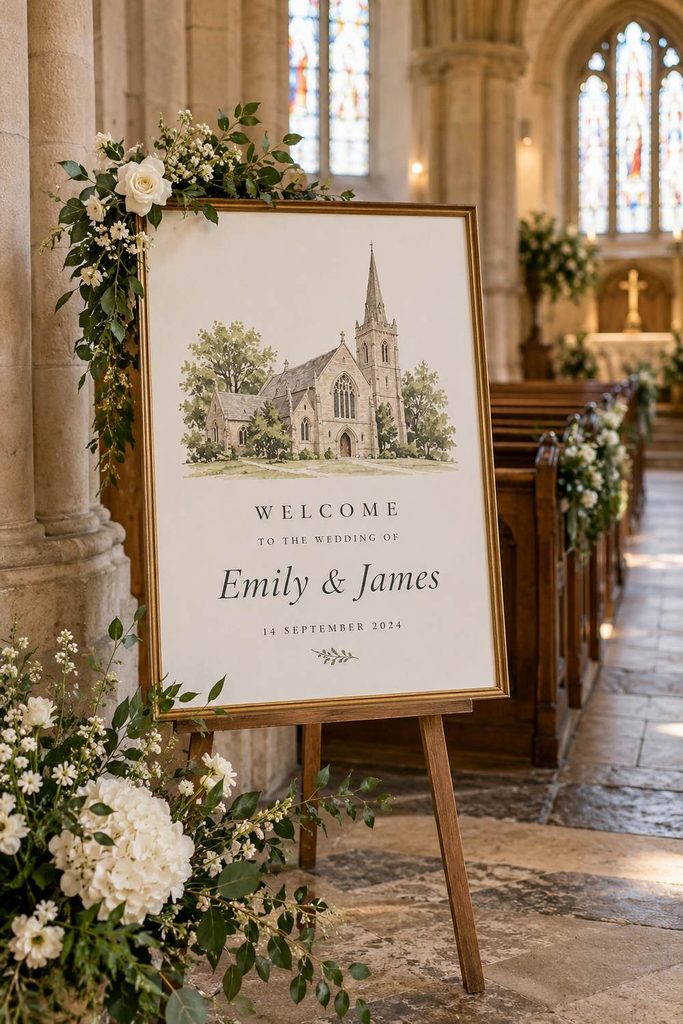
Use a simple illustration of your ceremony church above your names and wedding date. The building itself becomes part of the design, making the sign feel personal to your location. A plain frame and a few flowers let the artwork stand out.
26. A Floral Garland Over the Entrance

An approved floral installation above the main doors creates a beautiful arrival moment. Concentrate flowers at the corners or across the top, allowing some of the doorway to remain visible. Have the florist and church agree on the support method before the design is finalized.
27. Flower-Filled Planters on the Steps

Dress wide church steps with planted containers or coordinated flower pots. Use a small number of substantial planters for a composed look, leaving the handrails and access routes clear. Containers in one finish help mixed flowers feel cohesive.
28. A Ribbon Detail on the Door Wreaths

Give simple greenery wreaths a more personal finish with long silk-style ribbon tails. Choose a color drawn from your bouquet or bridesmaids’ dresses. Secure the tails so they hang neatly without becoming caught when the doors move.
29. Paired Flower Arrangements Beside the Sanctuary

Two arrangements placed in approved positions near the sanctuary create a balanced ceremony backdrop. Use the same containers and similar proportions on each side. Let the church’s central religious features remain clearly visible between them.
30. Asymmetrical Front Flower Arrangements

For a less formal look, use one taller arrangement and one lower, fuller arrangement near the front. Repeat the same flowers and containers so the difference feels deliberate. Ask your florist to assess the design from the back pews as well as close up.
31. Flowers on Classic Pedestals
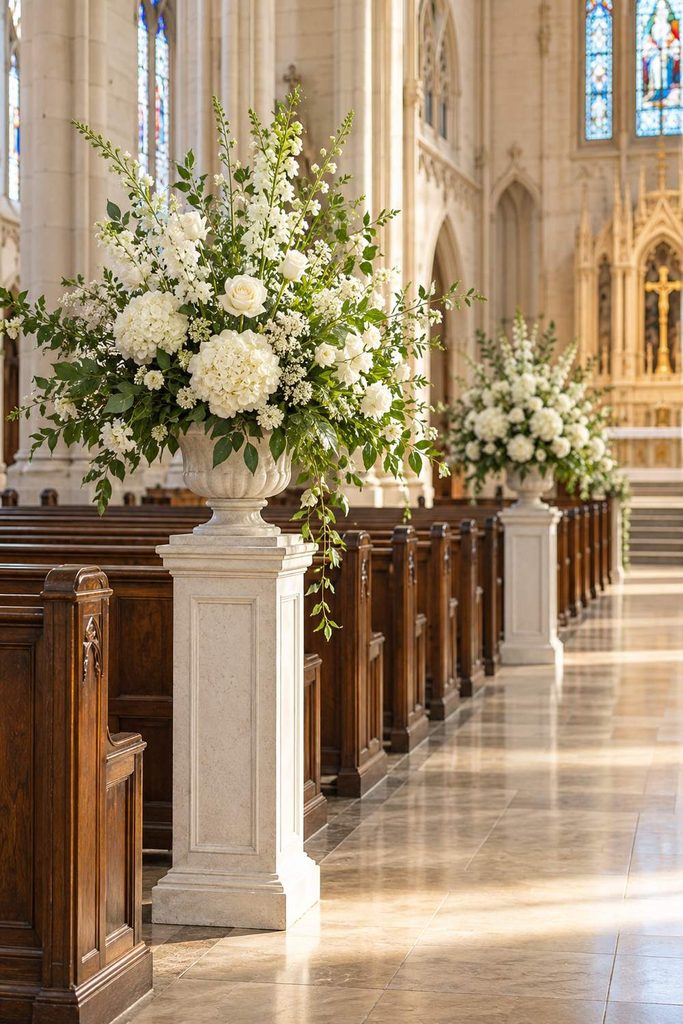
Pedestals lift arrangements into view in a large church. Choose heights that suit the available space and stable bases that can support the flowers securely. White or stone-look pedestals work well with many traditional interiors.
32. Low Arrangements Along Approved Sanctuary Steps

A few low flower arrangements can soften the edge of sanctuary steps where placement is permitted. Leave all walking areas and step edges clearly visible. Loose, rounded arrangements create a gentle finish without needing a continuous floral installation.
33. Flowers Around the Base of a Freestanding Cross

If the church approves decorating this area, place a low floral arrangement near the base of its freestanding cross. Keep the design restrained and leave the cross unobscured. White flowers and greenery can make the arrangement feel connected to the ceremony rather than overly elaborate.
34. An Open Floral Frame Behind the Couple
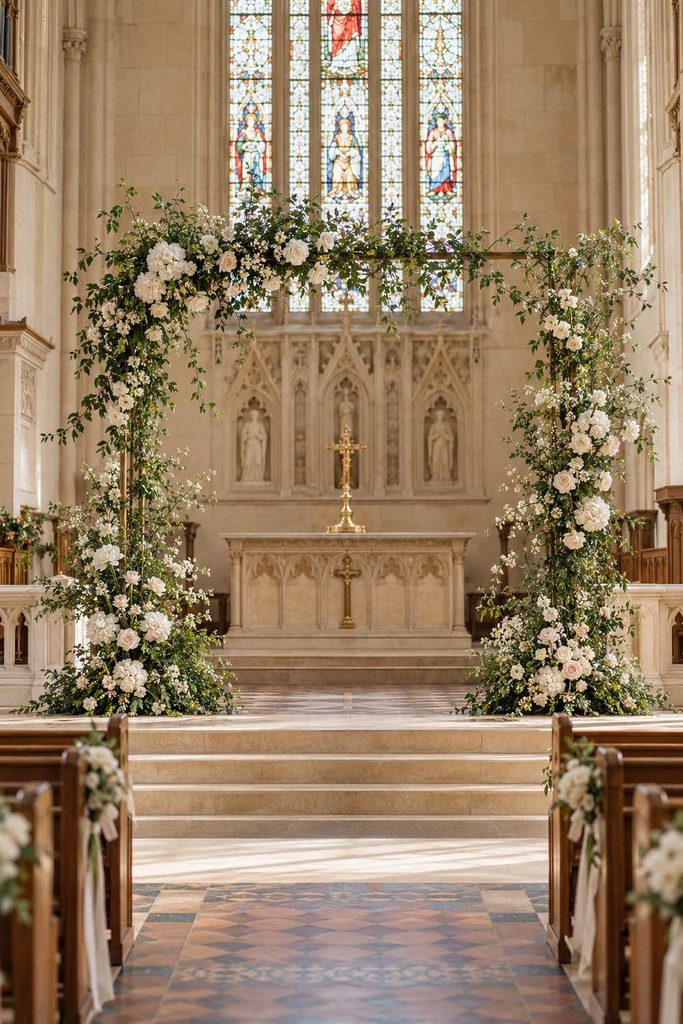
Where the church permits an additional structure, an open floral frame can define the ceremony area. Use an airy design with generous gaps so it does not conceal existing features. Its scale should suit the room and the space available around the couple.
35. A Grounded Floral Crescent

A low crescent of flowers can frame an approved ceremony position without creating a tall backdrop. Build fullness at the ends and let the arrangement taper toward the center. The shape works well for couples who want abundant flowers while keeping the space above them open.
36. Soft Draping on a Freestanding Frame

A lightly draped frame can add softness in a plain chapel where extra structures are allowed. Use a small amount of fabric so the folds look intentional, and anchor the frame securely. Keep the draping independent of church fixtures and outside any required access areas.
37. A Small Lectern Flower Arrangement
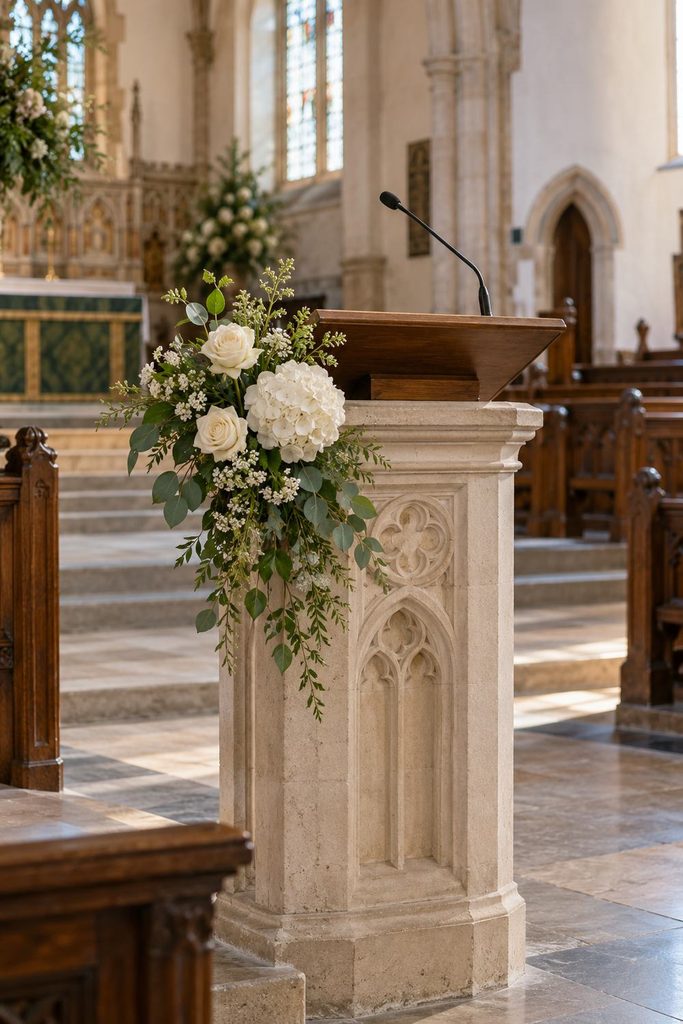
With permission, add a compact floral arrangement beside or on an approved part of the lectern. Keep microphones, reading surfaces, and sightlines clear. A modest arrangement can tie this part of the ceremony into the wider decor without distracting from the readings.
38. Decorated Couple’s Chairs

If the ceremony includes chairs for the couple, dress the backs with small flower sprays or soft ribbon bows. Keep the decorations lightweight and contained. Matching the pew ribbons creates a connection between the seating and the front of the church.
39. Reserved Family Pew Signs

Small reserved signs help family members find their seats while adding another decorative detail. Use sturdy cards with clear lettering and a ribbon that matches the aisle decorations. Place them where guests can spot them before stepping into the row.
40. A Memorial Display in the Vestibule
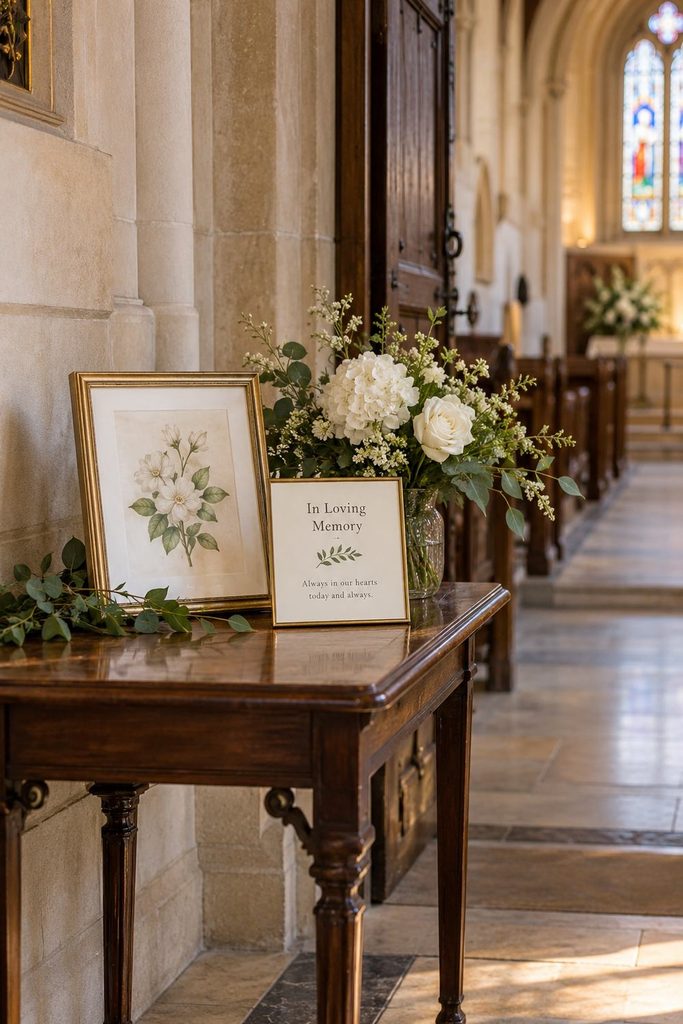
Create a quiet remembrance display with a framed photograph, a brief message, and a small flower arrangement. A side table in the vestibule can give guests space to pause. Keep the display personal and uncluttered so each chosen detail has room to be seen.
41. Wedding Programs in a Woven Basket
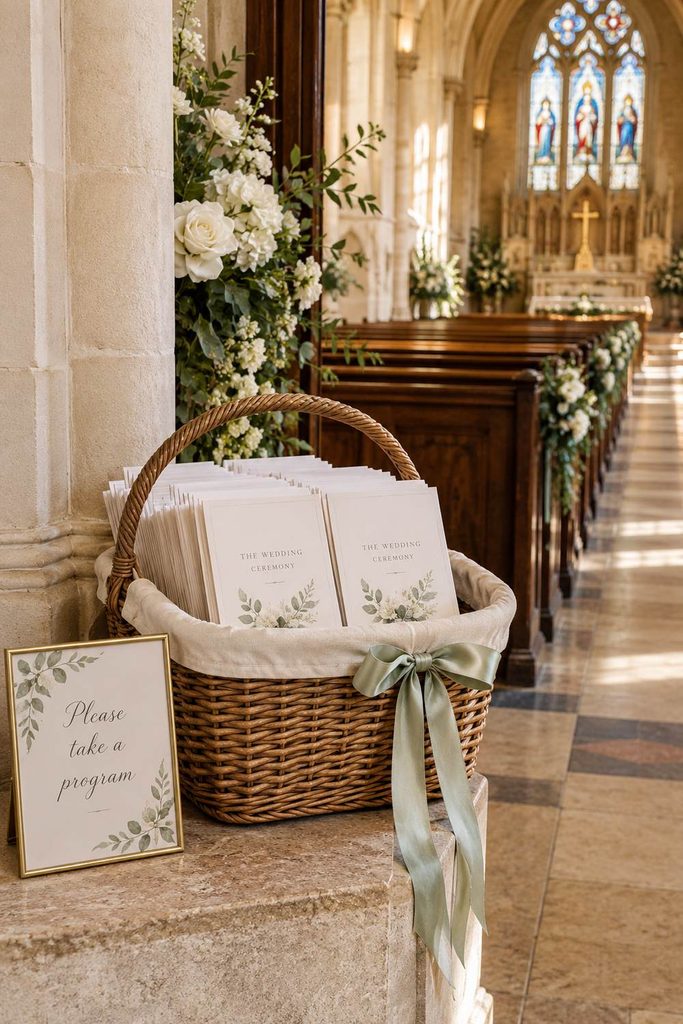
Arrange ceremony programs upright in a lined basket near the entrance. Add a ribbon to the handle or a small sign inviting guests to take one. A generous basket is easier to keep tidy than several small stacks balanced on a narrow surface.
42. A Dedicated Program Table
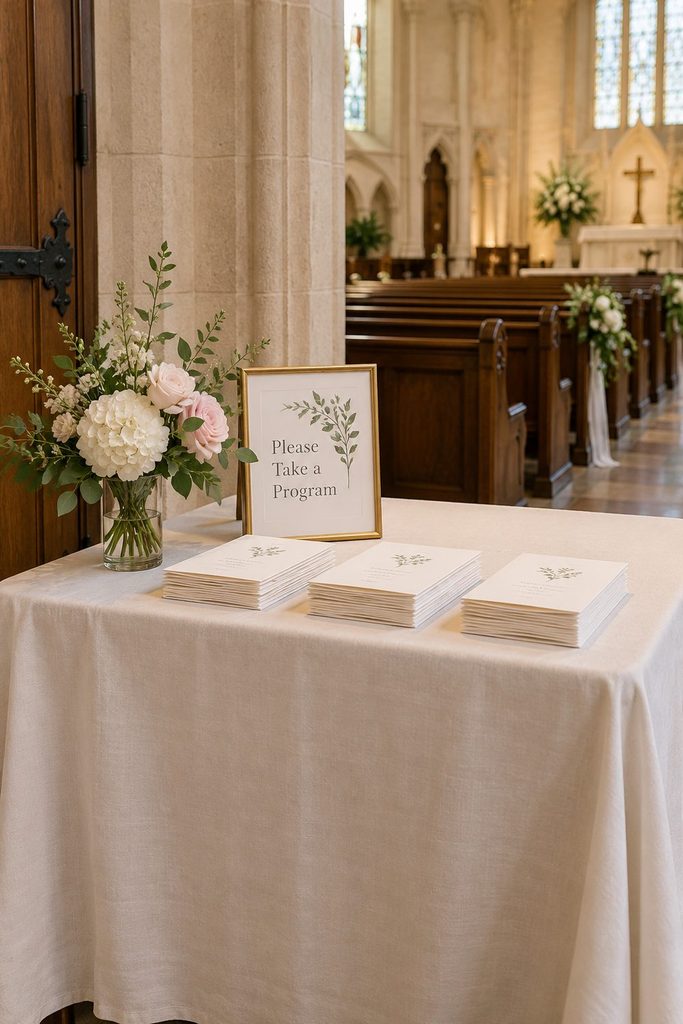
Cover an approved entrance table with a well-fitted linen and arrange programs in neat piles. Add one modest vase of flowers and a simple framed message. Leaving open space on the tabletop makes it easier for guests to pick up a program.
43. Illustrated Ceremony Programs

Carry an illustration of the church onto your printed programs for a coordinated paper detail. Pair it with readable typography and one accent color. The illustration can also appear on your welcome sign to connect the entrance displays.
44. A Hand-Lettered Scripture Sign

Display a meaningful verse on a small framed sign near the entrance, if suitable for your ceremony. Choose a short passage and generous lettering rather than fitting too much text onto the page. Confirm the wording with your officiant if it connects directly to the service.
45. A Floral Ring Pillow

A small ring pillow decorated with a fabric flower or embroidered botanical detail can echo your ceremony decor. Choose colors that complement the bouquets and keep the design compact. Secure the rings appropriately, or use display rings if that is your preference.
46. A Glass Vase Flower Display on a Side Table
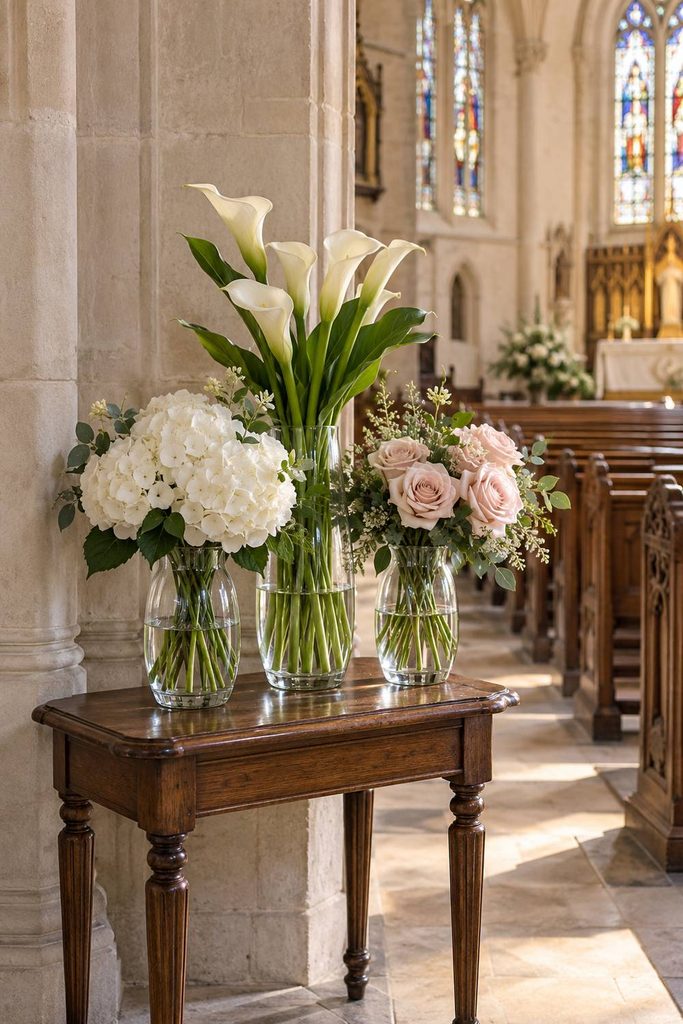
Group three substantial glass vases on an approved side table, each holding a different flower from your wedding palette. Repeating the vase style keeps the display composed. This can be a pretty choice for a vestibule with limited floor space.
47. Gold Vessels for a Formal Ceremony
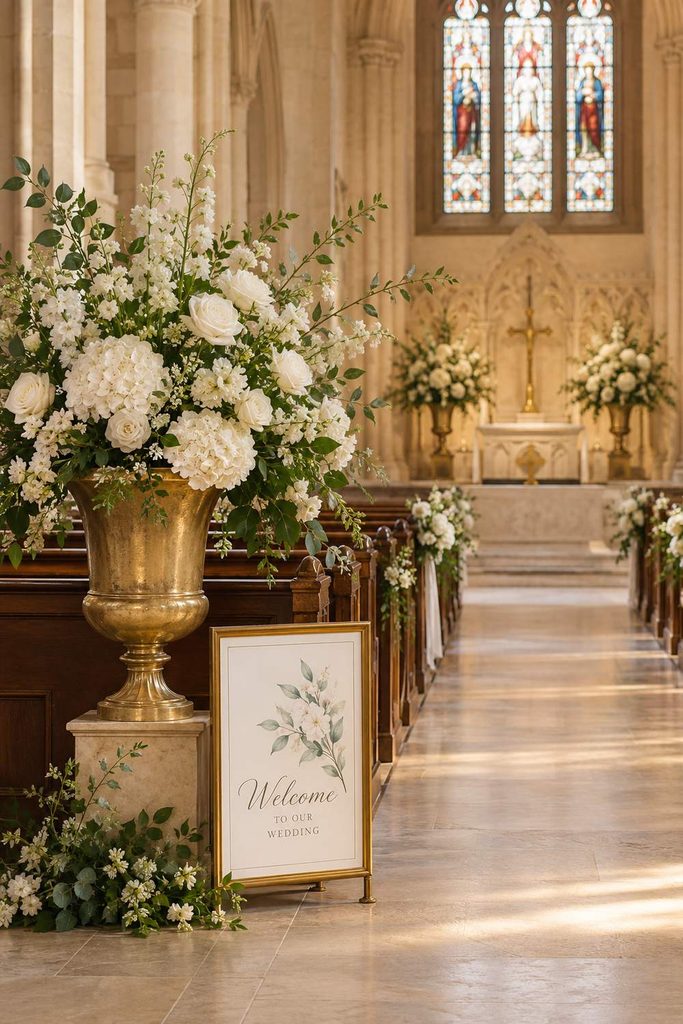
Use muted gold containers to give your flower arrangements a warmer, more formal finish. Repeat the metal in a sign frame or small paper details instead of introducing several different metallics. Soft white flowers keep the overall look balanced.
48. White Ceramic Vessels for a Minimal Look
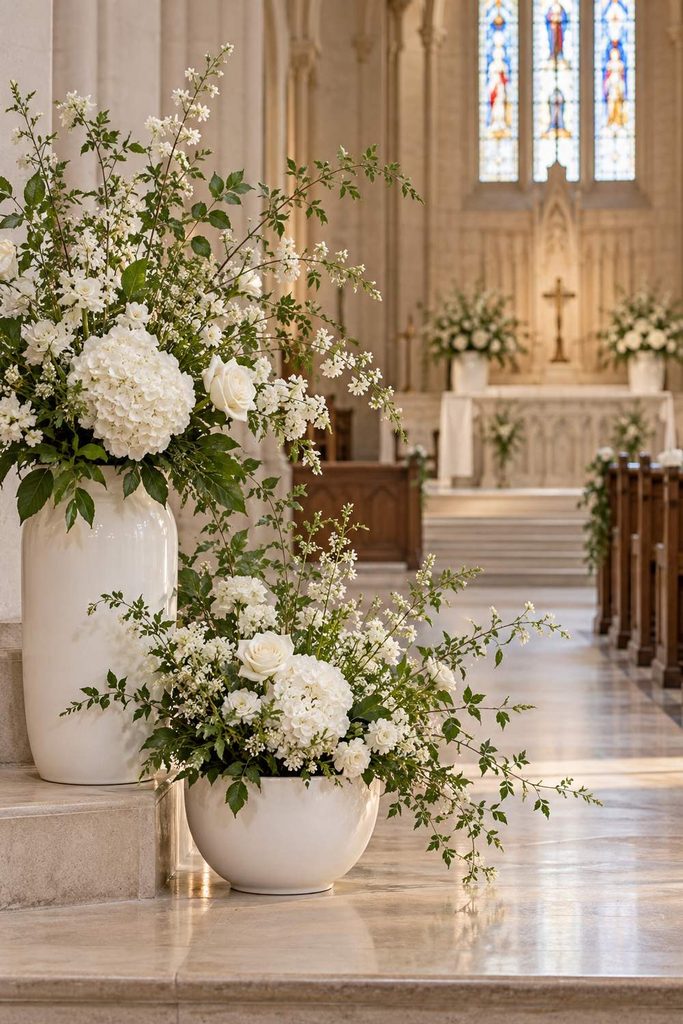
Simple white ceramic containers let the flower shapes take the lead. Use them for entrance arrangements, a program table, or approved displays near the front. A consistent container style helps even modest arrangements look like part of a complete design.
49. Terracotta Pots for a Country Chapel
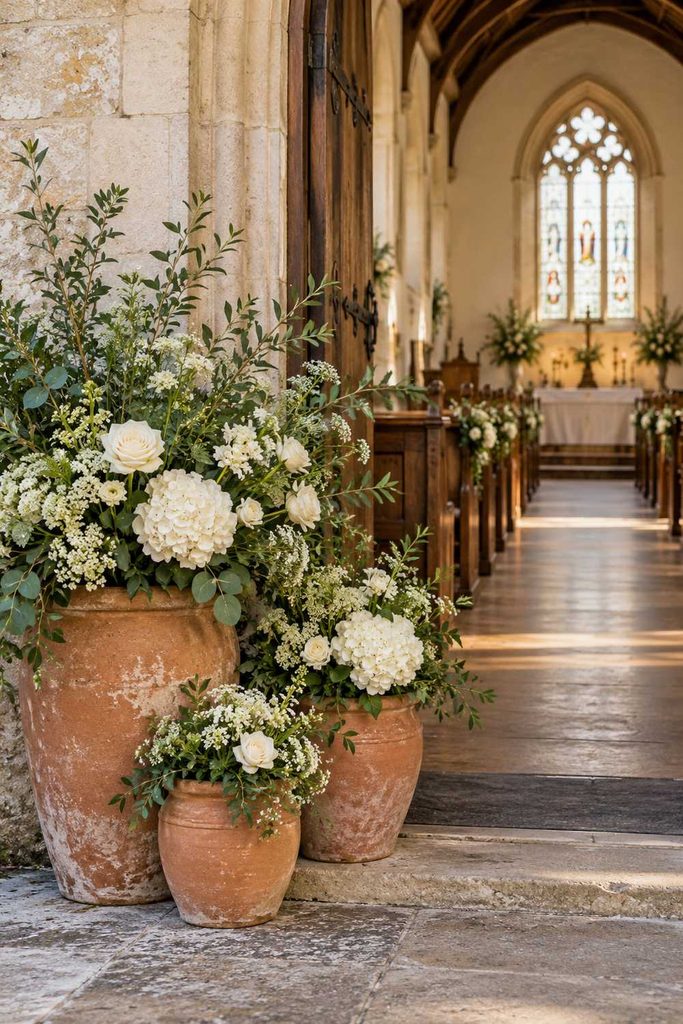
Terracotta pots filled with cream flowers and green foliage create a warm, natural look. Cluster them near the entrance or use larger pots in a few approved positions indoors. Add liners where needed to protect church surfaces from moisture.
50. Spring Branch and Blossom Arrangements

Flowering branches bring height and a seasonal feel to entrance urns or front arrangements. Combine them with lower spring flowers so the base looks full. Keep the tallest branches away from door swings, lights, and guests’ sightlines.
51. Summer Wildflower Pew Posies
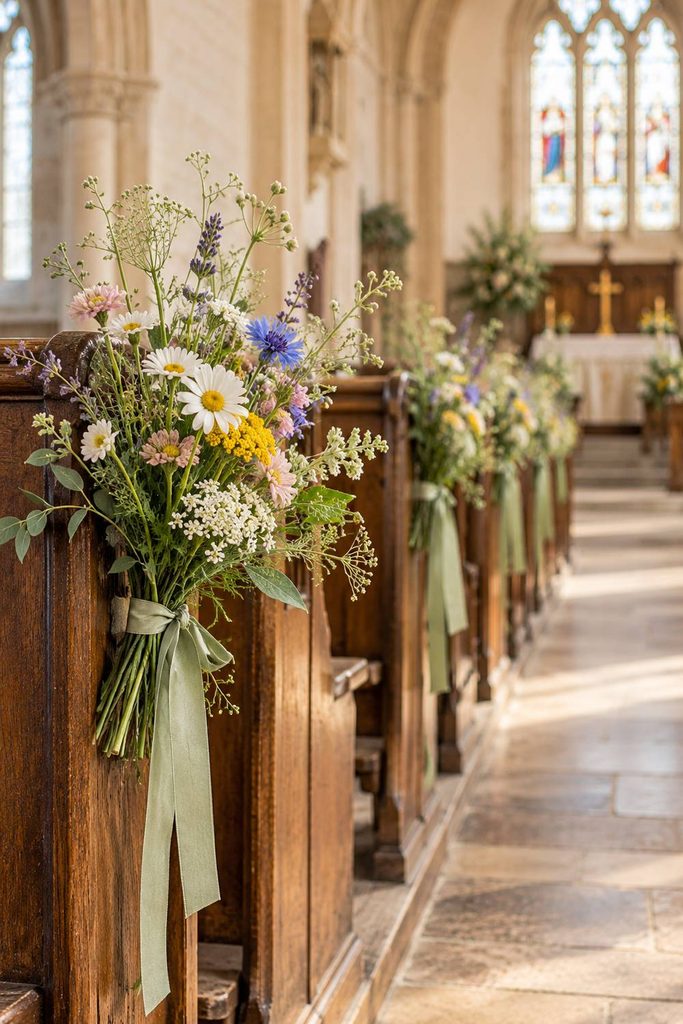
Loose posies of meadow-style flowers suit a cheerful summer church wedding. Mix small blooms, delicate foliage, and a few taller stems while keeping each bouquet manageable. Narrow ribbons in one repeated color help the varied flowers look connected.
52. Autumn Foliage and Rose Arrangements
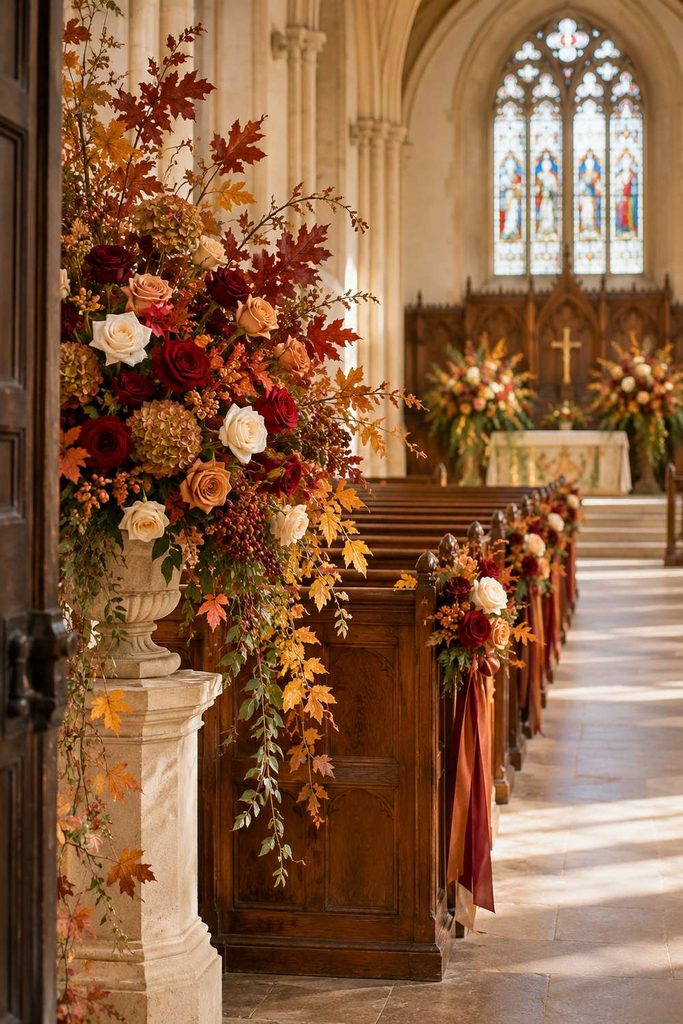
Combine warm-toned roses with autumn foliage for a church ceremony rich in seasonal color. Rust, burgundy, cream, and muted gold can look especially beautiful against wooden pews. Repeat the palette in entrance arrangements and a few pew bouquets for continuity.
53. Winter Evergreen Pew Bundles
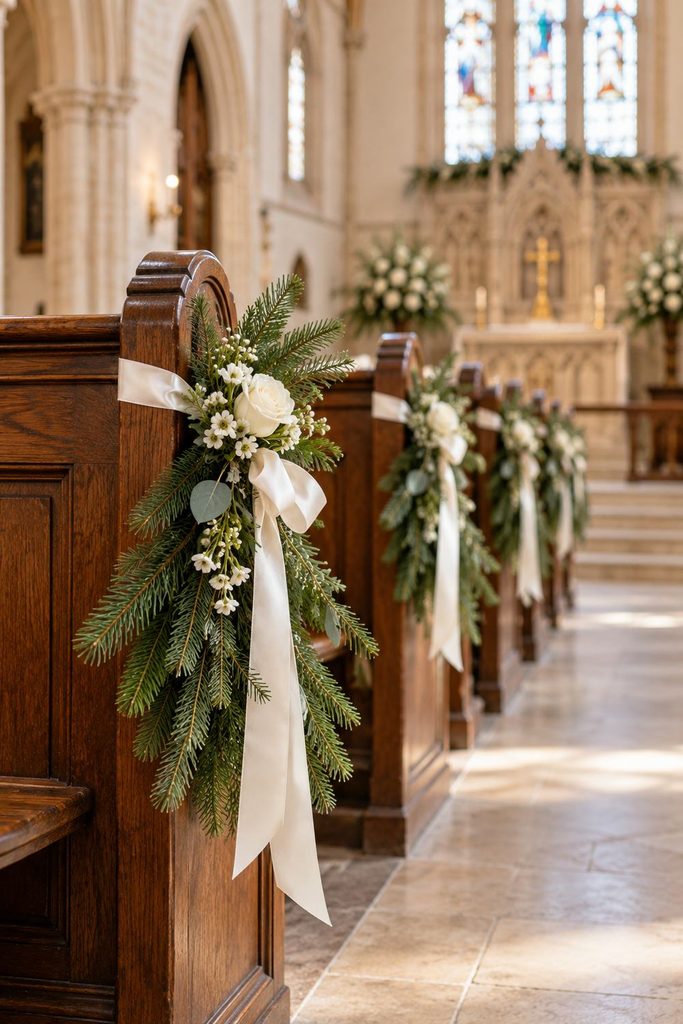
Small bundles of evergreen foliage bring texture to a winter ceremony. Add ivory ribbon and a few white flowers for a softer finish. Keep cut stems and any sap away from the pew surfaces, using a protective wrap and an approved attachment.
54. Monochromatic Flower Arrangements

Choose one flower color and use it throughout the ceremony decorations. All-white feels classic, while an all-blush or burgundy scheme creates a stronger color statement. Mix flower sizes and shapes so the arrangements have depth even within a single shade.
55. Statement Decorations on the First and Last Rows

Concentrate your fullest pew arrangements at the aisle entrance and the front rows, with simpler accents between them. This creates two strong focal points and gives the aisle a finished appearance. It is also an effective way to prioritize your flower budget without decorating every pew equally.
How to Choose Your Church Wedding Decorations
Start with the building. In an ornate church, a few well-placed arrangements may be enough. A small, plain chapel can suit more color, texture, or a stronger entrance display.
Choose two or three ideas to repeat rather than trying to include everything. Door wreaths, ribbon pew bows, and paired front arrangements can create a complete ceremony design on their own. Use the same flowers, ribbon color, or container finish to connect the different areas.
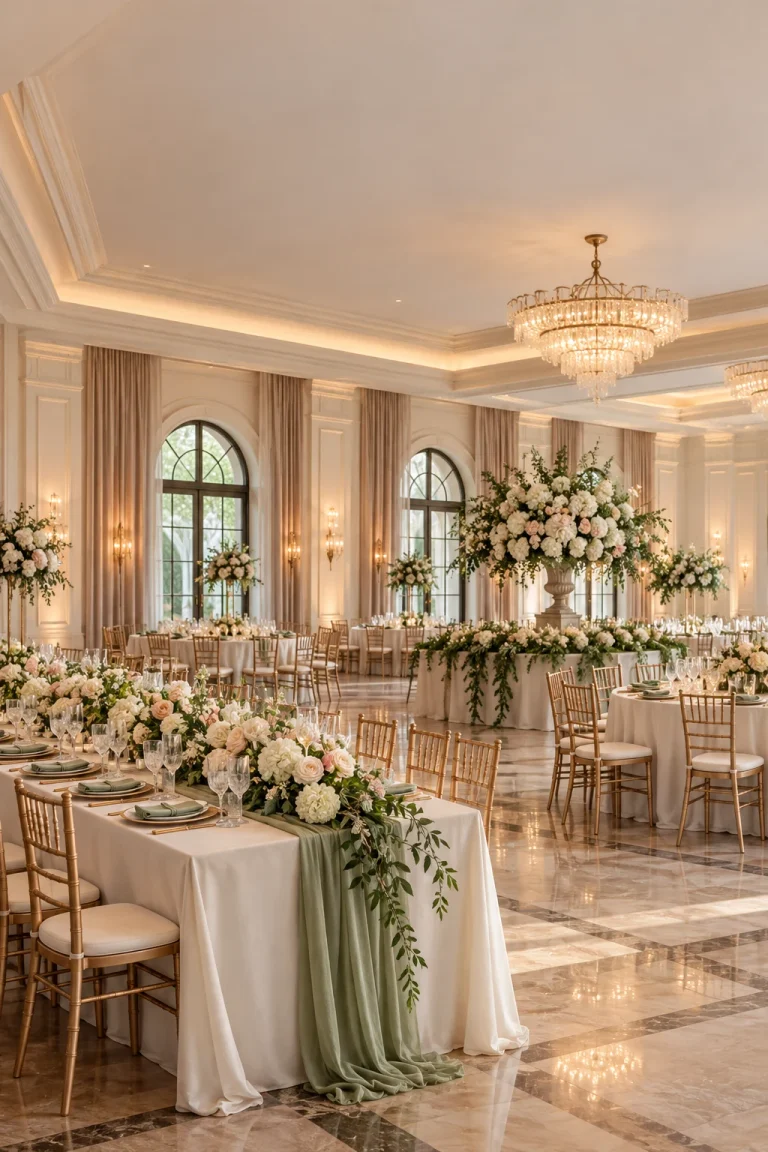
If you want to reuse arrangements at the reception, plan that move in advance with your florist or coordinator. Freestanding entrance flowers and some pew bouquets may be easier to transfer than installed pieces, provided their containers and timing allow it.
The most beautiful church wedding decorations feel at home in the space. Give your chosen details room to stand out, keep the ceremony area comfortable to move through, and let the church remain part of what makes the day memorable.