How to Set and Communicate Your Wedding RSVP Deadline
Set your wedding RSVP deadline before vendor cutoffs, with more lead time for guests arranging travel. A missed reply can leave you guessing about seats, meals, and plans.
RSVP stands for the French phrase “Répondez, s’il vous plaît,” meaning “Please respond.” The date you choose shapes your final headcount and how much time you have to reach nonresponders.
Travel needs can change the timing, especially when guests must book flights or plan time away. You can set a date that fits your vendors, share it clearly, and make it easy for guests to reply.
Treat the date as part of your planning schedule, not just a line on an invitation.
What Is the Right Wedding RSVP Deadline?
For a local wedding, set the wedding RSVP deadline 3-4 weeks before the date. Choose four weeks when you need a firm headcount.
An RSVP tells you whether guests plan to attend. Their answers help you finalize the guest list, seating chart, and catering numbers.
The letters RSVP mean “Please respond.” That request asks guests to say yes or no by your chosen date.
A clear date gives guests time to check work, family plans, and travel. It also gives you time to sort out missing replies before plans become final.
Why four weeks works
Four weeks gives you a useful middle ground for a local wedding. Guests have a clear window to answer, and you still have time to contact nonresponders.
Choose the full four weeks when your venue or caterer needs a set number. A firm headcount can affect meal orders, table layouts, and room plans.
Some couples choose three weeks when their vendors allow a later count. Keep enough time for each person on your guest list to reply and for you to check every answer.
What your RSVP date must allow
Use the four-week headcount deadline when a firm count is required. Your RSVP date should leave time to fix unclear answers and reach guests who missed it.
Think about the date as a working part of your wedding timeline. The final choice should fit the time your venue and caterer need, not just a common rule.
Choose a date that leaves enough room to resolve missing replies before plans must be finalized.
Work Backward From Your Caterer’s Cutoff
Start with the earlier final-count date your venue or caterer gives you. Count backward far enough to follow up with nonresponders.
A Wedding RSVP date calculator can be a simple backward count. Use the earlier cutoff from your venue or caterer, then leave time for late replies.
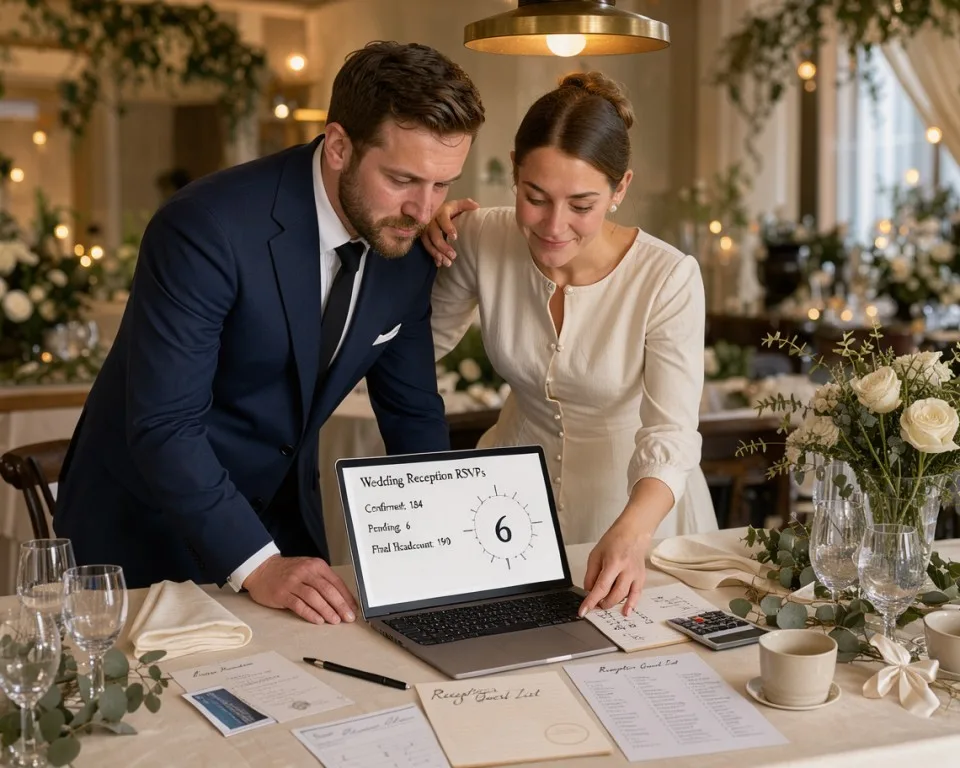
Venues and caterers typically request final guest counts 1-2 weeks before the wedding. Leave at least 10 days between your RSVP deadline and that cutoff.
Use these three checks to set a date that works with your vendor timeline:
- Ask your venue and caterer for their final-count cutoff dates.
- Use the earlier date if their cutoffs do not match.
- Leave at least 10 days for follow-up before the cutoff.
Confirm the final headcount date
Ask each vendor for the date they need your final headcount. A venue and caterer may have different timelines, so write both dates down.
Use the earlier cutoff as your planning point. This keeps the guest list on track for the vendor with the tighter schedule.
If a vendor needs numbers earlier than expected, your RSVP date may need to fall before the usual local window. That is better than promising a count you cannot provide.
Build a follow-up buffer
The gap between the RSVP date and cutoff is your follow-up buffer. It gives you a few days to confirm late answers and check any unclear responses.
Build your wedding planning timeline around the date each vendor gives you. A structured wedding planning timeline can help you keep these deadlines visible.
Confirm any fee or restriction for adding guests after the submitted headcount.
Destination RSVP Deadlines Need More Lead Time
Destination timing depends on how far guests must travel. Use 5-8 weeks as the broad range, then move earlier for domestic, international, or remote trips.
Guests may need more time to arrange flights, time off, and other travel plans. The right deadline gives them a fair chance to decide before your event plans lock in.

A deadline two months before the wedding fits the eight-week end of the domestic destination range. Some trips need an earlier answer because travel steps take longer.
Domestic destination weddings
Set the RSVP deadline 8-10 weeks before a domestic destination wedding. Guests may need to book flights, arrange a stay, and request time away from work.
Hotel room blocks commonly release unreserved rooms 30-60 days before the event. Set your date before a release that could affect guests’ room choices.
Group transport providers typically need passenger counts 4-6 weeks before travel. That cutoff can shape when you need firm answers about rides or shuttles.
International weddings
For an international wedding in an English-speaking country, set the deadline 10-12 weeks ahead. For a country where guests may not speak English, allow 12-14 weeks.
International documents and travel plans may take more time to arrange. Visa documentation may require 8-12 weeks, so guests need time to learn what applies to them.
These earlier dates can help guests make a clear choice before booking costs or time off become harder to manage. Share the reply date plainly with every invited household.
Remote destinations
Set the RSVP deadline 12-16 weeks before a remote destination wedding. A hard-to-reach place can call for more planning than a trip to a nearby city.
Remote plans may involve several travel steps or limited ways to reach the event. Give guests room to assess the trip before they commit.
For help shaping travel plans, use this guide to plan a small destination wedding. Its ideas can help you explain travel needs without adding clutter.
Set the date before any room-block release or travel-arrangement cutoff that affects your guests.
Mail Invitations on a Schedule Guests Can Use
Mail local invitations 6-8 weeks before the wedding. Give destination weddings or large guest lists 10-12 weeks.
Guests need enough time to receive the invitation and act before the reply date. Your schedule should match the travel needs and size of your guest list.
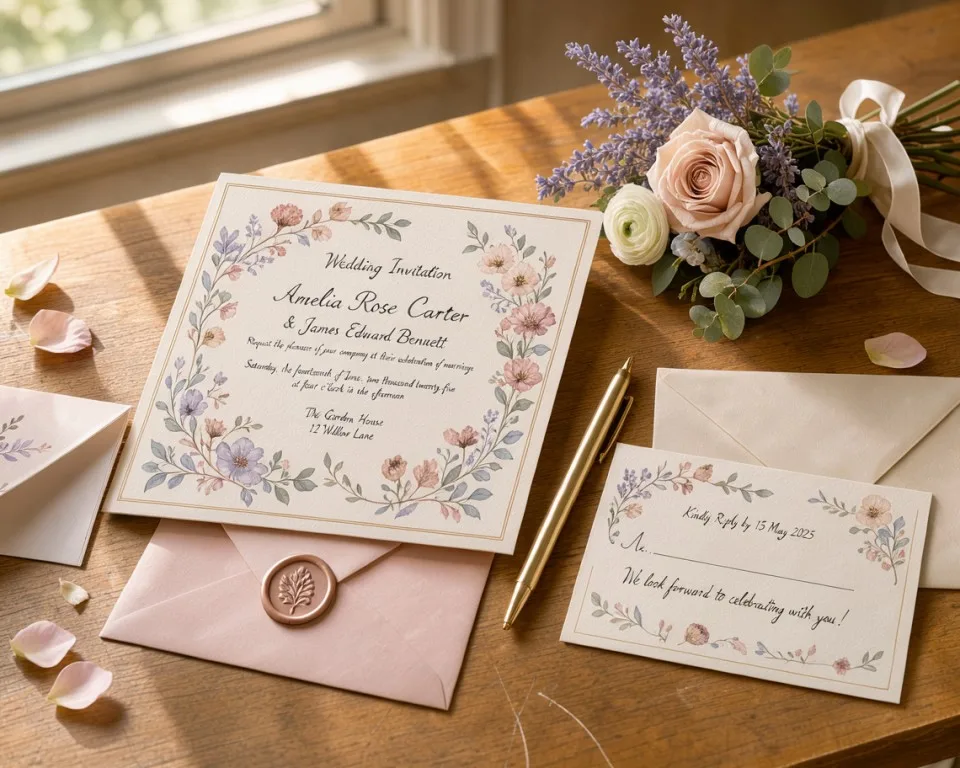
Use this schedule to set invitation and save-the-date timing:
- Local wedding: mail invitations 6-8 weeks ahead.
- Large guest list: mail invitations 10-12 weeks ahead.
- Destination wedding: mail invitations 10-12 weeks ahead.
- Destination wedding needing more notice: mail invitations 4-6 months ahead.
Local and large-guest-list timing
Local save-the-dates commonly go out 6-8 months ahead. They give guests an early notice before the formal invitation arrives.
For a large guest list, mailing invitations 10-12 weeks ahead gives more time for delivery and replies. Use a real calendar date for the RSVP deadline, even when invitations go out early.
The date should not be left for guests to work out from the wedding day. A specific date helps each household plan its reply.
Destination invitation lead time
Destination save-the-dates commonly go out 9-12 months ahead. This gives guests time to budget, request leave, and arrange travel.
When guests need more notice, destination invitations with RSVP cards can go out 4-6 months ahead. This longer lead time can help guests make plans before the deadline arrives.
Share what guests need to know about the trip when you send the invitation. A month-by-month wedding planning timeline can help you coordinate mailing with other wedding tasks.
Check that the invitation arrives early enough for guests to act before the printed reply date.
Make the RSVP Deadline Easy to Spot
Use a specific date in a single, easy-to-find line, such as “Kindly reply by [Month Day, Year].”
Put the date where guests can find it at a glance. A reply date buried at the bottom of a card is easy to miss.
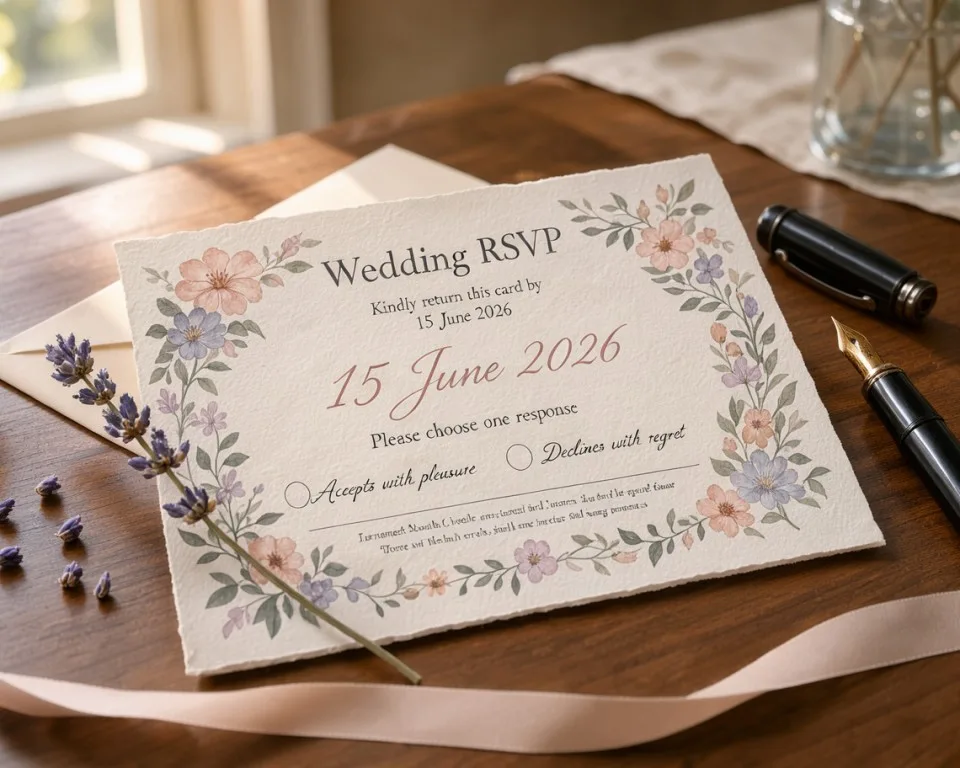
These examples fit different invitation styles:
- Formal: “The favor of a reply is requested by [date].”
- Simple: “Please reply by [date].”
- Warm: “Kindly reply by [Month Day, Year].”
On a printed reply card, place the deadline at the top or just below the name line. Formal cards should include the year as well as the month and day.
Emily Post’s guide to wedding response card wording also suggests a clear reply-by date and space for meal choices.
Choose wording that sounds like the rest of your invitation. A formal invitation calls for more formal words, while a casual card can sound relaxed.
Avoid writing “four weeks before the wedding” instead of a date. Guests should not have to count weeks or check another calendar to know when to reply.
Keep the date on the card itself, even if you also print it on your wedding website. Guests can then see the same deadline in either place.
Match the wording’s formality to the rest of the invitation.
Choose an RSVP Method and Ask Only What You Need
Give guests one clear way to reply and ask only for details that affect attendance or event plans. A paper card or online form can both collect useful answers.
Keep the form short, so guests can complete it without guessing what you need. Your chosen method should help you build an accurate headcount.
Include only the fields that matter:
- Names of the invited guests.
- Attending or declining.
- Number attending, when relevant.
- Meal choice, when applicable.
Paper cards and online responses
Paper reply cards give guests a simple way to mail their answers. Ask guests to mail the physical card about one week before its due date.
Online responses can come through a wedding website or QR code. A wedding website can track responses in real time, which helps you spot missing answers.
If a guest asks when to RSVP on your wedding website, point them to the specific date shown on the invitation and site. Use the same date in both places.
A shared guest list can keep names, contact details, and response status in one place. The wedding guest list guide offers ways to track these details.
Household counts and multi-event RSVPs
A household is an invitation group living at one address. Pre-fill the number of seats reserved for each household, so guests do not add uninvited people.
Make the household’s seat limit clear before anyone replies. The number of people attending should match the invitation, not an open guess.
For a destination wedding with several events, ask guests to reply for each event. You can also ask them to choose a meal when that event includes food.
Separate answers for each event give you a clearer count for each gathering. Keep the form focused on attendance and arrangements that affect your plans.
Make the invitation’s household and seat limits clear before guests submit their responses.
Follow Up Politely With Nonresponders
Expect a few missing replies even when the deadline is clear. Keep reminders brief and personal.
For a local wedding, plan for 15-20% of guests to miss the RSVP deadline. A calm follow-up can help you get the answer you need.
Use this simple follow-up plan:
- About two weeks before the deadline, send one friendly reminder to everyone.
- Before the due date, nudge each remaining nonresponder directly.
- After the deadline, call or text anyone who has not replied.
Reminders before the deadline
A group reminder can be short and warm. Tell guests the reply date and where to send their answer.
Before the deadline, contact only the people who still have not replied. A private note feels more thoughtful than another message to everyone.
Keep the message simple and kind. You can say, “We hope you can join us; please send your yes or no by [date].”
Direct follow-up after the deadline
Allow 2-3 days after the deadline to collect late replies before sending final numbers. Contact nonresponders by phone or text, rather than mailing another response card.
Ask for a clear yes or no by a specific date. Do not extend the deadline in a public post, since other guests may read it as a new date.
Emily Post’s wedding guest etiquette advice says guests should reply by the date on the invitation.
Use a friendly tone, even when you need a firm answer. A direct note can make it easy for a guest to say no without feeling pushed.
Record every confirmed answer in one master guest list so your submitted count matches the replies.
Estimate Attendance Without Treating a Yes as Guaranteed
Use confirmed replies for your final headcount, and treat attendance estimates as a planning reference rather than a substitute for responses.
For a local wedding, estimated attendance is 75-85% of invited guests. That estimate is not the same as the share of people who explicitly RSVP yes.
Each guest list has its own mix of plans and needs. Travel distance, household circumstances, and the event schedule can all affect your count.
Local attendance planning
RSVPify reports an average acceptance rate of 83% and a decline rate of 17%. Those are one platform’s reported averages, not a promise for your guest list.
Use general estimates only while you plan. Once guests reply, use those confirmed answers for vendor numbers and seating plans.
If you are still building your list, a shared spreadsheet or wedding app can track RSVP status and meal choices. A clear record helps you see which answers still need attention.
Late cancellations and estimate limits
Destify estimates that 5-10% of guests who RSVP yes cancel late. A late change can affect the headcount, meal order, and seating chart.
Keep your count tied to actual replies instead of lowering it based on a broad estimate. Your vendors need the answers you have, not a guess about who may attend.
Travel distance can shape how sure guests feel about attending. Household needs and the event schedule may also change a guest’s plans.
Keep your final seating and catering counts tied to the answers you have actually received.
Conclusion
A clear RSVP date gives you a more reliable headcount and guests a straightforward way to respond. Allow time for personal follow-up before you send final numbers.
Guests traveling from farther away may need more time to decide. Keep their travel needs in mind as you set your date.
Confirm the final-count cutoff with your venue and caterer first. Then add the chosen date to the invitation and wedding website.
Confirm your vendor cutoff today, then put the resulting response date wherever guests will look for it.